
Substrates Definition
Substrates are fundamental materials that act as starting points in various scientific and industrial contexts, including printing and biochemistry. In chemical reactions, substrates serve as primary reactants that undergo transformation. They are essential for enzyme activity in biological systems, binding specifically to enzymes through active sites. Substrates find diverse applications in industries such as electronics and packaging. Understanding substrates’ roles and characteristics is critical for optimizing performance in these fields, which warrants further exploration.

Quick Summary
- Substrates are fundamental materials that act as surfaces for reactions or functions in various fields, including printing, biology, and material science.
- In chemical reactions, substrates are the primary reactants that undergo transformation, distinct from catalysts and products.
- In biochemistry, substrates are specific molecules that enzymes act upon, highlighting their role in enzyme activity and specificity.
- Substrates impact ecological systems, serving as essential elements for plant growth and microbial life, influencing biodiversity.
- Industrial applications of substrates include electronics, packaging, and automotive sectors, where they support various functions like insulation and protection.
Understanding the Concept of Substrates
Substrates are fundamental materials that serve as the base for various processes across multiple disciplines, including printing, biology, and material science.
In the context of printing, the choice of substrates considerably influences coating-substrate compatibility, which affects adhesion and durability of the applied inks or coatings. Variability in ink absorption across different substrates can lead to inconsistencies in print quality. Understanding these factors is vital for achieving ideal results in applications like packaging and signage. Also, the chemistry of substrate impacts coating properties, making it crucial to select the appropriate substrate for optimal performance. The substrate is a molecule that an enzyme reacts with, highlighting its role in both chemical and biological processes. Substrates are also critical in biochemical reactions, as they are the specific molecules upon which enzymes act to catalyze transformations.
In biological settings, substrates are essential for enzyme interactions, impacting processes such as growth and detection in histological studies, highlighting their versatile importance across fields.
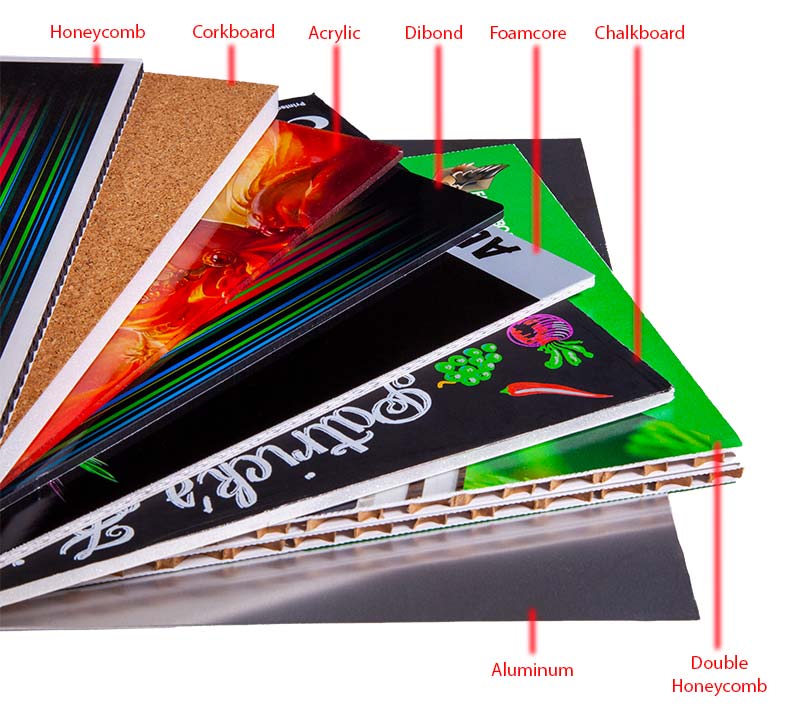
Substrate Printing by imagesquareprinting.com
Substrates in Chemical Reactions
In chemical reactions, the substrate serves as the primary reactant undergoing transformation, playing a critical role in the overall process. It acts as a surface for adsorption or reaction platforms, distinct from catalysts and products. The substrate is central to stoichiometry and reaction progress analysis, varying contextually in organic versus inorganic chemistry. Substrate feeders facilitate the introduction of these reactants, ensuring proper alignment for ideal reactions. In biochemistry, the substrate is the molecule upon which an enzyme acts, leading to a chemical reaction. This relationship illustrates the concept of enzyme specificity, highlighting how different substrates correspond to specific enzymes for effective catalysis. Also be aware that substrates are typically chemically stable before the reaction, providing a reliable foundation for the transformation process. Nevertheless, surface adhesion issues can impede effectiveness, impacting the desired outcomes. Understanding the substrate’s role enhances comprehension of reaction dynamics, emphasizing its importance in both spontaneous and catalyzed chemical processes.

Large Format Substrate and Rigid Material Printing by 40visuals.com

Sustainable Signage: 7 Substrates for Planet-Friendly Printing by smartpress.com
The Role of Substrates in Biochemical Mechanisms
Understanding the dynamics of enzyme-substrate interactions is essential for elucidating biochemical mechanisms. Enzymes bind to substrates through complementary active sites, forming transient complexes that facilitate various biochemical reactions. This binding process is critical for understanding how substances are transformed at a molecular level. Substrate concentration can significantly affect the rate of enzyme activity, highlighting the importance of optimal conditions in biochemical reactions. The substrate specificity of kinases, which determines which proteins are phosphorylated, plays a crucial role in regulating cellular responses.
In practical applications, substrates can be likened to materials used in producing packaging materials, brochures, and flyers. Just as enzymes require specific substrates to function effectively, the selection of materials in printing processes directly impacts the final product’s quality and effectiveness.
Consequently, recognizing the role of substrates enhances both scientific comprehension and practical application in various fields.
Substrates in Biological Contexts
Ecological systems rely on various substrates that serve as foundational elements for both plant and microbial life. Soil, rich in organic matter, provides essential minerals for plant root absorption and supports diverse microbial communities. The composition of soil influences plant growth, with variations affecting species distribution. Additionally, substrate diversity greatly impacts the enzymatic activity of microbes, as they rely on specific compositions for survival. Aquatic substrates, such as gravel, create habitats for water organisms, while terrestrial substrates include rocks and sand. Nutrient diversity within these substrates greatly impacts microbial enzymatic activity, as microbial communities depend on specific compositions for survival. Substrates enable stability and play a critical role in nutrient processing and fostering biodiversity within ecosystems, highlighting their importance in biological contexts.
Industrial Applications of Substrates
Substrates play a critical role across various industrial applications, serving as foundational materials that support and enhance the functionality of products.
In electronics, FR-4 substrates are essential for printed circuit boards, while flexible substrates facilitate bendable designs in wearable technology.
Automotive and aerospace industries utilize metal foil for thermal shielding and woven fabric for structural reinforcement.
Substrates like cardboard are prevalent in packaging, ensuring product protection and presentation.
The versatility of these materials enables diverse applications, from insulation in power systems to protective layers in industrial manufacturing, demonstrating their critical importance in advancing technological and functional capabilities across sectors.
Popular Wiki Terms:
Key Characteristics of Substrates
The key characteristics of substrates encompass various physical, chemical, and structural properties that influence their functionality in different applications.
Nutrient content is critical, as substrates enriched with organic matter enhance fertility. pH sensitivity must be managed to guarantee balanced acidity or basicity, promoting ideal plant growth.
Structural integrity is crucial; substrates should resist compaction and deformation to support root development. Proper porosity facilitates aeration and moisture retention, while particle size diversity aids in water and nutrient penetration.
Each characteristic plays an essential role in determining the efficacy of substrates within diverse agricultural and horticultural contexts.
References & Data Sources:
https://www.stahl.com/beyond-chemistry-from-a-to-z/what-is-a-substrate – Retrieved March 28, 2025
https://byjus.com/chemistry/substrate/ – Retrieved March 30, 2024
https://en.wikipedia.org/wiki/Substrate_%28chemistry%29 – Retrieved December 30, 2024
https://imagesquareprinting.com/substrate-printing-2/ – Retrieved March 23, 2025
https://study.com/academy/lesson/enzyme-substrate-complex-definition-lesson-quiz.html – Retrieved March 30, 2025
https://www.sciencing.com/what-substrate-chemistry-4673739/ – Retrieved March 30, 2025
https://40visuals.com/large-format-substrate-and-rigid-material-printing/ – Retrieved March 30, 2025
https://smartpress.com/blog/on-press/sustainable-signage-8-substrates-for-planet-friendly-printing – Retrieved March 30, 2025
https://portlandpress.com/biochemsoctrans/article/doi/10.1042/BST20241420/235646/Activation-is-only-the-beginning-mechanisms-that – Retrieved March 30, 2025
https://academichelp.net/stem/biology/what-is-substrate.html – Retrieved March 29, 2025
https://pcbmake.com/picture-of-a-substrate/ – Retrieved March 29, 2025