
Micro-Embossing Definition
Micro-embossing is a manufacturing process that employs heat and pressure to create detailed textures and relief patterns on various substrates. Typically, it requires an embossing press operating at temperatures between 50–65°C and pressures of 10–16 MPa. The ideal duration for this process is 5–10 seconds. This technique is used in packaging, electronics, and other industries to enhance product aesthetics and functionalities. Further exploration reveals its diverse applications and technological nuances.

Quick Summary
- Micro-embossing is a process that uses heat and pressure to create fine textures and relief patterns on materials.
- It typically operates at temperatures of 50–65°C and pressures of 10–16 MPa for effective pattern transfer.
- Common applications include enhancing packaging aesthetics, preventing counterfeiting, and fabricating components in industries like electronics and automotive.
- The technique involves precise control of timing, material thickness, and temperature to achieve desired texture fidelity.
- Micro-embossing can be economically challenging due to high initial equipment costs, but offers sustainable packaging design opportunities.
Understanding the Micro-Embossing Process
Micro-embossing is a highly specialized process that involves the application of heat and pressure to create fine textures and subtle relief patterns on various materials. The process requires an embossing press, where ideal temperatures range between 50–65°C and pressure between 10–16 MPa. Timing is critical, with durations of 5–10 seconds being perfect. Material thickness limitations can impact the effectiveness of micro-embossing, as thicker materials may not compress adequately. Common substrates include filter paper and polymer films, which must be compatible to guarantee effective pattern transfer. Classification of the materials used can also influence the outcomes, ensuring that the right type is chosen for optimal results. Micro embossing creates optical refraction through light and shadow effects, enhancing the overall design. Precision in temperature, pressure, and timing is essential for successful micro-embossing outcomes.
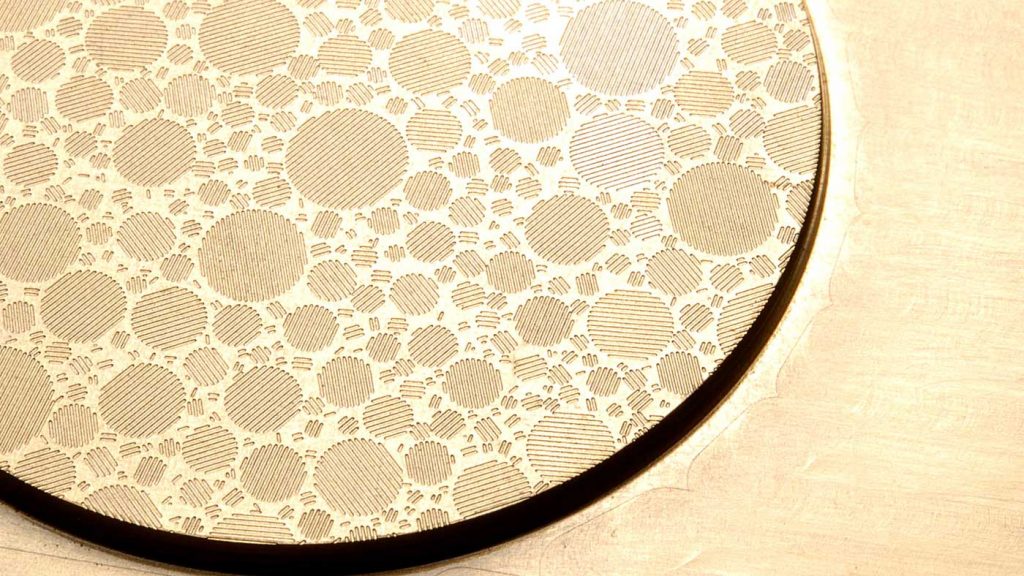
microtexture
Applications of Micro-Embossing in Industry
Applications of micro-embossing span various industries, showcasing its versatility and functionality.
In packaging and consumer goods, micro-embossing enhances premium branding through fine texture and optical effects, while also preventing counterfeiting with unique patterns. Micro metal stamping is often combined with micro-embossing to create even more intricate designs and features that elevate product aesthetics. The development of a mechanical roll-to-roll process allows for continuous surface structuring, improving efficiency in production.
The electronics sector utilizes micro-embossing for precision in MEMS fabrication and micro metal stamping, leading to miniaturized components.
Medical applications leverage micro-embossing for the creation of intricate biomedical devices and sensors.
The automotive and aerospace industries benefit from lightweight and fuel-efficient components, ensuring structural integrity.
Hot stamping techniques further enhance the aesthetic and functional qualities of products across these fields, particularly in security printing.
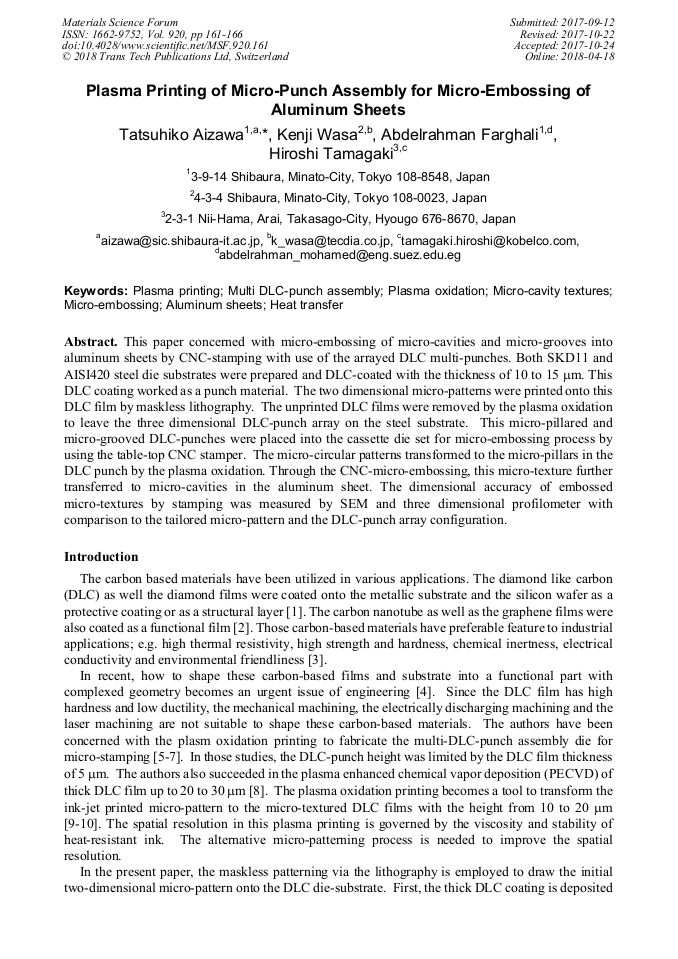
deep embossing rotary machines by gasperini.it

Micro-embossing - Print Business info by printbusiness.info
Techniques and Variants of Micro-Embossing
The techniques and variants of micro-embossing encompass a range of processes that enhance the functionality and aesthetic appeal of materials. Core methods include hot foil stamping, which utilizes heat and pressure for effective pattern transfer, and nano-embossing, which achieves intricate designs. Hot embossing is also commonly used for large-scale manufacture of micro-fluidic and photonic devices. The embossing process involves precise pressure and temperature control to prevent material damage. Material preparation requirements are essential; substrates must possess heat resistance and surface elasticity to maintain integrity during the process. Accurate alignment guarantees even pressure, mitigating distortions. Micro-embossing primarily focuses on textures between 3–630 µm, while nano-embossing targets submicron scales for enhanced optical effects. Each technique presents unique challenges, necessitating precision in tooling and calibration to achieve desired outcomes.
Material Interactions in Micro-Embossing
Material interactions in micro-embossing are critical to achieving desired texture and functionality in various substrates.
Temperature-dependent polymer behaviors play a significant role, as materials like PMMA and PVC exhibit altered viscosities above their glass phase change temperatures, facilitating flow into micro-cavities.
In addition, pressure-density relationships influence replication fidelity, with increased embossing pressure enhancing feature accuracy but potentially risking material permeation.
Consistent thermal gradients are essential; uneven heating can lead to replication issues or shrinkage.
Proper material selection, including dimensional stability, guarantees effective embossing, especially in applications requiring precise surface patterns and structural integrity.
These interactions ultimately steer successful micro-embossing outcomes.
Plasma Printing of Micro-Punch Assembly for Micro-Embossing of ... by scientific.net
Popular Wiki Terms:
Economic and Sustainability Considerations in Micro-Embossing
Economic and sustainability considerations in micro-embossing are essential factors influencing both production efficiency and environmental impact. The process can be cost-prohibitive due to high initial investments for equipment, such as die-cutting machines and molds required for hot micro-embossing. Nevertheless, alternatives like cold foiling and wax printing offer lower-cost options. While hot embossing delivers faster processing times, scalability remains a challenge for small producers. Energy consumption varies across methods, impacting overall resource usage. Sustainable practices in packaging design can enhance environmental outcomes while meeting production demands, aligning economic viability with ecological responsibility in the micro-embossing industry. Also, micro-embossing has been highlighted as a simple, efficient method for mass production of bio-inspired surfaces on metals, showcasing its potential for both economic benefits and sustainability in manufacturing.
References & Data Sources:
http://schoollibraryconnection.com/Glossary – Retrieved March 27, 2025
https://www.micpressed.com/what-is-micro-metal-stamping-and-what-are-its-applications/ – Retrieved March 29, 2024
https://www.kit-technology.de/en/technology-offers/details/665 – Retrieved December 29, 2024
https://gasperini.it/en/finishing-technologies/sheet-plate-embossing-machine/ – Retrieved March 22, 2025
https://printbusiness.info/technologies/2019/05/micro-embossing/ – Retrieved March 29, 2025
https://dspace.mit.edu/handle/1721.1/7463 – Retrieved March 29, 2025
https://www.allbranded.com/Glossary/Embossing/ – Retrieved March 29, 2025
https://www.scientific.net/MSF.920.161 – Retrieved March 29, 2025
https://www.mdpi.com/1996-1944/13/2/412 – Retrieved March 29, 2025