
Gloss Coating Definition
Gloss coating refers to a high-shine finish that enhances the reflective properties of surfaces. This result is achieved through precise formulations and application techniques, utilizing smooth surface textures and specific refractive indices. Gloss levels are quantified using glossmeters, adhering to standards such as ASTM D523. Commonly used in packaging, automotive finishes, and architectural elements, gloss coatings promote both aesthetic appeal and functional performance. Further insights into their formulation and applications are available for those interested.

Quick Summary
- Gloss coating provides a high shine and reflective surface through specular reflection, enhancing visual appeal in various applications.
- The finish’s clarity and reflection quality are influenced by surface texture and the refractive index of the coating materials.
- Gloss levels are measured using a glossmeter, adhering to standards like ASTM D523 for consistency and quality assurance.
- Common formulations include aqueous coatings with acrylics and alkyd resins, often cured using UV light for durability.
- Gloss coatings are widely used in packaging, automotive, and architectural applications to enhance aesthetics and provide protective qualities.
Definition and Optical Properties of Gloss Coating
Gloss coating is characterized by its high shine and reflective surface, primarily achieved through the principles of specular reflection. This optical property measures the intensity of reflected light at an equal angle to the incident light, resulting in a mirror-like appearance.
The surface texture plays a vital role, as smoother surfaces enhance gloss through focused reflection, while rougher textures scatter light and reduce shine. The refractive index of materials influences gloss levels, with higher indices promoting increased reflection. Higher gloss finishes ensure clarity in reflections, which is essential for various applications, including packaging and print materials. The significance of measuring the gloss of the coating allows for achieving specific coating requirements and desired aesthetic effects. The level of gloss is quantified using a glossmeter to ensure consistency and quality in the final product. Distinctness-of-image (DOI) is preserved with higher gloss, ensuring clarity in reflections, which is essential for various applications, including packaging and print materials.

Finish Strong with Gloss or Matte Printed Media - Vancouver Print ... by twiistedmedia.com
Measurement Standards for Gloss
Measurement standards for gloss are critical for ensuring consistency and accuracy in evaluating the reflective properties of coated surfaces.
ASTM D523 outlines specular gloss measurements at 20°, 60°, and 85° angles, creating a global benchmark. ISO 2813 and GB/T9754 align with these standards for broader applicability. The gloss unit (GU) is defined using a polished black glass standard, with non-metallic surfaces typically measuring ≤100 GU. Gloss measurement values are essential for assessing surface quality, helping to identify potential issues in coatings. The use of gloss measurement instrumentation allows for precise quantification of gloss levels across various surfaces.
ASTM D523 establishes global standards for specular gloss measurement at key angles, supported by ISO 2813 and GB/T9754 for wider use.
Haze measurement is addressed by D4039, while D4449 focuses on appearance differences, essential for quality control. Gloss measurement instruments like glossmeters are essential tools in this process, helping to quantify the reflective properties of various coatings.
Region-specific standards like DIN67530 and JIS Z8741 further enhance measurement precision across various industries, including UV coating applications.
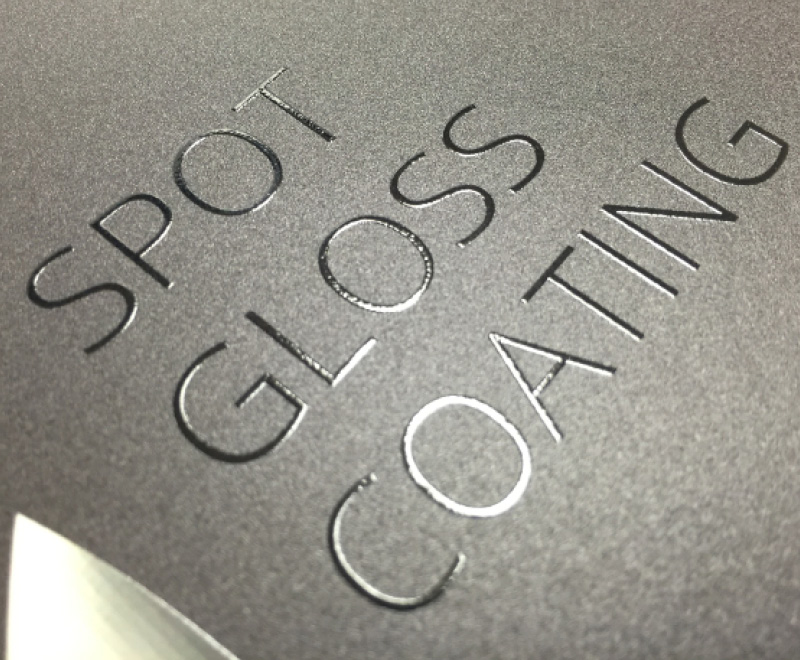
Chicago Color Printing by sunrisehitek.com
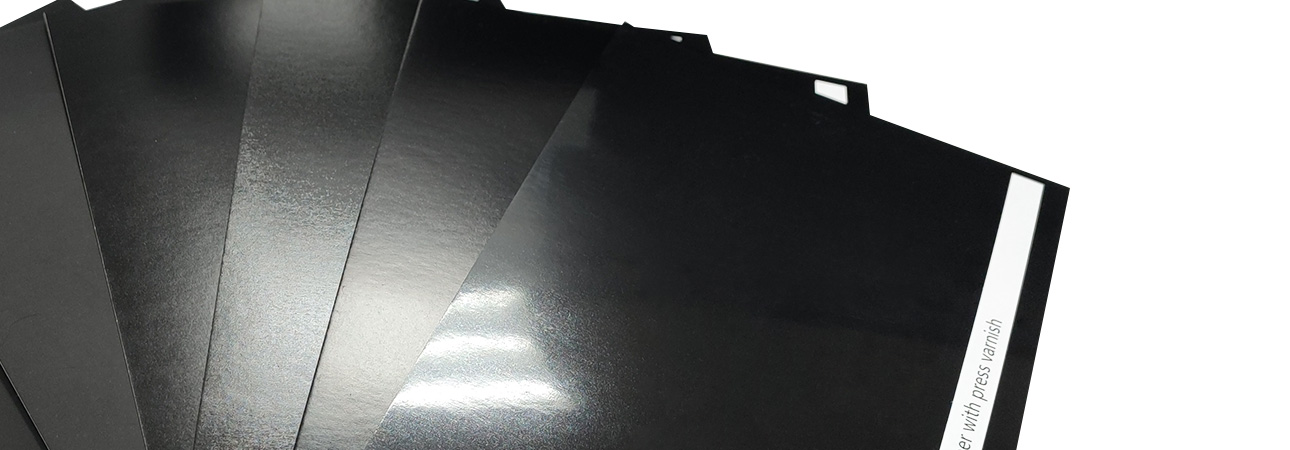
A Helpful Introduction to Varnishes and UV Coating for Printing by qinprinting.com
Composition and Formulation of Gloss Coatings
The composition and formulation of gloss coatings are pivotal in determining their performance and visual characteristics.
Aqueous coatings often employ acrylic formulations with a binder system comprising vinyl acetate and butyl acrylate. Alkyd resins, enhanced with vinyltoluene and isophthalic acid, contribute to gloss retention. Ethylene acrylic acid is incorporated for improved durability and adhesion. Incorporating key components such as pigments can further enhance the color and opacity of the gloss coating.
Water, as the primary solvent, is supplemented by co-solvents like ethylene glycol mono-n-butyl ether to enhance flow. N-methylpyrrolidone is included to achieve high shine.
The utilization of a UV curing machine further guarantees rapid curing, resulting in a durable, glossy finish suitable for various applications.
Applications and Use Cases of Gloss Coatings
Utilizing gloss coatings has become essential across various industries due to their ability to enhance both aesthetic appeal and functional performance. In packaging, UV-coated boxes and labels elevate luxury products by emphasizing brand quality. Brochures and promotional materials benefit from high-gloss finishes that attract consumer attention and provide image protection. UV coating forms a hard, resilient layer post-curing, protecting against damage and enhancing the longevity of printed materials. Gloss finishes offer a high-shine, vibrant appearance that enhances color, making them ideal for applications requiring visual impact. Automotive surfaces and metal fixtures utilize gloss coatings for visual enhancement and durability. Architectural elements gain weather resistance and reflectivity through glossy finishes. These applications demonstrate the versatility of gloss coatings, serving functional needs while contributing to visual sophistication across diverse sectors.

What is UV Coating in Packaging? by pakfactory.com
Gloss Retention and Maintenance Techniques
Effective gloss retention and maintenance techniques are critical for preserving the visual appeal and functional performance of coated surfaces. Material-specific sensitivity affects gloss retention; for instance, giomer composites outperform resin-modified glass ionomers. Cleaning techniques greatly influence gloss levels, where non-abrasive methods maintain higher gloss compared to harsher agents. Formulation advancements, such as incorporating light stabilizers and nanofillers, enhance resistance to UV degradation and abrasion. Understanding the impact of environmental factors, including UV exposure and pollution, is essential for developing effective maintenance strategies. Implementing these techniques guarantees sustained gloss retention and peak performance of coated materials, especially since gloss retention is significantly influenced by the type of coating system used.

Varnish in Packaging Printing: Types
Popular Wiki Terms:
Methods for Manipulating Gloss Levels
Manipulating gloss levels in coated surfaces is a multifaceted process that requires an understanding of mechanical, chemical, and surface modifications.
Mechanical gloss adjustment involves grit progression and buffing techniques, while chemical formulation adjustments utilize flattening agents and surfactants to alter light reflection.
Surface texture modification can effectively shift between varnishing and matte coating by creating microtextures that diffuse or reflect light.
Methods such as wet sanding and polishing compounds enhance surface smoothness, while differential curing in powder coatings offers additional control over gloss levels.
Each approach provides distinct benefits, allowing for tailored results in various applications.
References & Data Sources:
https://waterlox.com/guide-how-gloss-works/ – Retrieved March 27, 2025
https://www.linshangtech.com/tech/what-factors-affect-the-coating-gloss-tech1156.html – Retrieved March 29, 2024
https://coatings.specialchem.com/coatings-properties/gloss – Retrieved December 29, 2024
https://twiistedmedia.com/finish-strong-with-gloss-or-matte-printed-media/ – Retrieved March 22, 2025
https://www.lisungroup.com/news/technology-news/what-is-gloss-and-its-measurement-method.html – Retrieved March 29, 2025
https://www.testronixinstruments.com/blog/understanding-standards-and-process-of-gloss-measurement/ – Retrieved March 29, 2025
https://www.pcimag.com/blogs/14-pci-blog/post/109767-understanding-gloss-standards-and-units – Retrieved March 29, 2025
https://www.sunrisehitek.com/page/spot-uv-coating – Retrieved March 29, 2025
https://www.qinprinting.com/varnishing/ – Retrieved March 29, 2025
https://www.rroij.com/open-access/chemical-formulations-for-acrylic-matt-and-acrylic-gloss-paints.php?aid=91361 – Retrieved March 28, 2025
https://www.epackprinting.com/support/the-ultimate-guide-to-uv-coating-benefits-and-applications/ – Retrieved March 28, 2025
https://www.ipspaint.co.uk/industrial-paints/industrial-acrylic-coatings-matte-vs-gloss-aesthetics-benefits-ips-paint-supplies/ – Retrieved March 28, 2025
https://pakfactory.com/blog/learn/what-is-uv-ultraviolet-coating/ – Retrieved March 28, 2025
https://kta.com/gloss-retention-coatings-industry/ – Retrieved March 28, 2025