
Ad Impression Definition
Ad impressions refer to the instances when an advertisement is displayed on a medium, effectively quantifying exposure to potential viewers. Measurement methods include served impressions and viewable impressions, which mandate that a minimum percentage of the ad is visible for a designated time. Impressions primarily track visibility, not engagement. This metric is critical for evaluating campaign performance and optimizing marketing strategies. Further examination reveals the intricate relationship between impressions, engagement, and overall advertising effectiveness.
Definition of Ad Impressions
An ad impression is defined as an occurrence where an advertisement is displayed on a digital or physical medium, indicating potential visibility to an audience.
Ad impressions are vital for understanding visibility criteria, as they measure how many times an ad is shown, regardless of user engagement. Measurement metrics, including engagement rates, help advertisers analyze campaign effectiveness. Impressions play a significant role in assessing campaign performance and uplift, allowing advertisers to gauge the effectiveness of their strategies. One impression equals each occurrence of an ad being loaded, which highlights the frequency of exposure to the audience.
Ad impressions are crucial for assessing ad visibility, providing vital data on exposure and campaign performance.
Various advertising platforms, such as Google Ads, utilize these metrics to provide insights into visibility. Tracking ad impressions helps advertisers understand campaign reach and effectiveness, particularly for brand awareness campaigns where clicks may not be the focus.
The economic significance of ad impressions lies in their impact on advertiser payments and publisher revenue, making them essential for strategic advertising decisions and budget allocation.
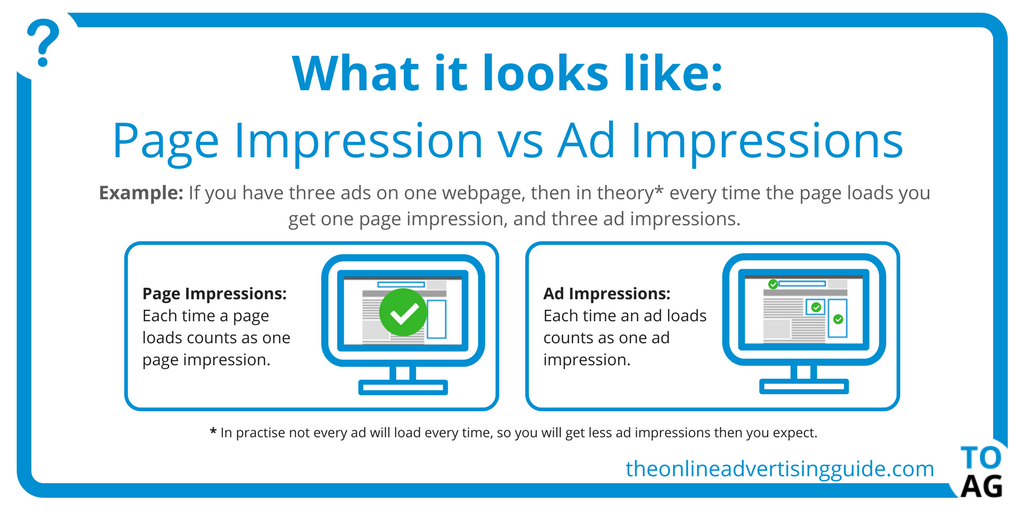
and ... by business.adobe.com
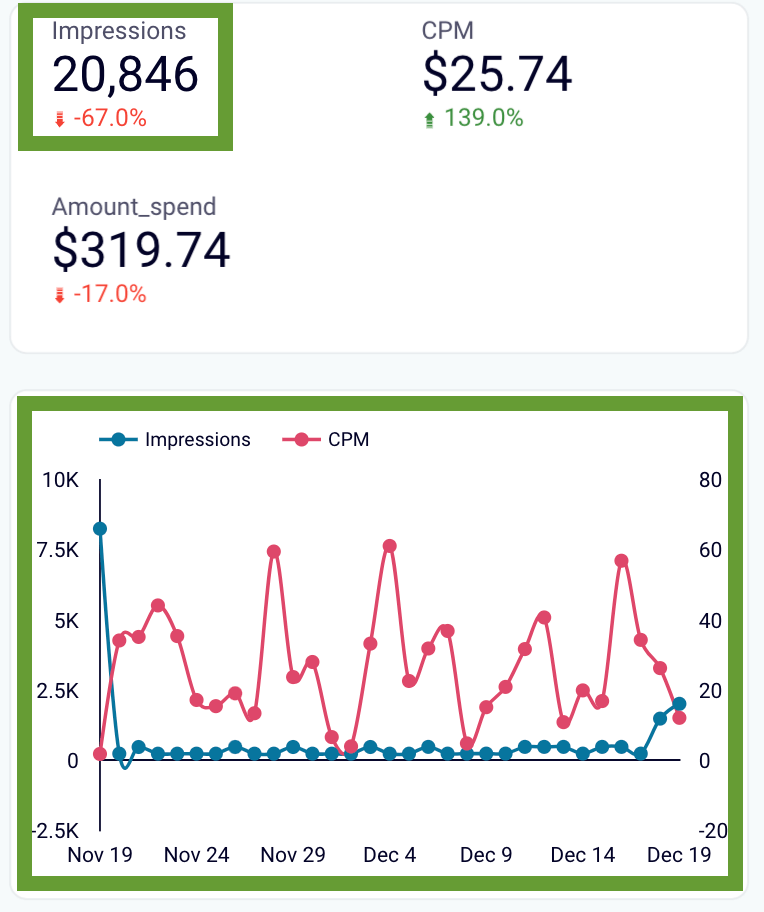
Example data from Facebook's Ad Archive
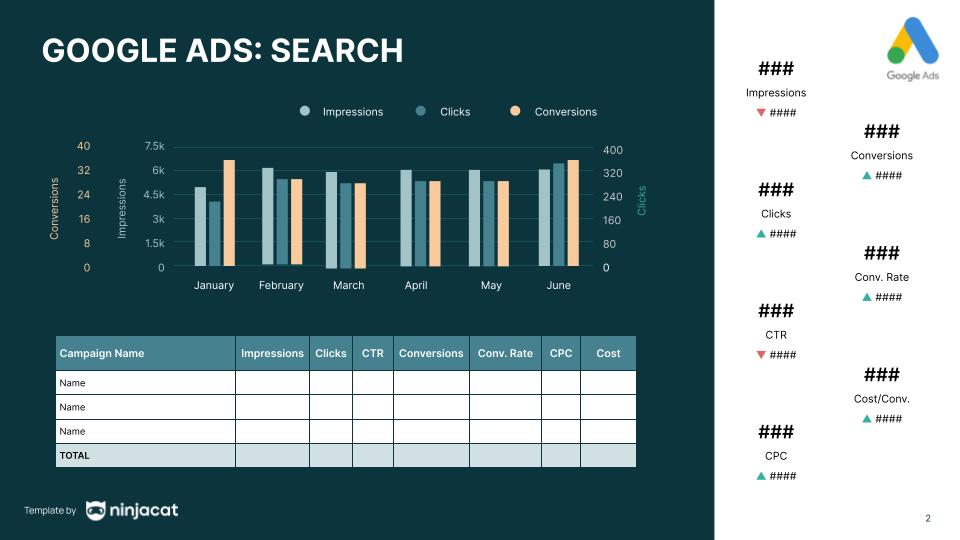
showing impression and ... by researchgate.net
Measurement Methods for Impressions
Measurement methods for ad impressions are critical for accurately evaluating the effectiveness of advertising campaigns across various platforms. These methods encompass various tracking metrics, including served impressions and viewable impressions, the latter adhering to IAB Guidelines. Industry standards dictate that to be considered viewable, at least 50% of ad pixels must be visible for a specified duration. Data integration challenges arise when consolidating measurement insights across different formats and devices. Employing consistent methodologies, such as count-on-begin-to-render, enhances the reliability of impression data. Adherence to these standards guarantees transparency and accuracy in evaluating advertising impact and reach. Also, the IAB Guidelines emphasize client-side ad counting to ensure that impressions reflect actual viewing opportunities. Accurate measurement of ad impressions is essential for understanding the reach of an advertiser’s campaign. Using various counting methodologies can significantly impact the reliability of impression counting.
Cost Models and Monetization Strategies
Cost models and monetization strategies for ad impressions constitute essential frameworks for advertisers and publishers in the digital ecosystem.
Key models include CPM (Cost Per Mille), which charges per 1,000 impressions, and CPC (Cost Per Click), which charges only for clicks. CPA (Cost Per Action) requires payment after specific user actions. Hybrid/eCPM strategies combine these models to optimize revenue, considering impressions count and audience demographics. Understanding eCPM provides insight into ad campaign effectiveness and helps optimize pricing strategies based on revenue generation. Each model supports specific advertising campaign goals, which allows advertisers to choose the most suitable model based on their desired outcomes. CPC, for instance, ensures payment only when a user engages with the ad, aligning costs with user engagement.
Dynamic optimization and A/B testing further enhance effectiveness by identifying the best monetization approach.
Each model presents distinct benefits and challenges, necessitating careful selection based on campaign goals and audience engagement metrics.
Impressions vs. Reach
Understanding the distinction between impressions and reach is pivotal in evaluating the effectiveness of advertising campaigns.
Impressions quantify the total times an ad is displayed, regardless of individual engagement, while reach measures the unique users exposed to the ad. Impressions often exceed reach, as multiple views by the same individual are counted. Analyzing both metrics provides insights into audience demographics, engagement rates, and overall campaign performance. Effective advertising strategies leverage these metrics to refine targeting efforts and enhance visibility. In particular, the measurement of impressions in digital marketing allows for a more quantitative analysis compared to offline methods.
In the end, understanding impressions and reach aids in gauging the impact of campaigns on potential customers and optimizing future advertising efforts.
Importance of Impressions in Advertising
Impressions play a pivotal role in the effectiveness of advertising by quantifying the total instances an advertisement is displayed to potential viewers. Understanding how impressions count is essential for marketers aiming to enhance brand awareness. By analyzing audience demographics, advertisers can tailor their strategies to reach the right consumers effectively. Also, impressions contribute to performance optimization, informing adjustments that align with campaign goals. High engagement rates are often a result of increased impressions, demonstrating the interconnectedness of visibility and consumer interaction. In the end, leveraging impressions is fundamental to refining an advertising strategy and maximizing return on investment. Additionally, impressions measure the total views an advertisement receives, which helps in evaluating advertising strategies and effectiveness. Also be aware that focusing on quality impressions can lead to more meaningful interactions and conversions, ultimately driving better campaign results. The distinction between impressions vs. engagement is crucial for understanding the overall impact of an advertising campaign.
Popular Wiki Terms:
Impressions and Engagement Metrics
Measuring advertising performance involves analyzing both impressions and engagement metrics. Impressions count the total times content is displayed, while engagement rates reflect interactions such as likes and shares. Understanding audience demographics is essential for optimizing campaigns. High impressions indicate successful visibility; yet they do not guarantee engagement, which is important for evaluating campaign effectiveness. Additionally, high impressions do not accurately reflect engagement impact, making it crucial to assess both metrics collectively. Calculating return on investment (ROI) necessitates examining engagement alongside impressions. This combined analysis informs marketing objectives and allows for targeted adjustments. Low engagement with high impressions may signal the need for content refinement or strategy realignment to better serve the intended audience and achieve desired outcomes. Also, engagement metrics are crucial as they indicate how well content resonates with the audience. Tracking email impressions can provide valuable insight into how many recipients are engaging with the content, further enhancing campaign effectiveness.
References & Data Sources:
https://www.adjust.com/glossary/impression/ – Retrieved April 27, 2025
https://www.investopedia.com/terms/i/impression.asp – Retrieved April 29, 2024
https://searchengineland.com/guide/ad-impressions – Retrieved January 29, 2025
https://business.adobe.com/blog/basics/marketing-impressions – Retrieved April 22, 2025
https://www.researchgate.net/figure/Example-data-from-Facebooks-Ad-Archive-showing-impression-and-monetary-statistics-for-a_fig1_336011177 – Retrieved April 29, 2025
https://www.iab.com/guidelines/ad-impression-measurement-guidelines-us-global/ – Retrieved April 29, 2025
https://www.quantcast.com/wiki/term/ad-impressions/ – Retrieved April 29, 2025
https://learn.microsoft.com/en-us/xandr/industry-reference/impression-counting – Retrieved April 29, 2025
https://blockthrough.com/blog/ad-tech-pricing-models-explained/ – Retrieved April 29, 2025
https://www.start.io/glossary/advertising-pricing-models/ – Retrieved April 28, 2025
https://www.criteo.com/blog/whats-difference-cpc-cpm/ – Retrieved April 28, 2025
https://www.bigcommerce.com/glossary/digital-marketing-impressions/ – Retrieved April 28, 2025
https://www.indoormedia.com/blog/how-impressions-work-into-your-advertising-strategy – Retrieved April 28, 2025
https://advertising.forumcomm.com/its-about-quality-of-impressions-not-just-quantity – Retrieved April 28, 2025
https://www.clearvoice.com/resources/impressions-vs-reach-vs-engagement/ – Retrieved April 28, 2025
https://sproutsocial.com/insights/reach-vs-impressions/ – Retrieved April 28, 2025
https://www.thehartford.com/business-insurance/strategy/marketing-roi/measuring-ad-impressions – Retrieved April 28, 2025