
Water-Based Ink Definition
Water-based ink is a printing solution that primarily uses water as a solvent, making it non-toxic and environmentally friendly. It consists of pigments or dyes for color, binders such as acrylic resins for durability, and surfactants for uniform application. Common applications include food packaging and textiles. The production process involves pigment dispersion and blending for desired viscosity. Nevertheless, challenges such as color management and drying on non-porous surfaces exist. Further information on its benefits and limitations follows.

Quick Summary
- Water-based ink uses water as its primary solvent, making it non-toxic and safer for various applications.
- It contains pigments or dyes for vibrant colors, along with binders for durability and stability.
- Commonly used in food packaging and apparel printing, it ensures safety for skin contact and prevents chemical migration.
- Water-based inks have lower VOC emissions, contributing to better air quality and environmental sustainability compared to solvent-based inks.
- They offer challenges like color shift on different substrates and potential fading, which require careful management for optimal results.
Composition of Water-Based Ink
The composition of water-based ink consists of several core components that contribute to its functionality and performance.
Water serves as the primary solvent, diluting pigments and binders while guaranteeing non-toxic properties for eco-friendly printing.
Pigments or dyes, finely ground and suspended, provide color intensity and vibrancy.
Binders, commonly acrylic or methacrylic resins, link pigments to substrates, enhancing durability.
Surfactants lower surface tension for uniform application, while stabilizers and additives guarantee stability and prevent microbial growth. These elements work in concert to achieve reduced VOC emissions, making water-based inks a suitable choice for environmentally conscious printing practices. Water-based inks offer excellent printing effects and good color brightness, enhancing the overall quality of printed materials. Also, water-based ink is not completely waterproof but offers significant water resistance, making it versatile for various applications.
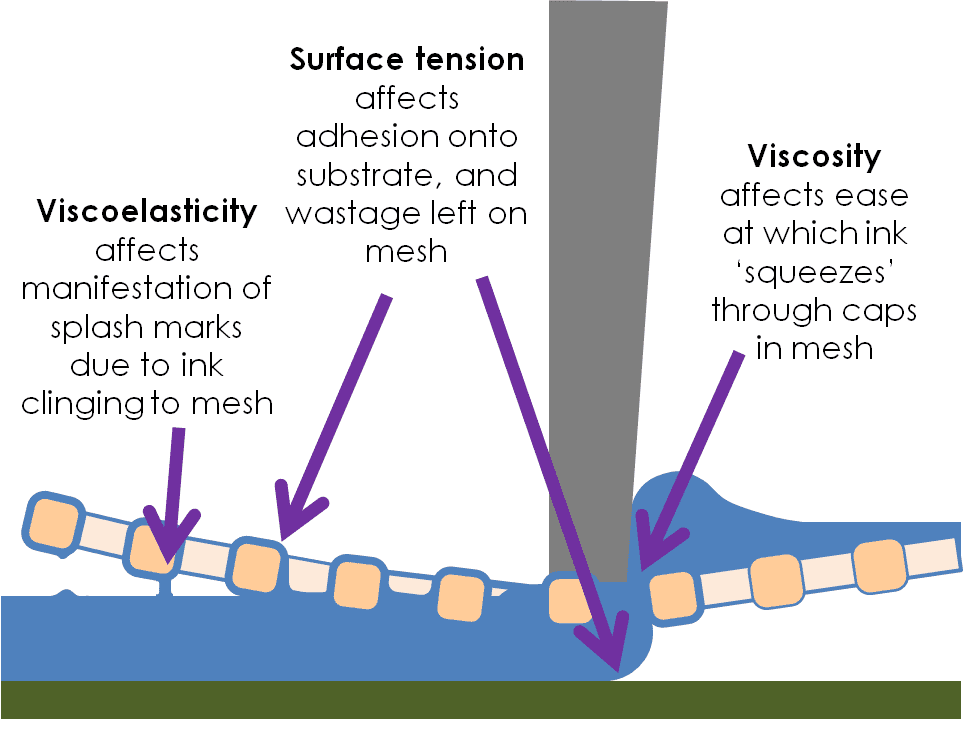
The Rheological Demands of Screen Printing Inks and Pastes by rheologylab.com
Advantages Over Traditional Inks
While traditional inks often present environmental and health challenges, water-based inks offer several distinct advantages that enhance their appeal for modern printing applications.
These inks exhibit fast drying properties, greatly improving production efficiency. Their non-toxic formulation guarantees safety for skin contact and food packaging, promoting environmental and health benefits. Water-based inks demonstrate consistent performance, despite ink absorption variability across different substrates. They also reduce volatile organic compound (VOC) emissions, contributing to improved air quality. Also, their exceptional color quality allows for vibrant and long-lasting prints that are visually appealing. Also be aware that they are environmentally friendly, making them a superior choice for sustainable printing practices. They are composed of pigments suspended in water, which ensures high color stability and good adhesion for graphic products. In line with sustainable practices, these inks are increasingly aligned with biodegradable inks that further minimize environmental impact. The use of UV coated paper can further enhance the durability and visual appeal of prints made with water-based inks.
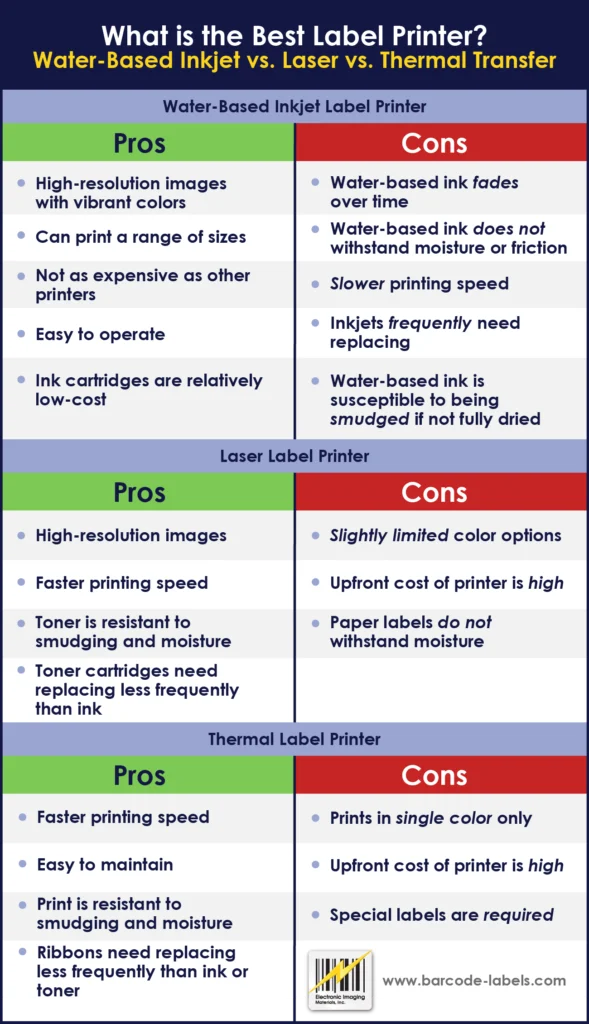
Hardware & Software Archives - Electronic Imaging Materials by barcode-labels.com
Common Applications
Water-based inks have established a significant presence across various printing applications due to their non-toxic properties and environmental benefits.
In food packaging, they guarantee safety by preventing chemical migration, while maintaining vibrant colors on cardboard and plastic films. Their low chemical risk makes them suitable for primary and secondary packaging, ensuring safety for consumers. Water-based inks are also known for their eco-friendly composition, making them an ideal choice for brands focusing on sustainability.
Apparel printing leverages water-based inks for soft-hand textiles, guaranteeing safety for sensitive skin. This is particularly important as ink penetration in high nap fabrics ensures adequate coverage and vibrancy on items like towels.
Non-porous surfaces benefit from their strong adhesion to synthetic materials, retaining print vibrancy. Effective use of substrate-specific calibration and ICC profiles for water-based inks enhances color accuracy.
These applications highlight the versatility and sustainability of water-based inks in modern printing practices.
Production Process
In the production of water-based ink, a systematic approach is essential to secure quality and functionality.
The process begins with the dissolution of polyvinyl alcohol in deionized water, followed by the preparation of colorants and additives.
Pigment dispersion involves grinding in sand mills to achieve desired fineness. The use of water-soluble resins in the formulation helps to reduce harmful organic solvents significantly.
Careful blending of binders, colorants, and additives guarantees proper viscosity and performance.
Quality control includes viscosity checks and pH adjustments to maintain compatibility with various printing methods.
Throughout production, dot gain compensation is critical for achieving high-resolution output files, securing the final product meets industry standards and customer expectations.
Challenges and Limitations
Numerous challenges and limitations are associated with the use of water-based inks in various printing applications.
Color shift on different substrates can lead to inconsistencies, complicating color management. Ink limit settings are critical, as inadequate adjustments may hinder tonal accuracy and adhesion, particularly on non-absorbent materials. Additionally, water-based inks are generally cheaper than solvent-based inks, making them appealing for budget-conscious businesses. However, the 3 billion tons of printing inks consumed worldwide in 2022 highlights the scale of competition that water-based inks face in the market.
Water resistance and longevity remain significant concerns, as these inks are susceptible to fading and decoloration, especially in outdoor settings. Also, ink foaming can occur due to insufficient ink flow, leading to defects that compromise print quality.
Drying challenges on non-porous substrates can extend production times and increase energy costs.
Popular Wiki Terms:
Environmental Impact
The environmental impact of water-based inks is significant when compared to traditional solvent-based alternatives. Water-based inks contribute to lower carbon footprints by reducing CO₂ emissions by 30-40% during production processes. They also promote water pollution prevention, as they pose minimal risk of groundwater contamination and utilize safer disposal methods. The elimination of harmful VOC emissions enhances air quality and worker safety. These inks support sustainability efforts by minimizing energy consumption and waste. Their biodegradability and recyclability further align with eco-friendly practices, making them a responsible choice for environmentally conscious printing applications. Also, the use of water-based inks not only reduces emissions of toxic chemicals into the atmosphere but also promotes cleaner air in the surrounding community. This is further supported by the fact that carbon footprint is 30-40% lower than solvent-based inks, reinforcing their environmental benefits. Also be aware that switching to water-based inks can significantly reduce VOC emissions, creating a safer working environment for employees.
References & Data Sources:
https://www.kagem-inks.com/water-based-ink/water-based-ink-composition.html – Retrieved April 6, 2025
https://www.qinghe-chemical.com/blog/is-water-based-ink-waterproof – Retrieved April 8, 2024
https://www.rheologylab.com/articles/coatings-paints-inks/screen-printing-ink-paste/ – Retrieved January 8, 2025
https://www.qinghe-chemical.com/blog/ultimate-comparison-water-based-ink-vs-solvent-based-ink – Retrieved April 1, 2025
https://maryiscontrary.com/the-great-printmaking-ink-debate/ – Retrieved April 8, 2025
https://rcpbco.com/en/blog/what-are-the-advantages-and-uses-of-water-based-ink/ – Retrieved April 8, 2025
https://224664-286886.apps-06.cloudsonic.dev/term/biodegradable-inks/ – Retrieved April 8, 2025
https://224664-286886.apps-06.cloudsonic.dev/term/uv-coated-paper/ – Retrieved April 8, 2025
https://barcode-labels.com/blog/category/hardware-software/ – Retrieved April 8, 2025
https://www.needham-ink.com/knowledgehub/what-is-water-based-ink – Retrieved April 7, 2025
https://greengalaxy.ca/blogs/water-based-ink/what-is-water-based-ink-definition-guide-of-use – Retrieved April 7, 2025
https://www.sharprint.com/blog/bid/100615/the-advantages-and-disadvantages-of-water-based-ink – Retrieved April 7, 2025
http://www.ink-expo.com/article/show_article.php?id=756 – Retrieved April 7, 2025
https://packoi.com/blog/solvent-vs-water-based-inks/ – Retrieved April 7, 2025
https://www.flexography.org/industry-news/smithers-study-reveals-challenges-for-water-based-flexographic-printing/ – Retrieved April 7, 2025
https://www.kymc.com/msg/4-Common-water-based-printing-issues.html – Retrieved April 7, 2025
https://www.realthread.com/blog/water-based-ink-environmental-impact – Retrieved April 7, 2025
https://www.quimovil.com/en/sustainability-inks-and-varnishes/ – Retrieved April 7, 2025
https://rcpbco.com/en/blog/environmental-benefits-of-water-based-inks/ – Retrieved April 7, 2025