
Soy-Based Inks Definition
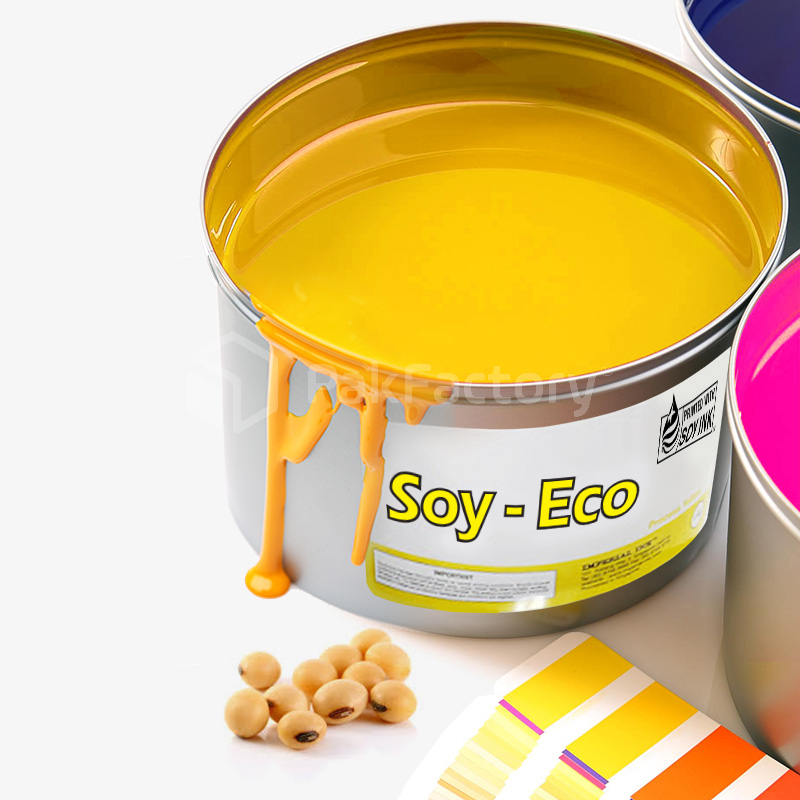
Soy-based inks are environmentally friendly printing inks primarily composed of soy oil, which serves as the main solvent. They contain pigments and resins to guarantee compatibility with conventional printing processes. These inks exhibit lower volatile organic compound (VOC) emissions and biodegradability compared to traditional petroleum-based inks. They are commonly used in offset printing, paper packaging, and eco-friendly applications. Further exploration reveals additional technical details about their production and advantages over conventional inks.
Composition of Soy-Based Ink
Soy-based ink is primarily composed of soy oil, which constitutes at least 20% of its volume, serving as the main solvent in its formulation.
This ink includes pigments such as titanium dioxide and zinc oxides, ensuring compatibility with conventional printing processes. Resins, whether plant-based or synthetic, enhance adhesion and durability.
To improve rub resistance and drying, waxes or paraffins may be incorporated. Remarkably, soy-based inks maintain a low-VOC profile, reducing airborne pollutants.
Incorporating waxes or paraffins enhances rub resistance and drying, while maintaining a low-VOC profile for reduced airborne pollutants.
Their formulation allows for high pigment retention and customizable viscosity, making them suitable for various printing technologies while supporting eco-friendly initiatives.

What is Soy-Based Ink? Definition
Benefits
Environmental Impact of Soy Ink
The environmental impact of soy ink is significant due to its reduced volatile organic compound (VOC) emissions, which are reported to be 80% lower than those of traditional petroleum-based inks, according to data from the EPA in 1994.
Soy-based inks offer recyclability advantages, simplifying the de-inking process during paper recycling and enhancing reprocessing efficiency.
Their degradability promotes waste reduction, being four times more biodegradable than standard petroleum inks.
These characteristics contribute to cleaner air quality in printing facilities and minimize hazardous waste during disposal, making soy-based inks a more environmentally responsible choice for printing applications.
and Applications by epackprinting.com
Production Process of Soy Ink
The production process of soy ink begins with the initial preparation of soybeans, which involves several steps to guarantee quality and efficiency.
Cleaned soybeans undergo flaking, drying, and dehulling to facilitate oil extraction. A solvent extraction method, typically using hexane, separates oil from soybean flakes. The oil is then purified through water washing, alkali neutralization, and centrifugal separation.
Cleaned soybeans are processed through flaking, drying, and dehulling, followed by solvent extraction for oil separation and purification.
Additives, including pigments and resins, enhance the ink’s properties. Final products exhibit low volatile organic compounds and biodegradability, making them suitable for eco-friendly substrate selection.
Soy ink-compatible presses and effective color management for soy inks support its application in various printing processes, including recyclable coatings.
Types and Applications of Soy Ink
Various types of soy ink are formulated to meet specific printing requirements across different applications.
Black and color newspaper inks contain 40% and 30% soy oil, respectively, making them suitable for vibrant newspaper printing.
Cold-set inks with 30% soy oil are ideal for cold-set processes, while sheet-fed inks contain 20% soy oil for sheet-fed applications.
Web heatset inks, containing 7% soy oil, are utilized in web heatset printing.
Soy ink is widely applied in offset printing, paper packaging, and environmental printing, providing a sustainable option for packaging materials and reducing volatile organic compounds in the printing process. Soy-based inks are easier to de-ink than solvent-based inks during recycling, enhancing the recyclability of printed materials.
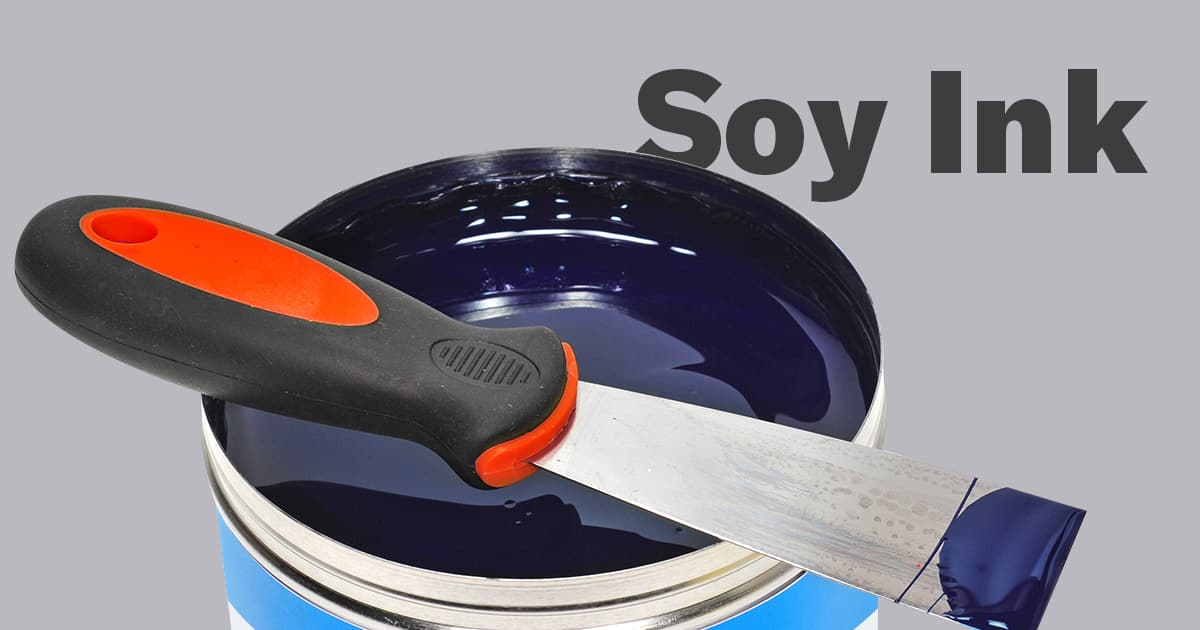
Soy/Vegetable Based Inks by pakfactory.com
Soya Based Ink Printing Leads to Sustainable Results by lynxdesigners.com
Advantages Over Traditional Inks
While traditional inks primarily rely on petroleum, soy-based inks present numerous advantages that enhance both environmental sustainability and print quality.
They support eco-friendly branding initiatives through their renewable resources and lower VOC emissions, which improve health and safety for workers.
Cost efficiency arises from lower ink consumption and faster press cleanup, while waste reduction is achieved through simplified recycling processes and biodegradable packaging options.
Cost efficiency and waste reduction are achieved through reduced ink usage and eco-friendly packaging solutions.
The non-toxic formulation minimizes hazardous waste, ensuring safer disposal and compatibility with food packaging.
These benefits collectively promote a sustainable approach that aligns with the needs of environmentally conscious businesses and consumers.
Popular Wiki Terms:
Future Developments in Soy Ink Technology
Advancements in soy ink technology are poised to redefine the landscape of sustainable printing solutions. Future innovations include enhanced formulations with advanced soybean oil derivatives and higher biobased content, targeting over 90% renewable materials. Eco-friendly inks are projected to reach USD 5.1 billion by 2025, indicating a growing market for sustainable alternatives.
Digital printing compatibility will improve, enabling high-resolution outputs while maintaining moisture barrier properties essential for food-grade applications. Color calibration tools specific to soy-based pigments will guarantee accurate color reproduction, fostering successful sustainable product launches. Regulatory collaborations will standardize soy ink formulations, promoting industry-wide adoption and compliance with environmental regulations. Collectively, these developments will further integrate soy inks into mainstream printing processes, supporting sustainability initiatives.
References & Data Sources:
https://www.epackprinting.com/support/what-is-soy-based-ink/ – Retrieved April 30, 2025
https://www.ecoenclose.com/blog/what-is-the-most-sustainable-ink/ – Retrieved May 2, 2024
https://pakfactory.com/soy-vegetable-based-inks.html – Retrieved February 2, 2025
https://lynxdesigners.com/blog/how-printing-with-soy-ink-benefits-the-environment/ – Retrieved April 25, 2025
https://www.futuremarketinsights.com/reports/eco-friendly-inks-market – Retrieved May 2, 2025