
Process Colors Definition
Process colors refer to the four-color printing technique utilizing Cyan, Magenta, Yellow, and Black (CMYK) to achieve a diverse spectrum of colors in printed materials. This subtractive color model allows for precise color separations, essential for high-quality prints in commercial applications like magazines and packaging. While process colors offer cost efficiency and vibrant results, they also have limitations, such as challenges in reproducing certain hues. Further exploration reveals more about their technical applications and implications.

Quick Summary
- Process colors refer to the CMYK color model used in printing, consisting of Cyan, Magenta, Yellow, and Black (Key).
- They enable full-color imaging by combining these four inks to produce a wide range of colors.
- Process colors are essential for cost-effective mass production printing, such as in magazines and newspapers.
- Limitations include the inability to create certain solid colors and potential vibrancy loss in 4-color printing.
- Accurate color reproduction relies on effective halftone dot management and regular color calibration for print consistency.
Understanding CMYK and Its Components
Understanding the CMYK color model is essential for effective print production, as it relies on the combination of four primary inks: Cyan, Magenta, Yellow, and Black (K). This model enables CMYK process color separations only, which are critical for achieving consistent color reproduction in printed materials. Each ink is applied separately through distinct plates, ensuring accurate registration. Nevertheless, color shifts in conversion to CMYK can occur, impacting the final output. Utilizing ICC profiles for CMYK output devices helps mitigate these shifts and maintain color fidelity. Understanding these components is fundamental for successful image separation and overall print quality, as the CMYK model is vital for producing high-quality prints and supports a variety of printing services and techniques. Additionally, CMYK printing is best for complex images with more than three distinct colors, making it versatile for various applications. The addition of black ink enhances detail and depth, improving registration accuracy for fine details like text. The 4-color process is instrumental in producing vibrant imagery and simulating intricate details in printed materials. The incorporation of subtractive color model principles allows for a broader range of color mixing and reproduction, further enhancing the capabilities of the CMYK process.
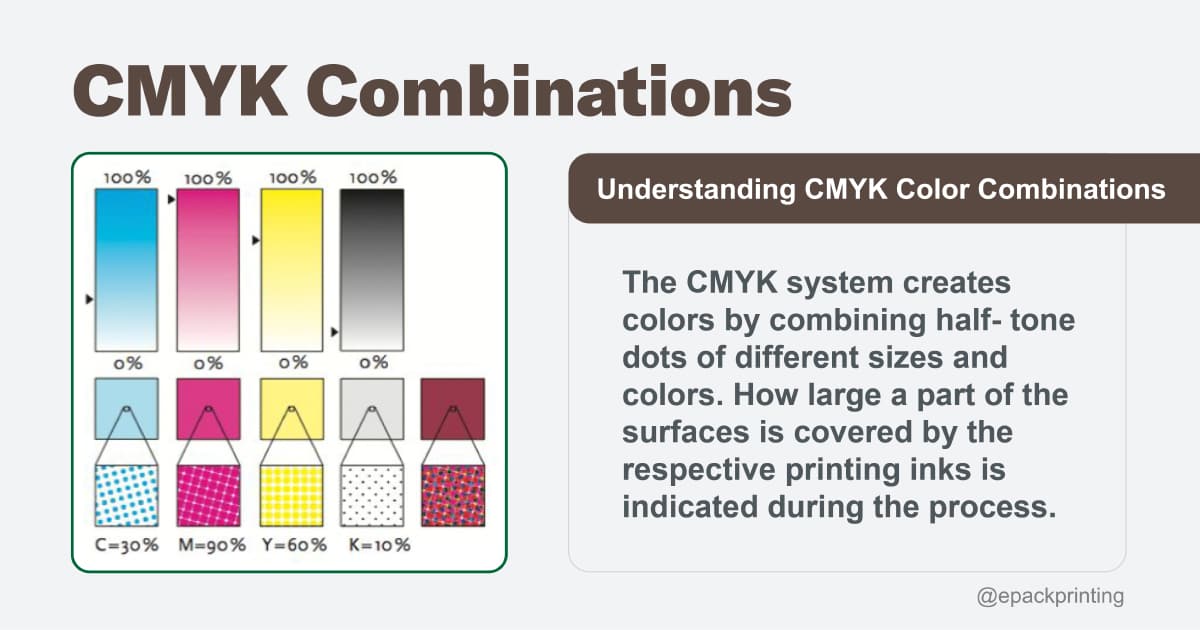
CMYK Printing Guide: Achieve Vibrant and Accurate Colors by epackprinting.com
The Subtractive Color Model Explained
The subtractive color model, which underpins the CMYK process, relies on the interaction of primary colors to create a spectrum of hues. In this model, cyan, magenta, and yellow serve as the primary colors, with each absorbing specific wavelengths of light. Subtractive color mixing is essential for color printing, as it predicts the spectral power distribution after light passes through absorbing media. Effective color separation is vital for achieving accurate reproduction in print. Ink management practices must guarantee that specific ink density levels are maintained, preventing color shifts. Total ink coverage limits are critical to avoid issues such as bleeding or saturation. Understanding these principles allows for greater consistency and quality in printed materials, as subtractive color theory provides the foundation for how colors interact when pigments are mixed. This model contrasts with the RGB color model, which is primarily used for digital displays and requires a different approach to color blending. The use of CMYK color mode in printing ensures that the final output aligns closely with the original design intent. Also, maintaining ink density is crucial for achieving vibrant and true-to-design colors in the printing process.
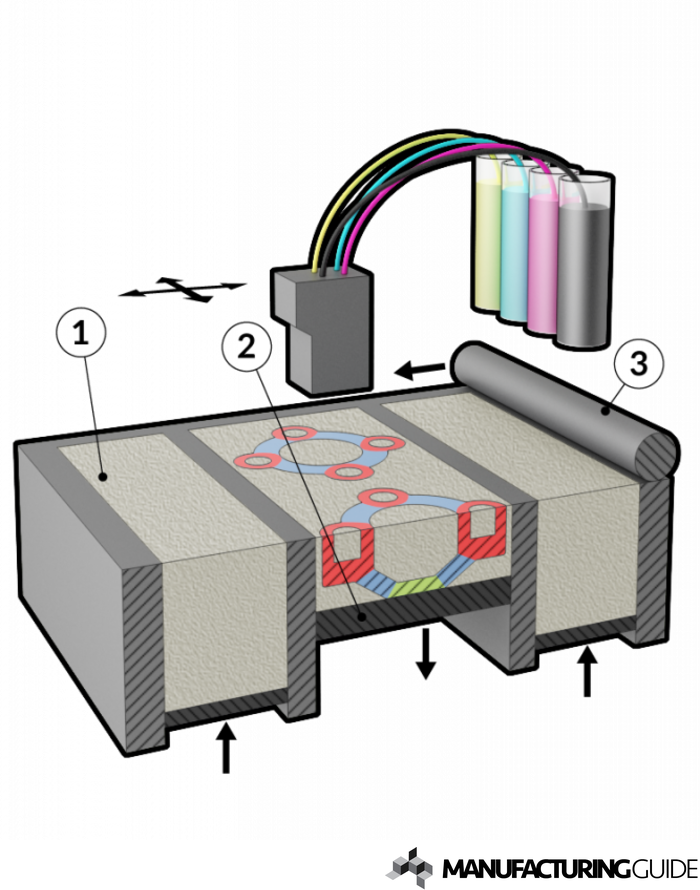
Color Jet Printing

Color correction using a set of reference colors for ... by researchgate.net
Key Applications of Process Colors
Process colors play an essential role in various applications across the printing industry. They are integral to full-color imaging, enabling the reproduction of nuanced hues in photography and complex graphics. Publications such as magazines and brochures utilize CMYK for vibrant advertisements and full-color spreads. In mass production printing, process colors offer cost efficiency, particularly for newspapers and bulk marketing materials. Additionally, setting up documents for CMYK is advisable to ensure optimal results in product packaging, which also benefits from CMYK’s affordability, supporting multiple colors in design. Also, digital displays, including billboards, rely on process colors to maintain consistent color fidelity, ensuring effective communication in visual media across diverse platforms. The limitations of CMYK inks can sometimes affect color matching for specific designs, which is why understanding their capabilities is crucial. Notably, the CMYK model uses a blend of inks to achieve a wide range of colors, making it a versatile choice for many printing applications. Offset printing techniques enhance the quality of process colors, ensuring high fidelity in the final output. The evolution of inkjet technology has further improved the precision and vibrancy of process colors in various printing applications.
Limitations of Process Color Printing
While widely utilized in various printing applications, limitations exist within process color printing that can affect the final output. A primary constraint is the inability to produce certain solid colors, such as metallics or specific brand hues, without additional processes. The 4-color printing process, which incorporates CMYK colors, may not fully address the vibrancy loss seen in graphic elements. Overprint settings errors can lead to unpredictable tonal shifts, complicating color consistency. Process colors cannot reproduce every color accurately, highlighting the importance of understanding these limitations. Also, the use of spot color printing ensures consistency for specific designs, which can be a significant advantage compared to process colors. The Pantone Matching System serves as a reliable reference for achieving precise color reproduction. Notably, spot colors can achieve special effects that are impossible with standard process colors. Dot gain compensation is essential to mitigate discrepancies in color accuracy, particularly when using different paper types. Ultimately, these factors necessitate careful planning and consideration in the design and printing processes, especially in pdf/x formats.
Popular Wiki Terms:
The Role of Halftone Dots in Color Perception
Halftone dots play a vital role in color perception by influencing how colors are mixed and perceived in printed materials. Utilizing techniques like autotypical mixing, halftone dots enhance color gamut, particularly in light tones. The interaction of cyan and yellow, for instance, creates more saturated hues. Dot placement sensitivity is imperative, as misalignment can diminish color vibrancy. Different dot shapes—round, elliptical, and square—affect print quality. Halftone is utilized in color printing through the CMYK color model, which allows for a wider range of color combinations. Programs like Adobe InDesign and file formats such as EPS support precise halftone management. Also be aware that understanding the concept of DPI (Dots Per Inch) is essential for achieving accurate color reproduction in process color printing. Regular color calibration is crucial for maintaining the integrity of halftone dot output across various devices. Eventually, understanding halftone dots is essential for achieving accurate color reproduction in process color printing.
References & Data Sources:
https://aispa.us/blog/what-does-cmyk-stand-for/ – Retrieved April 6, 2025
https://www.primelinepackaging.com/blog/cmyk-spot-color/ – Retrieved April 8, 2024
https://en.wikipedia.org/wiki/CMYK_color_model – Retrieved January 8, 2025
https://224664-286886.apps-06.cloudsonic.dev/term/4-color-process/ – Retrieved April 1, 2025
https://224664-286886.apps-06.cloudsonic.dev/term/cmyk-cyan-magenta-yellow-black/ – Retrieved April 8, 2025
https://www.epackprinting.com/support/understanding-cmyk/ – Retrieved April 8, 2025
https://en.wikipedia.org/wiki/Subtractive_color – Retrieved April 8, 2025
https://study.com/academy/lesson/subtractive-color-theory-definition-system.html – Retrieved April 8, 2025
https://arounda.agency/blog/additive-vs-subtractive-color-a-complete-guide – Retrieved April 8, 2025
https://224664-286886.apps-06.cloudsonic.dev/term/cmyk-color-mode/ – Retrieved April 7, 2025
https://224664-286886.apps-06.cloudsonic.dev/term/ink-density/ – Retrieved April 7, 2025
https://www.researchgate.net/figure/Color-correction-using-a-set-of-reference-colors-for-interoperability-in-different_fig4_358164141 – Retrieved April 7, 2025
https://blog.printablesacademy.com/spot-colors-vs-process-colors-graphic-design/ – Retrieved April 7, 2025
https://www.adobe.com/creativecloud/design/discover/spot-vs-process-color.html – Retrieved April 7, 2025
https://www.bigdropinc.com/blog/unlocking-the-science-of-colors-a-guide-to-rgb-cmyk-and-pms/ – Retrieved April 7, 2025
https://224664-286886.apps-06.cloudsonic.dev/term/offset-printing/ – Retrieved April 7, 2025
https://224664-286886.apps-06.cloudsonic.dev/term/inkjet/ – Retrieved April 7, 2025
https://www.bindersinc.com/resources/4-color-process – Retrieved April 7, 2025
https://www.mondaymerch.com/resources/print-ready-files/process-colors-print-ready-files-explained – Retrieved April 7, 2025
https://packoi.com/blog/spot-color-printing-vs-cmyk-printing/ – Retrieved April 7, 2025
https://224664-286886.apps-06.cloudsonic.dev/term/pantone/ – Retrieved April 7, 2025
https://224664-286886.apps-06.cloudsonic.dev/term/spot-colors/ – Retrieved April 7, 2025
https://224664-286886.apps-06.cloudsonic.dev/term/dpi-dots-per-inch/ – Retrieved April 7, 2025
https://224664-286886.apps-06.cloudsonic.dev/term/color-calibration/ – Retrieved April 7, 2025