
PMS (Pantone Matching System) Definition
The Pantone Matching System (PMS) is a standardized color matching system developed for accurate color reproduction across various industries, particularly in printing and design. It was first introduced in 1963 and has become integral for maintaining color consistency. PMS utilizes a universal numbering system to standardize over 1,867 colors, facilitating brand identity and product accuracy. It is widely utilized in graphic design, packaging, and fashion industries. Further insights into its applications can deepen one’s understanding of its significance.
History of the Pantone Matching System
The Pantone Matching System (PMS) emerged in 1963 as a groundbreaking solution for color standardization in printing and design.
Lawrence Herbert purchased Pantone’s technology to address color matching challenges in various industries. The first Pantone Color Specifier, launched in 1964, allowed designers to select precise hues, fostering brand consistency across print materials. As digital printing evolved, Pantone adapted by digitizing its guides, integrating software compatibility, and expanding applications to textiles and industrial design. The Pantone formula guide remains essential for achieving accurate color representation, promoting uniformity in branding and design. This historical development has greatly influenced contemporary visual communication practices, particularly through the introduction of the Pantone Color Matching System in 1963. Additionally, over 10 million designers and producers globally rely on Pantone products and services to ensure consistent color quality. This commitment to color standards ensures that brand color critical for identity is maintained, increasing recognition by up to 87%.
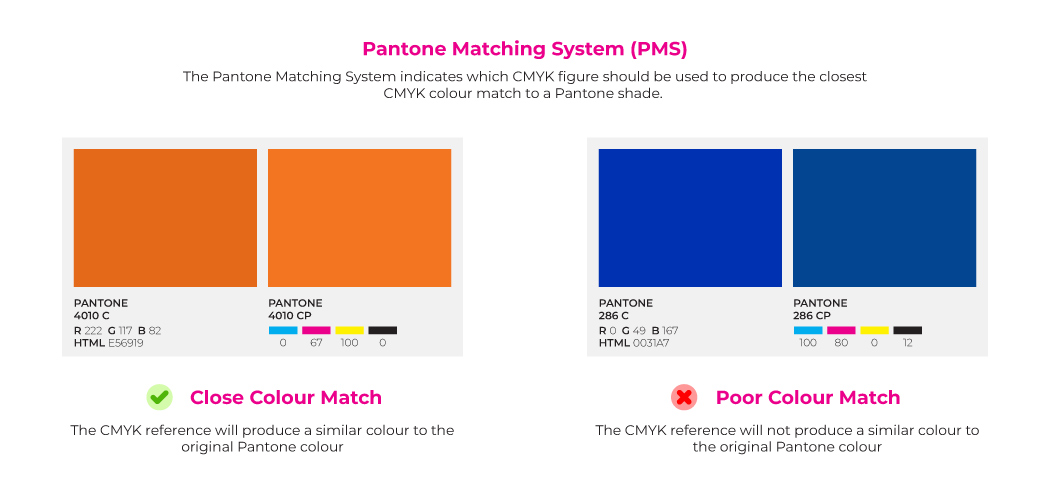
Colour Matching: What Do You Need To Know by aura-print.com
PMS / Spot-Color Printed Folders - FREE SAMPLE by companyfolders.com
Product Design and Swatch Guides
Product design relies heavily on accurate color representation, and the Pantone Matching System (PMS) plays a pivotal role in achieving this goal. PMS guarantees color consistency across various materials and manufacturing processes, critical for maintaining brand identity.
Swatch guides serve as essential tools, providing accurate color references that help designers select precise hues. These physical samples also accommodate different finishes, guaranteeing color accuracy in final products.
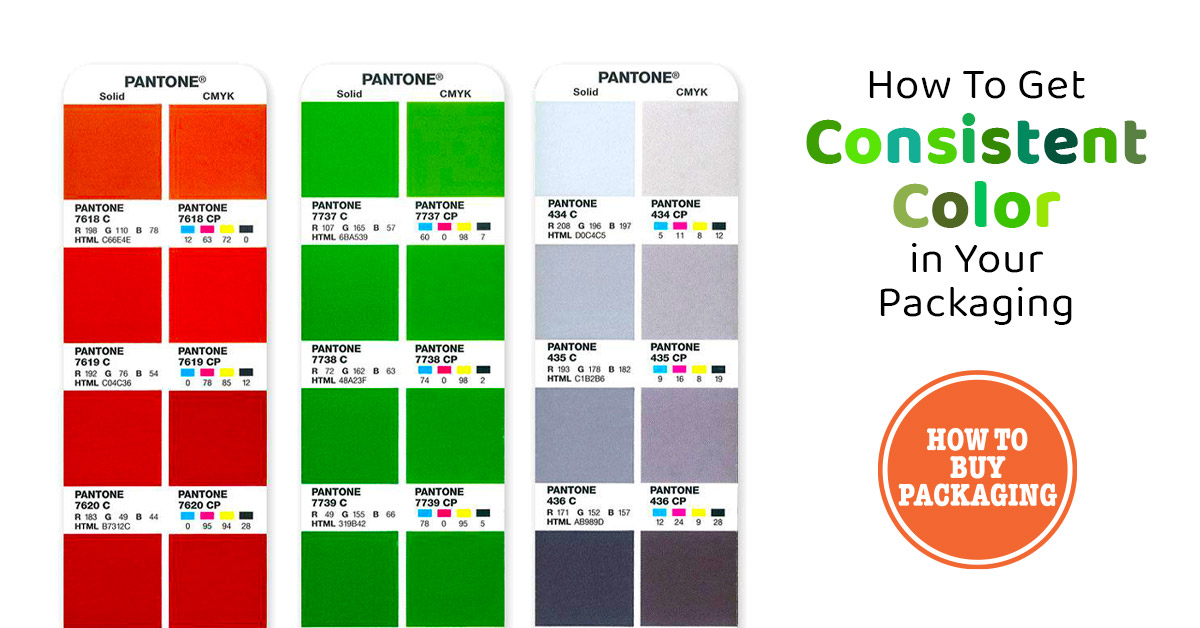
How to Get Consistent Color In Packaging by howtobuypackaging.com
Technical Operation and Color Formulation
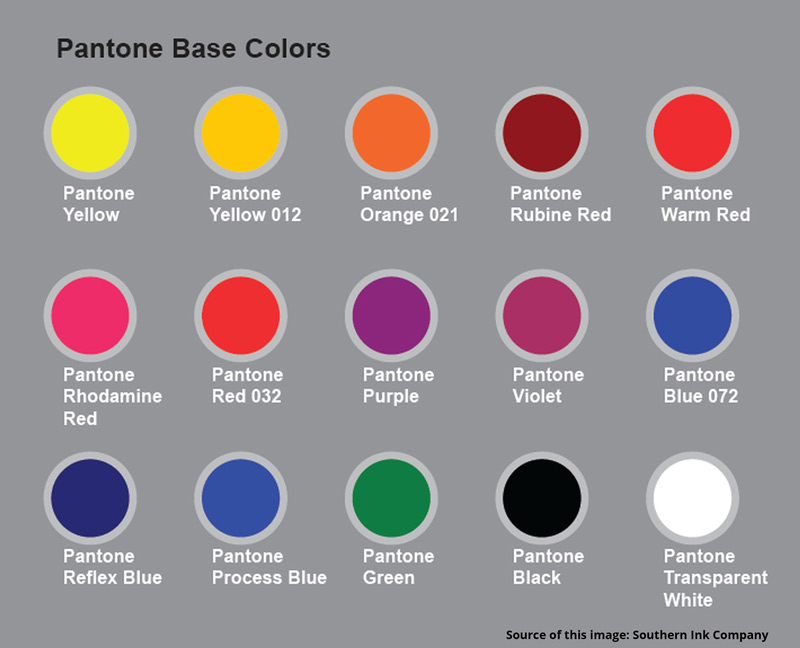
Accurate technical operation and color formulation are essential components of the Pantone Matching System (PMS). The system employs a base ink composition utilizing 14 pigment inks, enabling the creation of over 1,867 standardized colors.
Each PMS color features a unique formula specification, detailing precise ink percentages necessary for replication. Color standardization is achieved through a universal numbering system, ensuring consistency across various materials.
Compatibility considerations are vital, as PMS formulations differ from CMYK and RGB systems. Physical samples are required for verification, particularly when using specialty inks, ensuring accurate color reproduction across different manufacturers and substrates.
Industry Impact and Applications
Color formulation and technical operation within the Pantone Matching System (PMS) have significant implications across various industries.
PMS guarantees color accuracy, facilitating spot color printing that meets design standards in graphic design, packaging, and branding. It promotes brand consistency by providing a universal color language, which is essential for product launches and marketing campaigns.
The packaging industry benefits from uniform colors, enhancing brand recognition and visual impact. Industries such as fashion and cosmetics utilize PMS to maintain cohesive color schemes across products, contributing to a unified aesthetic.
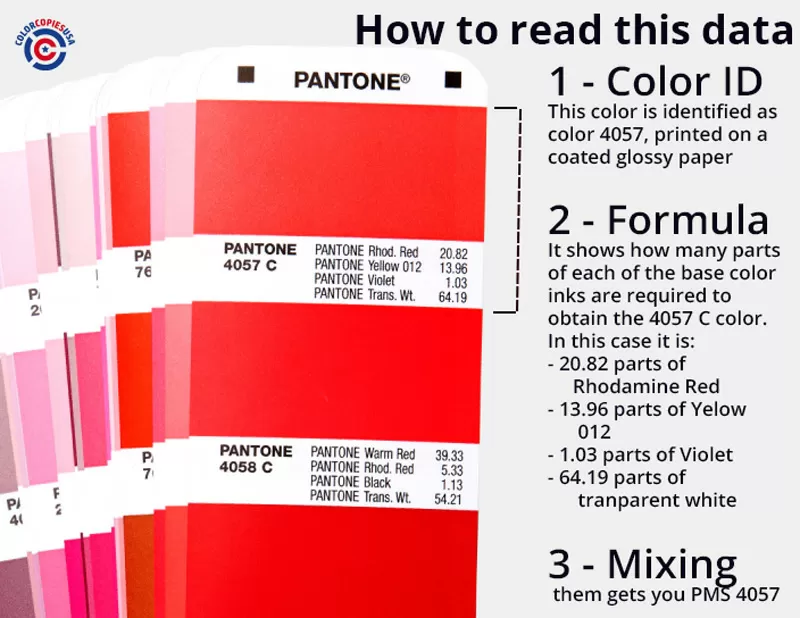
Pantone Matching System Color Chart by colorcopiesusa.com
Pantone Matching System Color Chart by colorcopiesusa.com
Popular Wiki Terms:
Digital Implementation and Modern Usage
As businesses increasingly embrace digital platforms for branding and marketing, the implementation of the Pantone Matching System (PMS) has evolved to address the unique challenges of digital environments.
Digital color tools, such as the Pantone color match card, enhance color accuracy by allowing real-world color matching.
Nevertheless, achieving color consistency remains a challenge due to variations in digital displays.
Digital printing challenges arise when reproducing Pantone colors on digital presses, often leading to discrepancies during conversion to RGB or HEX.
Integration of Pantone libraries into design software aids in maintaining precision across various platforms, supporting cohesive brand identities.
References & Data Sources:
https://en.wikipedia.org/wiki/Pantone – Retrieved April 30, 2025
https://www.pantone.com/about-pantone – Retrieved May 2, 2024
https://www.pantone.com/color-systems/pantone-color-systems-explained – Retrieved February 2, 2025
https://aura-print.com/uk/blog/post/colour-matching-what-do-you-need-to-know – Retrieved April 25, 2025
https://www.companyfolders.com/spot-color-printed-two-pocket-presentation-folder – Retrieved May 2, 2025
https://www.howtobuypackaging.com/how-to-get-consistent-color-in-packaging/ – Retrieved May 2, 2025
https://www.colorcopiesusa.com/what-is-pantone-matching-system-and-how-to-use-it.html – Retrieved May 2, 2025