
Photo Paper Definition
Photo paper is a specialized medium formulated for high-quality photographic printing. It consists of cellulose fibers and a receiving layer that optimizes ink interaction while preventing bleeding. The surface coatings vary, including glossy, matte, and metallic finishes, which enhance color vibrancy and texture. Key performance metrics include paper weight, UV coating, and D-Max, essential for print durability and fade resistance. For a thorough understanding of photo paper types and their applications, further details can be explored.
Definition and Basic Composition
Photo paper is a specialized substrate engineered for photographic printing, designed to effectively absorb and hold ink while producing sharp details and vibrant colors.
Its basic composition often includes a base layer of cellulose fibers, which provides texture and durability. A receiving layer, typically made of resin-coated paper, enhances ink interaction by retaining ink droplets. This multi-layer construction prevents ink bleeding, ensuring clarity in prints. Glossy finishes, characterized by high reflectivity, are common, contributing to the vibrancy of the final image. Fine art paper is composed of natural fibres, usually cotton or alpha cellulose, which ensures longevity of printed photos. The choice of photo paper significantly impacts overall print quality, particularly because inkjet technology achieves high-quality photographs. Protective coatings may also be applied to enhance durability and resistance to environmental factors, thereby prolonging print life.

Photography tips for your small business by printed.com
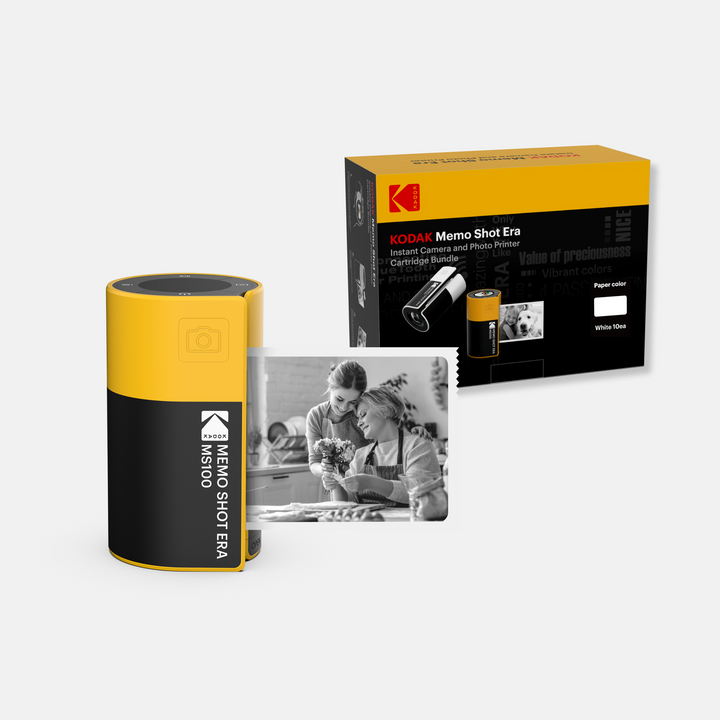
KODAK MemoShot Era MS100 Bundle – Kodak Photo Printer Europe by kodakphotoprinter.eu
Key Characteristics
Key characteristics of photo paper encompass various attributes that greatly influence print quality and suitability for specific applications. Particularly, the presence of polyethylene layers enhances durability and water resistance. The thickness and weight, measured in grams per square meter (gsm), affect the paper’s rigidity and professional feel. Types of photo paper include options such as glossy, matte, and semi-gloss, which cater to different aesthetic preferences and uses. Coatings applied to the surface improve ink receptivity and fade resistance, ensuring longevity and vibrancy in prints. Coatings enhance image qualities while surface finishes, such as glossy, matte, and satin, further contribute to the visual appeal, while texture options offer unique tactile experiences. The choice of photo paper types like Lustre, Glossy, and Pearl can significantly impact the final presentation of images. Together, these characteristics determine the ideal use of photo paper in diverse printing contexts.
Red Ryder Official Carbine Action 200 Shot Range Model Air Rifle ... by redbubble.com
Manufacturing Process
The manufacturing process of photo paper involves a series of meticulously controlled stages that guarantee the final product meets high standards of quality and performance.
Initially, a polyethylene resin-coated paper support forms the base, providing moisture resistance. Silver halide crystals suspended in gelatin create a light-sensitive emulsion. This emulsion is applied using slot die coating heads in multiple passes, assuring uniformity. The factory features a significant research machine for coating, which is the largest research machine in Europe, enhancing the production capabilities for high-quality photo paper.
After drying in conditioned air tunnels, the paper is cut into standard sizes. Surface finishing options, such as glossy or matte, enhance aesthetic appeal, while moisture-proof wrapping assures protection. The light-sensitive emulsion is crucial in capturing images during the photographic process.
This process results in photo paper suitable for inkjet printing and high-quality photo prints.
Types and Uses
A variety of photo paper types is available, each designed to meet specific printing needs and aesthetic preferences.
Glossy photo paper offers a shiny surface ideal for high-contrast images. Glossy papers are thick and smooth, producing vibrant colors but may reflect too much light.
Matte photo paper provides a non-glare finish, enhancing texture and reducing reflections.
Lustre photo paper combines gloss with subtle texture, making it popular for portraits.
Metallic photo paper introduces a shimmering effect, adding depth to images. Various types of photo paper are available for both home and business use, ensuring options for every need.
These papers are compatible with inkjet and dye-sublimation printing, catering to various professional and personal applications.
Each type serves distinct purposes, ensuring quality and visual appeal in photographic prints.
Popular Wiki Terms:
Performance Factors
When evaluating photo paper, several performance factors considerably influence print quality and longevity.
Key attributes include paper weight and thickness; heavier satin finishes, ranging from 250-300 gsm, enhance durability and minimize curling. The presence of UV coating improves fade resistance, ensuring vibrant colors for extended periods. Additionally, D-Max measures the maximum black tone achievable by the paper, which is crucial for achieving deep, rich contrasts in prints. Choosing acid-free paper also plays a significant role in preserving prints over time. Also, the choice of matte finishes can enhance detail visibility and reduce glare, making it suitable for various display conditions.
Archival characteristics, such as acid-free and lignin-free compositions, prevent yellowing and degradation over time. Microporous coatings control ink absorption, preserving color fidelity.
Proper printer compatibility is essential to avoid jams, while the choice of finish affects not only aesthetics but also durability against scratches and fingerprints, impacting overall print presentation.
References & Data Sources:
https://www.canson-infinity.com/en/fine-art-paper-and-photo-paper-what-difference – Retrieved April 28, 2025
https://photographylife.com/guide-photographic-photo-paper – Retrieved April 30, 2024
https://www.printed.com/blog/product-photography-tips/ – Retrieved January 30, 2025
https://kodakphotoprinter.eu/products/kodak-memo-shot-era-label-printer-1-8x2-7-bundle-camera-with-1-roll-9-rolls-cartridge-set – Retrieved April 23, 2025
https://www.redrivercatalog.com/infocenter/types-of-photo-paper.html – Retrieved April 30, 2025
https://www.bhphotovideo.com/explora/photography/buying-guide/how-to-choose-the-right-paper-for-photo-prints – Retrieved April 30, 2025
https://www.nationsphotolab.com/blogs/product-news-and-info/how-to-choose-your-paper-type – Retrieved April 30, 2025
https://www.redbubble.com/i/art-print/Red-Ryder-Official-Carbine-Action-200-Shot-Range-Model-Air-Rifle-Christmas-Story-by-alhern67/93778871.1G4ZT – Retrieved April 30, 2025
https://en.wikipedia.org/wiki/Photographic_paper – Retrieved April 30, 2025
https://www.katebackdrop.com/blogs/cameras-and-equipment/photo-paper-guide – Retrieved April 29, 2025
https://www.compandsave.com/paper – Retrieved April 29, 2025
https://kodak.globalbmg.com/en/5-factors-to-consider-when-choosing-the-right-photo-paper – Retrieved April 29, 2025
https://vmscart.com/blogs/news/7-essential-tips-for-choosing-the-perfect-photo-paper-for-your-prints – Retrieved April 29, 2025
https://www.redrivercatalog.com/infocenter/glossy-vs-matte-photo-paper-for-printing.html – Retrieved April 29, 2025