
Offset vs Large Format Definition
Offset printing transfers ink from a plate to a rubber blanket and then to a substrate, optimizing for high-volume outputs with exceptional detail. It is cost-effective for large runs exceeding 2,000 units. Conversely, large format printing utilizes inkjet technology for images over 36 inches with vibrant colors suited for banners and posters. Each method has unique applications, advantages, and efficiencies based on project scale. Further exploration of their specifications and uses reveals deeper insights.
Understanding Offset Printing
Offset printing is a widely utilized technique that operates on the principle of transferring an inked image from a plate to a rubber blanket, which subsequently applies the image to the substrate. This process integrates lithography, leveraging oil and water repulsion to create precise images. It is particularly efficient for large volume prints, such as newspapers and magazines, where the initial setup costs are offset by lower per-unit prices at higher quantities. The result is high-quality images that meet professional standards, making offset printing a cost-effective solution for organizations aiming to produce consistent and visually appealing printed materials. Modern computer-to-plate systems enhance quality and streamline the prepress production process. With advancements in prepress processes, the efficiency and speed of offset printing continue to improve. Offset printing excels for large print orders, allowing businesses to achieve significant savings on larger quantities.
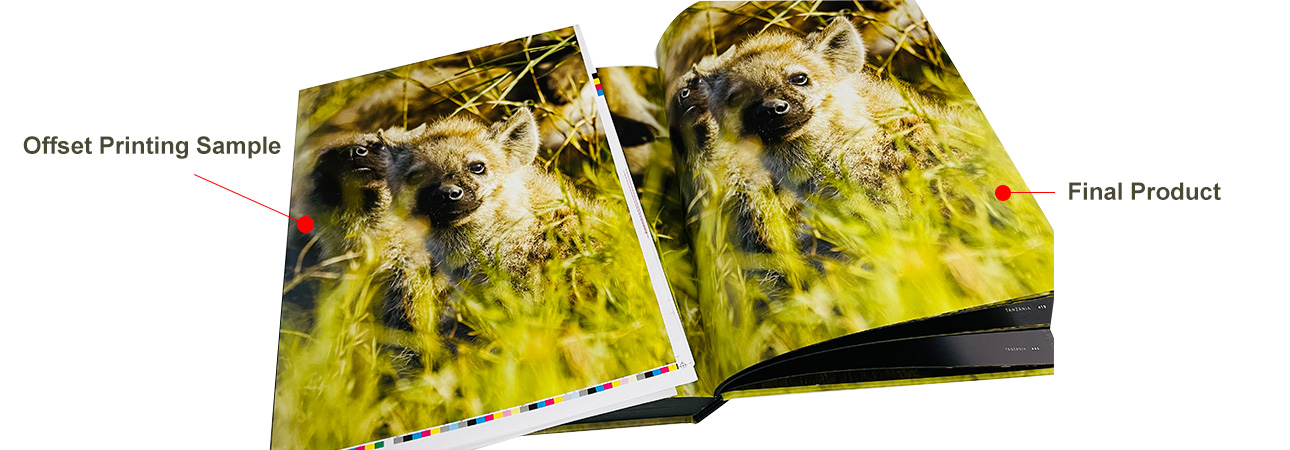
Offset Printing Sample by qinprinting.com
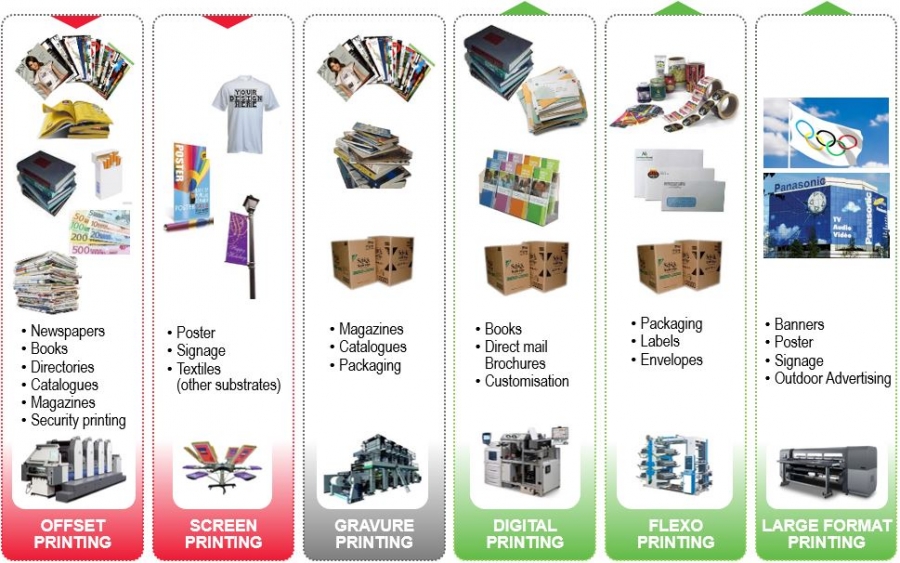
Techniques and Products by intergraf.eu
Exploring Large Format Printing
Large format printing encompasses the production of printed materials that exceed standard dimensions, typically surpassing 36 inches in width or height. This method employs inkjet technology, allowing for vibrant colors and high-resolution outputs. Common applications include posters and banners, which serve as effective marketing tools in various commercial settings. Large format printing offers versatility in materials, accommodating options such as paper, fabric, and rigid substrates. It involves the use of large format printing machines to ensure precise definition and clarity in the final product. The process also maintains quality through specialized techniques that ensure consistency across larger prints. Quality control measures are essential to maintain consistency and guarantee that prints meet high standards, regardless of size. The visual impact of large format prints enhances advertising efforts, particularly in trade shows and events.
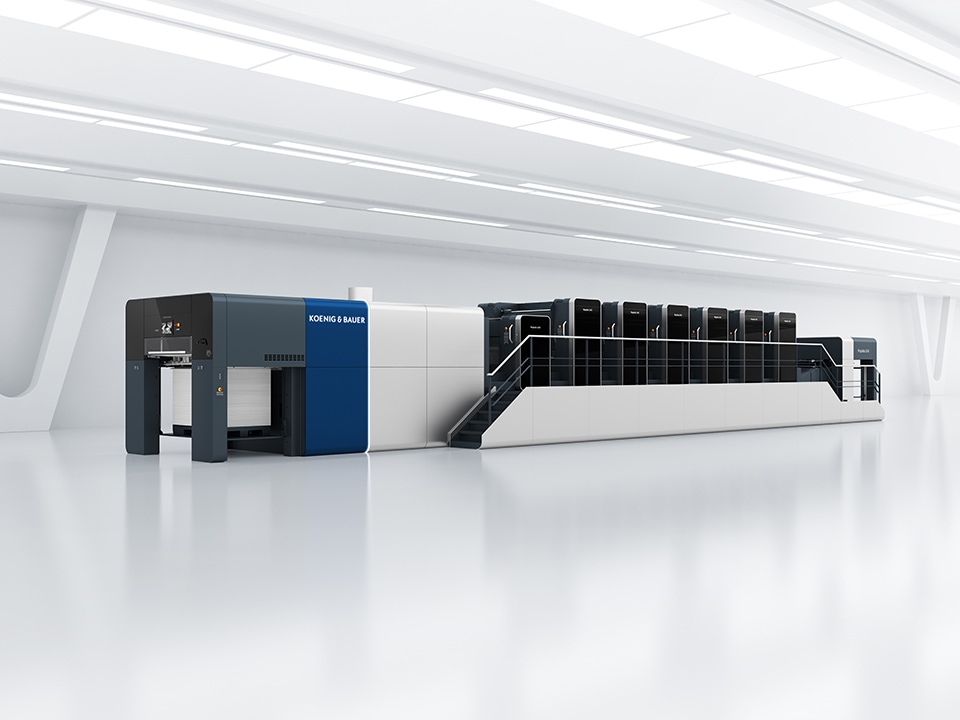
Koenig & Bauer: Rapida 145 & Rapida 164 by koenig-bauer.com
Cost and Efficiency Comparison
In comparing the cost and efficiency of printing methods, distinct advantages emerge for each process.
Offset printing is typically more cost-effective for large print runs, especially when quantities exceed 2,000 units, benefiting from economies of scale. Additionally, offset printing produces lower waste during setup compared to other methods, making it an even more appealing option for large projects.
Nevertheless, digital printing remains advantageous for short runs, maintaining a consistent cost per unit regardless of quantity.
An efficiency comparison reveals that offset printing achieves higher production speeds and consistent quality across bulk orders, while digital printing offers rapid turnaround times and flexibility for immediate needs.
Consequently, the choice between these methods hinges on the project’s scale and urgency.
Technical Specifications and Capabilities
When comparing technical specifications and capabilities, distinct differences between offset and large format printing become apparent.
Offset printing excels in substrate compatibility, handling a range of paper types from 20 to 400 gsm. It offers high speed and throughput, producing over 80,000 sheets per hour with exceptional detail and resolution, achieving 200–300 lpi for fine halftones. This method is known for its high-quality output, making it a preferred choice for mass production. Its ability to produce sharp, high-quality images contributes to its dominance in professional applications.
Conversely, large format printing accommodates rigid substrates up to 2 inches thick but is limited in speed, typically printing 1,000+ sq ft/hour. Its resolution caps at approximately 1440 dpi, facing challenges such as variable dot gain and maintenance of printheads.

Magazine Printing - Print Magazines - Make Your Own Custom ... by mixam.com

A Practical Guide to Digital and Hard Proofs and Samples for ... by qinprinting.com
Popular Wiki Terms:
Applications Across Industries
Applications of offset and large format printing serve distinct purposes across various industries, leveraging their unique capabilities to meet specific needs.
Offset printing excels in producing brochures and corporate branding materials, ensuring color consistency through meticulous color proofing. It is particularly effective for high-volume runs, making it ideal for catalogs and newsletters. Tailor-made solutions provided for each business enhance the effectiveness of these printed materials.
Conversely, large format printing plays an essential role in event promotion and retail advertising, creating impactful signage, banners, and displays. This method allows for quick turnarounds, accommodating urgent requirements.
Both printing techniques cater to diverse sectors, including publishing, marketing, and public health, enhancing communication and branding efforts.
References & Data Sources:
https://en.wikipedia.org/wiki/Offset_printing – Retrieved April 30, 2025
https://ordant.com/what-is-offset-printing/ – Retrieved May 2, 2024
https://meyers.com/meyers-blog/how-does-offset-printing-work-an-in-depth-guide/ – Retrieved February 2, 2025
https://www.qinprinting.com/offset-printing-sample/ – Retrieved April 25, 2025
https://www.intergraf.eu/about-us/item/153-techniques-and-products – Retrieved May 2, 2025
https://www.citypressinc.com/post/what-is-large-format-printing – Retrieved May 2, 2025
https://www.professionalgraph.com/what-is-large-format-printing-and-how-does-it-work/ – Retrieved May 2, 2025
https://www.koenig-bauer.com/en/products/p/rapida-145-rapida-164 – Retrieved May 2, 2025
https://platongraphics.com/a-comparison-of-large-format-printing-methods-digital-vs-screen-vs-offset/ – Retrieved May 2, 2025
https://pakfactory.com/blog/what-is-offset-printing/ – Retrieved May 1, 2025
https://www.vslprint.com/printing-nyc/offset/how-does-offset-printing-work-a-complete-guide/ – Retrieved May 1, 2025
https://mixam.com/magazines – Retrieved May 1, 2025
https://www.qinprinting.com/proofs-and-samples/ – Retrieved May 1, 2025
https://kelleyconnect.com/make-the-most-out-of-your-digital-printing/ – Retrieved May 1, 2025