
Invitations Definition
Invitations are formal requests for participation in events, conveying essential details such as time, location, and purpose. They facilitate attendance and engagement by providing necessary information for potential guests. Formal invitations adhere to specific structural conventions and often utilize traditional formatting and design elements. Conversely, informal invitations prioritize personalization and reflect a more casual rapport between sender and recipient. Understanding the distinctions between these types can enhance their effectiveness in various event contexts. Further details are available in the accompanying material.
Definition and Purpose of Invitations
Invitations serve as formal requests for participation in various events or activities, functioning as a structured form of communication that provides crucial details such as the event’s time, location, and purpose. Their core purpose includes ensuring event awareness, reinforcing formality, and managing attendance. For event planners, these invitations play a significant role in estimating guest numbers and resources. Wedding invitations exemplify the need for clarity and commitment, while corporate event invites facilitate professional engagement. This versatile format can be delivered physically, digitally, or verbally, making it an important component of effective event planning and communication strategies. Additionally, invitation trends reflect changes in social practices and communication, showcasing their evolving relevance. Digital invitations are increasingly popular due to their convenience and ability to reach a wider audience quickly. Invitations can also serve as formal requests for specific actions or behaviors, highlighting their multifaceted nature.
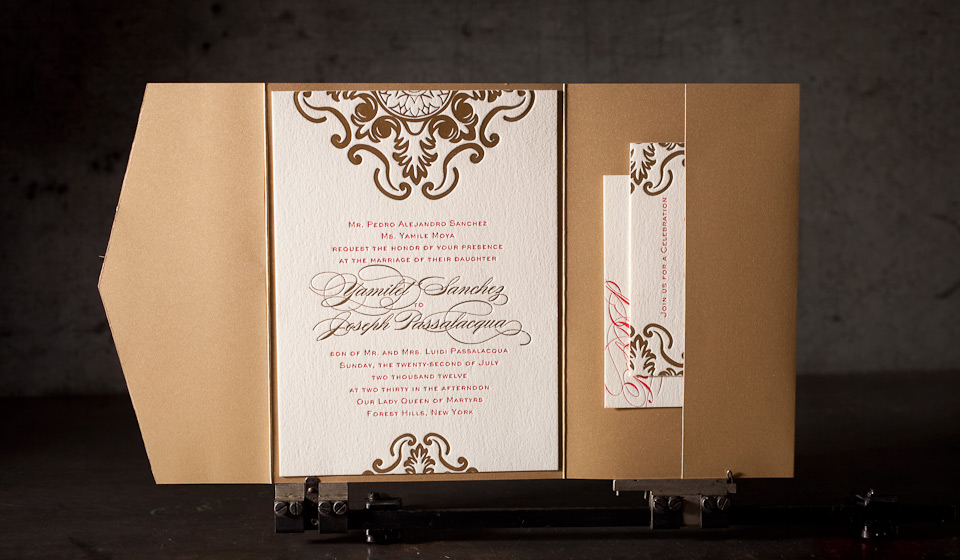
foil stamped wedding invitation
no. 12371 by boxcarpress.com
Characteristics of Formal Invitations
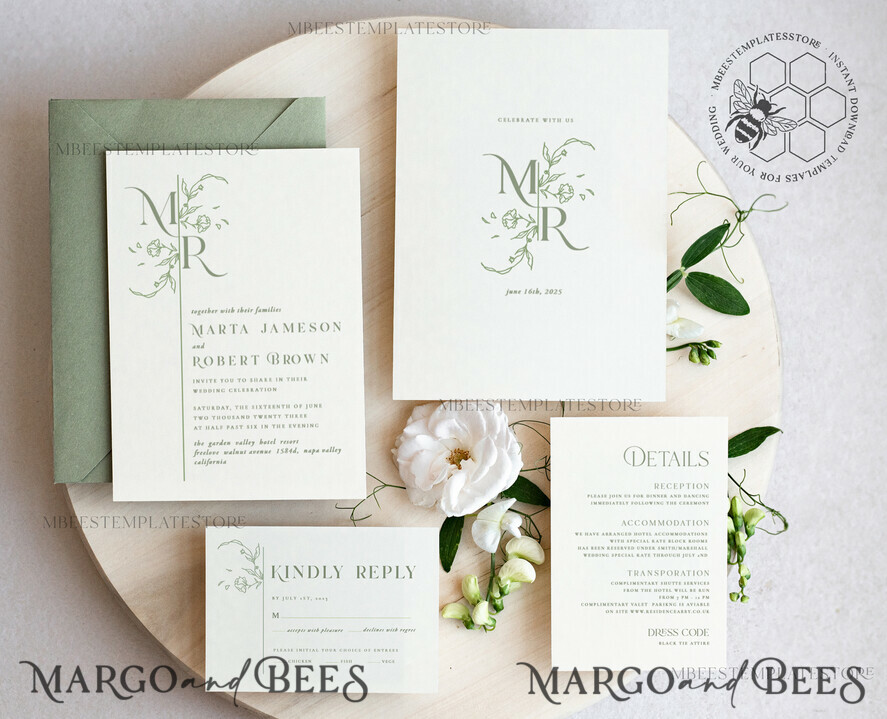
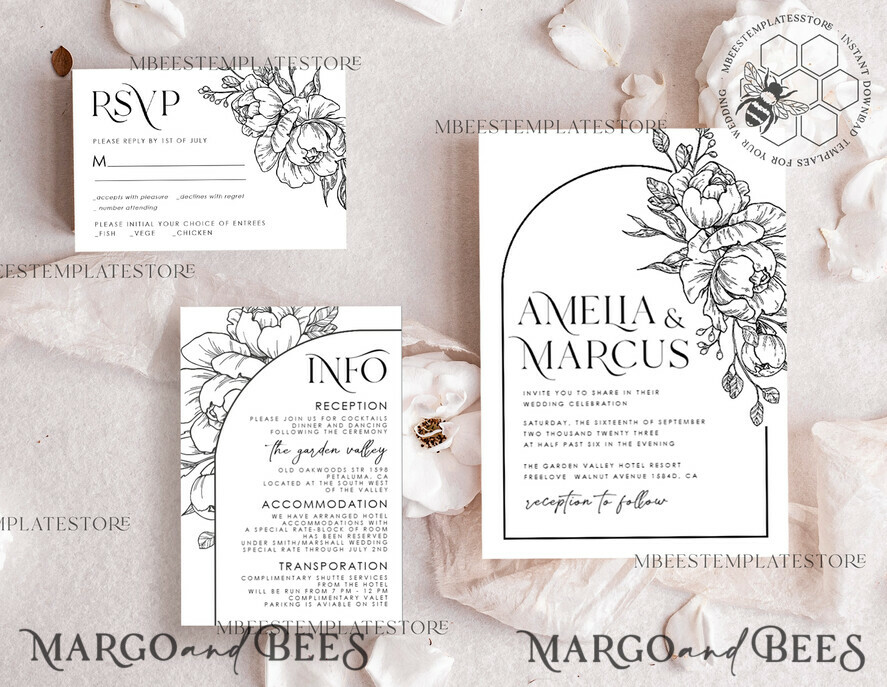
Formal invitations are characterized by a traditional structure and specific wording standards that emphasize respect and clarity. They typically utilize formal titles and full names, presented in a line-by-line format detailing the host, event type, date, time, and venue. Wording is formal, often employing passive voice and third-person phrasing. Invitations feature heavyweight cardstock, with options for digital printing, letterpress, or foil stamping to enhance tactile quality. Consistent typography in classic serif fonts and custom monograms may be included. Enclosures for response cards or additional details are standard, ensuring thorough communication with guests while maintaining elegance and formality. In addition, invitation wording etiquette should be carefully followed to ensure that all details are presented accurately and respectfully. Also, attire guidance can be included to help guests dress appropriately for the occasion. Additionally, clarity in the invitation is crucial to minimize confusion regarding event details.
ORDER SAMPLES (For Invitations Only) by claritynco.com
Features of Informal Invitations
Informal invitations serve as a means of communication for personal gatherings among close acquaintances, family, and friends. They prioritize personalization, often reflecting the rapport between the sender and recipient. These invitations typically follow informal letter conventions, omitting rigid templates and formal titles. Content includes essential event specifics and may feature casual design elements, such as handwritten notes. Informal invitations can be sent through e-mail or online platforms, making them easily accessible for most recipients. Informal invitations may be designed to convey respect and importance for the occasion, even if they lack the formal structure of traditional invitations. Key parts of invitations include sender, address, date, body, and invitee, which help to communicate necessary details effectively. Wedding coordinators and corporate marketing departments may utilize offset printing for creating gala announcements, ensuring clarity and visual appeal. Informal invitations allow flexibility in delivery methods and encourage recipient input, enhancing the personal connection and fostering engagement among attendees.
Language and Style Differences
Language and style differences play a significant role in the effectiveness of invitations, impacting both the tone and the recipient’s perception of the event.
Formal invitations, often used by luxury brands and event management firms, employ a third-person perspective, complete names, and passive voice, enhancing respect and formality. Formal invitations typically use traditional wording that sets the tone for the event and indicates its level of sophistication. The use of appropriate context is crucial for ensuring that the invitation matches the formality of the occasion. Also, the ability to switch between language styles allows the host to tailor the invitation to the audience’s expectations.
Conversely, informal invitations adopt a first-person approach, using casual phrasing and abbreviations.
The hospitality industry frequently utilizes the four-color process in printing to create visually appealing materials that resonate with target audiences.
Understanding these distinctions is essential for crafting invitations that align with the intended message and audience expectations.
Floral Sage Green Monogram wedding Invitations Set Template ... by margoandbees.com
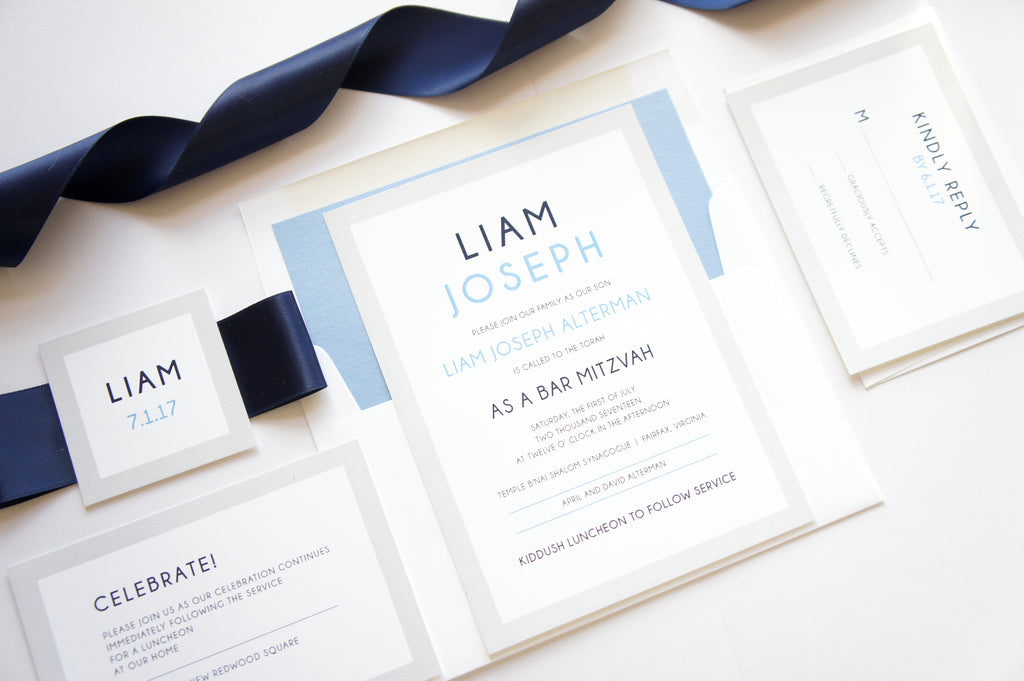
Blue Bar Mitzvah Invitation
Formatting Guidelines for Invitations
Effective formatting is essential for crafting invitations that convey the intended message clearly and professionally. Invitations should list host names prominently, using full legal names and appropriate titles. Event details must be specified completely, including day, date, time, and location. Consistency in formatting is vital, avoiding abbreviations and guaranteeing uniformity across all elements. For production, vector file preparation and die-cutting templates are necessary for high-quality results. Utilizing the four-color process enhances visual appeal. A standard lead time of 5-7 business days is typical for delivery. Attention to these guidelines guarantees invitations meet expectations and maintain formal integrity. It is crucial to include an RSVP request to ensure timely communication from guests regarding their attendance. Following these formal invitation guidelines not only enhances clarity but also elevates the overall presentation of the event.
Popular Wiki Terms:
Occasion-Based Applications of Invitations
Invitations serve an essential role across various occasions, providing a structured means of communication tailored to specific events. Happy hours, game nights, and grand openings exemplify social and business applications. Each event requires distinct designs, often utilizing the four-color process and spot color printing to create visually appealing invitations. Digital printers, such as HP Indigo, enable quick production, accommodating rush orders. Finishing techniques like embossing and debossing enhance tactile quality, making invitations memorable. Also, invitations for milestones, fundraisers, and seasonal gatherings guarantee essential details are communicated effectively, fostering engagement and attendance across diverse settings. To boost response rates, it’s important to send invitations early in the week, as recipients are more mentally fresh and energized during that time. Additionally, formal events like weddings and award ceremonies require elegant designs to reflect the significance of the occasion. Effective invitations are key to securing enthusiastic registrations and ensuring event success.
References & Data Sources:
https://www.collinsdictionary.com/us/dictionary/english/invitation – Retrieved April 29, 2025
https://www.template.net/graphic-design/design-invitations/ – Retrieved May 1, 2024
https://dictionary.cambridge.org/us/dictionary/english/invitation – Retrieved February 1, 2025
https://www.boxcarpress.com/letterpress-printing/foil-stamped-wedding-invitation-12371/ – Retrieved April 24, 2025
https://www.soireesignatures.com/invitation-wording-etiquette – Retrieved May 1, 2025
https://www.theaerialistpress.com/etiquette/invitation-etiquette – Retrieved May 1, 2025
https://www.canva.com/learn/modern-day-invitation-etiquette/ – Retrieved May 1, 2025
https://www.claritynco.com/order-samples-new-1.html – Retrieved May 1, 2025
https://arts.onehowto.com/article/the-difference-between-formal-and-informal-invitations-7853.html – Retrieved May 1, 2025
https://www.scribd.com/document/546168162/Invitation – Retrieved April 30, 2025
https://www.slideshare.net/slideshow/informal-invitation-2-1pptx/253820766 – Retrieved April 30, 2025
https://www.annsbridalbargains.com/content/formal-or-informal-wedding-invitation-wording-examples.aspx – Retrieved April 30, 2025
https://www.grammarly.com/blog/writing-tips/formal-vs-informal-writing/ – Retrieved April 30, 2025
https://livexp.com/blog/formal-vs-informal-english – Retrieved April 30, 2025
https://margoandbees.com/p/en/usd/527/529/18721/templett_wedding_invitation_download_265_templete_z.html – Retrieved April 30, 2025
https://emilypost.com/advice/invitation-etiquette – Retrieved April 30, 2025
https://www.greenvelope.com/blog/formal-invitation – Retrieved April 30, 2025
https://www.zkipster.com/blog/5-data-proven-ways-to-send-more-successful-online-invitations – Retrieved April 30, 2025
https://blog.photoadking.com/types-of-invitations/ – Retrieved April 30, 2025
https://www.eventtia.com/en/blog/discover-10-event-invitation-examples-that-earn-rsvps – Retrieved April 30, 2025