
GSM (Grams per Square Meter) Definition
GSM, or Grams per Square Meter, is a measurement that quantifies the weight and thickness of materials, especially in textiles and paper products. It is calculated by dividing the weight of the material by its area in square meters. GSM influences material quality, durability, and pricing strategies. Common weight classifications include lightweight (30-150 GSM), medium-weight (150-350 GSM), and heavyweight (over 350 GSM). Understanding GSM is essential for selecting appropriate materials for various applications and ensuring compliance with industry standards. Further exploration reveals its broader implications in quality control and environmental considerations.
Definition and Measurement of GSM
GSM, an acronym for Grams per Square Meter, serves as a standard measurement to evaluate the weight and thickness of materials such as fabric and paper.
This weight measurement is essential for quality assessment, as a higher GSM generally indicates better quality and durability. The measurement process involves area calculation, where the weight of the material is divided by its area in square meters. Understanding fabric weight categories is crucial for consumers as it helps in selecting the appropriate materials for specific applications. Also be aware that GSM is correlated with thickness and plays a critical role in determining the performance of various products. For instance, knowing the maximum GSM supported by a printer is crucial to avoid jamming issues when printing on thicker paper.
Precise GSM calculation is vital across industries, impacting material selection and production costs. Consequently, GSM has significant economic impact, influencing pricing strategies based on material quality, thickness, and intended applications in sectors like textiles and packaging.

What is GSM in Fabric
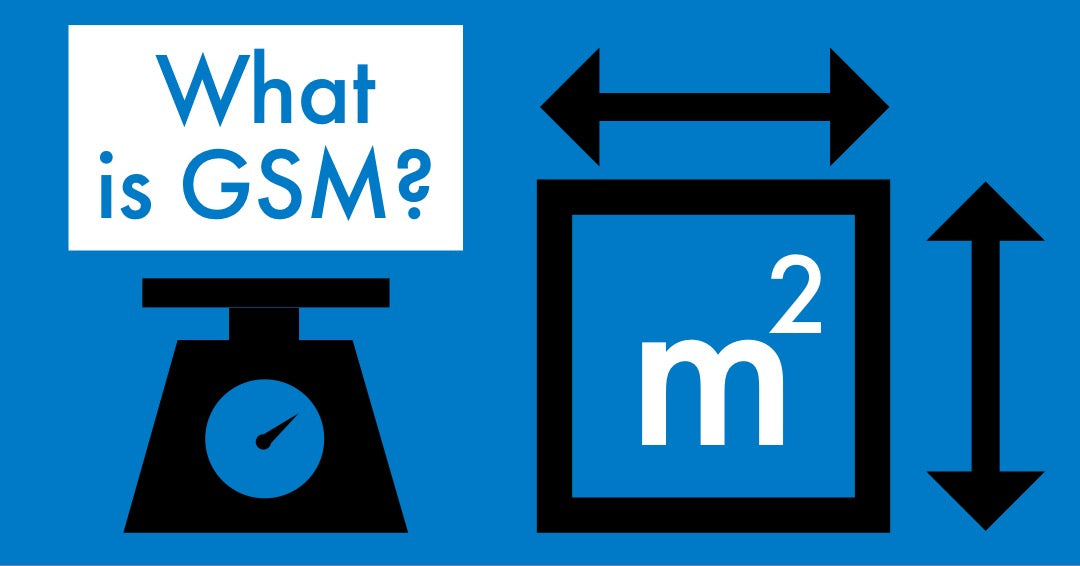
and Why Does it Matter? by justblanks.com
Fabric Weight Classifications
Fabric weight classifications are essential for understanding the characteristics and applications of different textiles.
Lightweight fabrics, ranging from 30 to 150 GSM, include materials like chiffon and silk, ideal for summer garments. Heavier textiles may cause discomfort in summer; lighter fabrics may not provide warmth in winter. Choosing fabric weight impacts durability and suitability for purpose. Lighter fabrics, like chiffon, offer more drape, while heavier fabrics provide structure.
Lightweight fabrics, such as chiffon and silk, are perfect for creating breezy summer attire.
Medium-weight fabrics, between 150 and 350 GSM, feature cotton poplin and jersey, suitable for everyday clothing.
Heavyweight fabrics, exceeding 350 GSM, encompass canvas and wool, designed for outerwear and workwear.
Ultra-lightweight fabrics, under 100 GSM, are primarily used for layering.
Midweight to heavyweight shifting fabrics, ranging from 170 to 340 GSM, provide versatility for changing seasons, combining moderate insulation with structural integrity.

What is GSM? by autofiber.com
Performance Factors Influencing GSM
The performance characteristics of textiles are considerably influenced by various factors, including material composition, weaving techniques, production processes, fabric finishings, and environmental considerations. Material composition affects GSM through fiber density, with natural fibers yielding lower GSM than synthetics. Weaving techniques, such as tighter weaves, increase GSM by packing more yarns. Additionally, higher GSM fabrics often suggest better durability and warmth, making them suitable for specific uses. Production processes, including yarn thickness and finishing treatments, also play a role in fabric density. Also, understanding GSM ranges can aid consumers in making informed choices about the appropriate fabric for their needs. Fabric finishings like waterproofing can enhance GSM. Finally, environmental and sustainability factors are essential, as heavier fabrics may require more resources, while lighter options often present lower ecological impacts. For instance, selecting a fabric with a medium-weight GSM range can provide versatility for various activities throughout the year.
Industry Applications of GSM
In various industries, GSM serves as a fundamental metric for evaluating material characteristics and suitability for specific applications. It plays an essential role in ensuring material quality and compliance with regulations, particularly in sectors like textiles, packaging, and insulation. Higher GSM directly influences product development by guiding material selection and optimizing manufacturing processes. Accurate GSM measurements enhance quality control and facilitate international trade through standardized comparisons. Understanding GSM has economic implications, as it aids in cost-effectiveness by minimizing material waste and ensuring products meet consumer expectations. Consequently, GSM is critical for maintaining industry standards and driving innovation. For example, knowing the fabric weight is crucial when choosing materials for specific garment types, ensuring they meet desired performance characteristics. Also, accurate GSM calculation helps reduce the risk of accidents and ensures that materials can withstand actual working conditions.
Cimmino by cimmino.com

What You Should Know About GSM vs. PT in Packaging by goldenwestpackaging.com
Popular Wiki Terms:
Common Misconceptions About GSM
Misunderstandings surrounding grams per square meter (GSM) are prevalent within various industries, leading to confusion regarding material properties and applications. A common misconception is that GSM directly measures thickness; nonetheless, it quantifies weight per unit area, with thickness determined separately.
Higher GSM does not always indicate better quality, as durability relies on fiber strength. Also be aware that GSM values can vary across materials, leading to inconsistent perceptions.
The pound rating system is also not interchangeable with GSM, requiring conversion for accurate comparisons.
Finally, GSM standardization does not eliminate purchasing risks due to tolerance variations and environmental factors affecting measurements.
References & Data Sources:
https://www.asg.org/grams-per-square-meter/ – Retrieved April 29, 2025
https://bulkcotton.com/industry-glossary/gsm-grams-per-square-meter/ – Retrieved May 1, 2024
https://www.printerbase.co.uk/news/what-is-gsm-or-gm2/ – Retrieved February 1, 2025
https://justblanks.com/blogs/news/what-is-gsm-in-fabric-and-why-does-it-matter – Retrieved April 24, 2025
https://sanvt.com/blogs/journal/fabric-weight-a-guide-to-gsm – Retrieved May 1, 2025
https://blog.fabricuk.com/understanding-fabric-weight/ – Retrieved May 1, 2025
https://corefabricstore.com/blogs/tips-and-resources/fabric-weights-blog – Retrieved May 1, 2025
https://www.autofiber.com/blogs/microfiber-university/what-is-gsm – Retrieved May 1, 2025
https://www.artilect.studio/us/guides/what-is-gsm – Retrieved May 1, 2025
https://www.urbanspacestore.in/blogs/news/gsm-in-fabric-a-complete-guide-to-fabric-weight-and-comfort – Retrieved April 30, 2025
https://pomp.store/blogs/journal/the-ultimate-guide-to-understanding-gsm-in-fabric – Retrieved April 30, 2025
https://dugarco.com/en/grams-per-square-meter-fabric/ – Retrieved April 30, 2025
https://stonemountainfabric.com/what-gsm-means-and-how-to-use-it/ – Retrieved April 30, 2025
https://www.pacorr.com/blog/importance-of-gsm-and-how-to-calculate-it/ – Retrieved April 30, 2025
https://www.cimmino.com/en/?taxonomy&term=decor-en – Retrieved April 30, 2025
https://goldenwestpackaging.com/wp/what-you-should-know-about-gsm-vs-pt-in-packaging/ – Retrieved April 30, 2025