
Foam Core Definition
Foam core is a lightweight, rigid board comprised of a foam center, typically polystyrene, sandwiched between two layers of paper or plastic. It combines durability with low weight, making it ideal for various applications such as large format printing, signage, and model building. Foam core materials can vary in thickness, density, and type, including closed-cell and open-cell variants for specific uses. Understanding its properties and applications can enhance project outcomes and material selection.
Composition and Materials of Foam Core
Foam core materials are characterized by their composition, which greatly influences their application in various industries. These materials often feature CFC-Free Foams, ensuring environmental compliance and safety. Their polymer structure provides essential mechanical strength, while density variations allow for tailored solutions across different uses. Core materials are crucial in sandwich structured composites, providing high bending stiffness with low overall density. Closed-cell foams excel in resisting water absorption, making them suitable for demanding environments. Conversely, open-cell foams are more susceptible to resin intake, limiting their utility in composite manufacturing. Additionally, Coosa Bluewater Sheets are a popular choice in marine applications due to their resistance to rot and ease of cutting with standard woodworking tools. The unrivaled consistency of General Plastics LAST-A-FOAM ensures that manufacturers receive reliable performance across all applications.
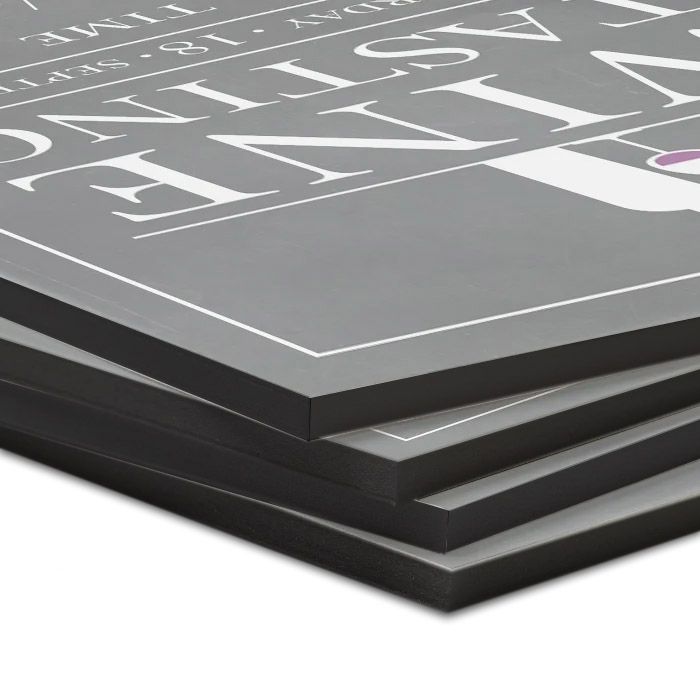
10pk Black Foamcore Pouch Boards with Pressure-Sensitive Adhesive ... by binding101.com
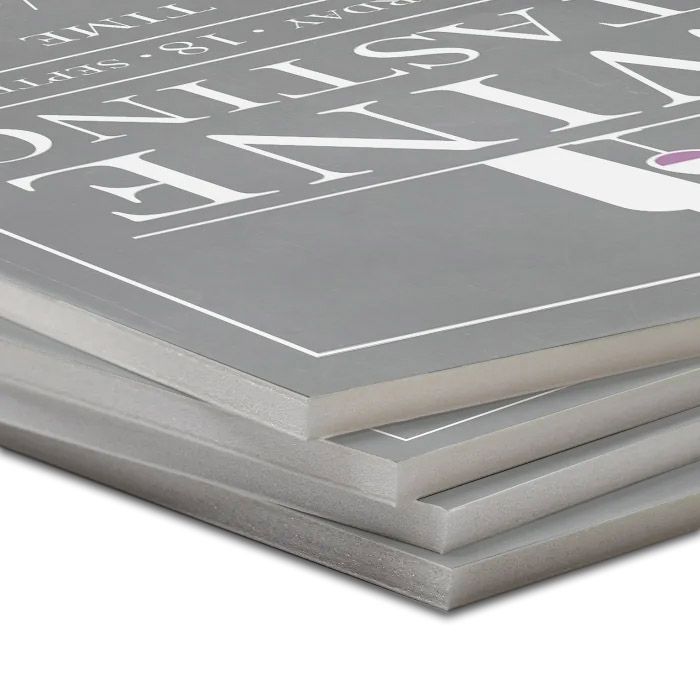
10pk White Foamcore Pouch Boards with Pressure-Sensitive Adhesive ... by spiralbinding.com
Applications and Uses of Foam Core
The applications and uses of foam core materials extend across various industries, highlighting their versatility and functionality.
Foam core is widely utilized in large format printing, creating mounted posters that enhance visual presentations. In retail settings, it serves as an effective medium for signage, providing a lightweight yet sturdy option for advertising displays. Its rigidity prevents flimsiness, making it suitable for trade show exhibits and promotional materials. Foam core supports artistic endeavors, enabling custom shapes and designs for craft projects. Various grades and colors of foam board can be selected to match the specific needs of each application, making it a flexible and durable choice for numerous creative projects. Also be aware that its versatile and lightweight material properties make foam core ideal for creating scale models in architecture and hobbies.
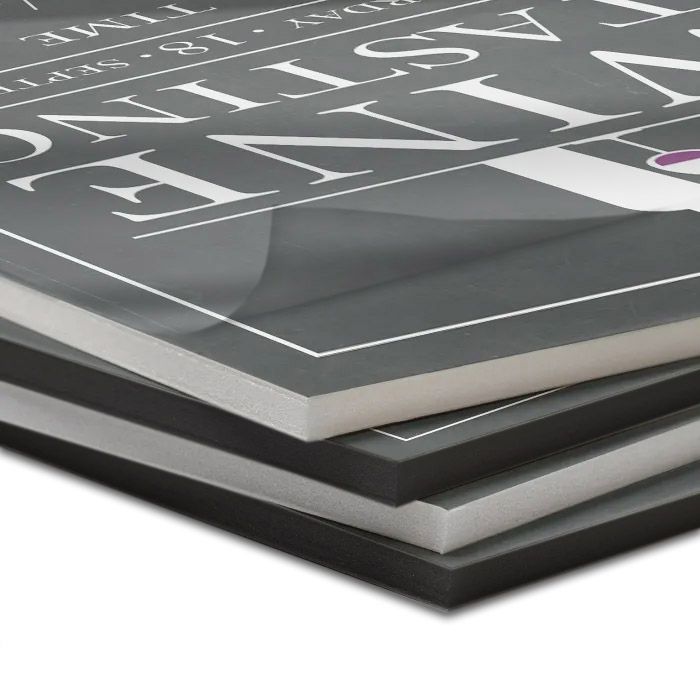
10pk Foam Core Matte Pouch Boards with Thermal Adhesive - Mount + ... by binding101.com
History and Development of Foam Core
Developed as a lightweight yet sturdy material, foam core consists of polystyrene foam sandwiched between paper facings, typically white clay-coated or brown kraft paper. Introduced by the Monsanto Company in 1961, it was designed for graphic arts applications, addressing the need for lightweight, rigid mounting boards. The original white foamcore board composition evolution included modifications for archival quality, with modern neutral pH facings compatible with sensitive artworks. This innovation reflects the broader trend of increased demand for foams during World War II, showcasing how materials can evolve to meet specific industry needs. Foam core has maintained its position in the graphic arts legacy, serving as a preferred choice for custom display solutions, while innovations in manufacturing have expanded its applications across various industries. The development of Structural Insulated Panels (SIPs) has highlighted the versatility and energy efficiency of foam core materials in modern construction.
Construction Variants of Foam Core
Various construction variants of foam core materials are designed to meet specific application requirements across multiple industries. Closed-cell foam is preferred for its low resin absorption and enhanced water resistance, making it suitable for composite sandwich structures. Core materials are designed around shear strength and stiffness ability, ensuring they can withstand demanding conditions. PVC foam is favored for its low density and cost-effectiveness, often utilized in various composite applications. The shear strength of foam cores is a critical factor in determining structural integrity, particularly in demanding environments. Fiber-reinforced foams are also used in high compression areas, providing durability and strength in applications that require through-fasteners. Other types, such as polyurethane and PET foams, offer versatility and good mechanical properties, catering to diverse needs across sectors like marine, aerospace, and automotive industries.

Foam Board Printing by squaresigns.com
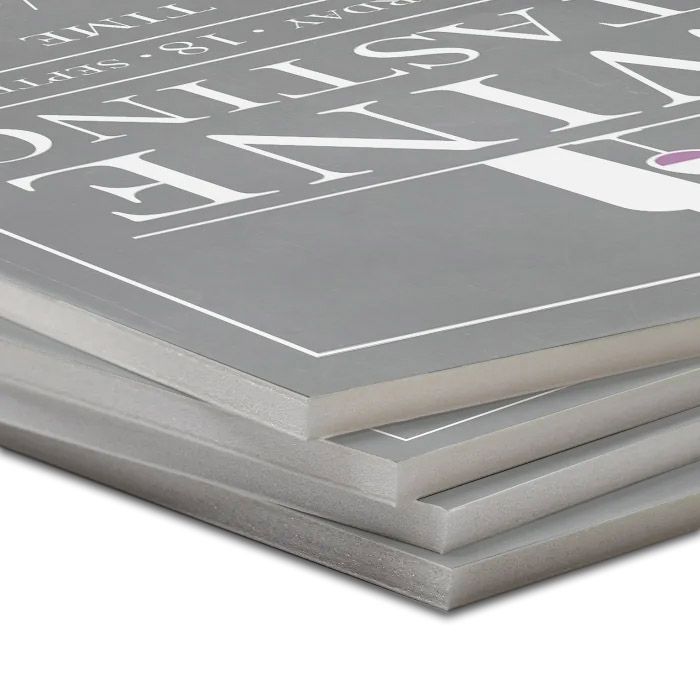
10pk White Foamcore Pouch Boards with Pressure-Sensitive Adhesive ... by binding101.com
Adhesion and Gluing Techniques for Foam Core
Adhesion and gluing techniques for foam core materials play a significant role in guaranteeing structural integrity and longevity in various applications. Techniques such as hot glue application provide quick bonding, while liquid adhesives offer an economical solution with moderate hold. Spray adhesives guarantee uniform coverage, making them ideal for mounting prints and signage. Surface preparation, including wire brushing and alignment marking, enhances adhesion strength. Specialized foam glues prevent material degradation and allow for flexible bonds, such as Loctite PL 300 VOC Foamboard Adhesive used in construction. These methods are essential for creating robust point-of-purchase displays and effective event promotions, ultimately contributing to the success of visual marketing initiatives. Using 3/16 inch foam core as a standard thickness ensures that projects maintain a consistent quality and ease of assembly. Notably, the ultra-lightweight nature of foam board also allows for easy handling and transportation of finished projects.
Popular Wiki Terms:
Advantages and Disadvantages of Foam Core
Foam core offers a range of advantages and disadvantages that impact its application in various industries. Its lightweight and portable nature facilitates easy transportation and setup, making it ideal for temporary displays. Foam core allows for cost-effective production, lowering expenses for bulk orders and short-term campaigns. Also, it is a cost-effective solution for businesses, particularly in environments like restaurants and grocery stores. However, it is available in 4-foot by 8-foot sheets, which can be a convenient size for many projects. Also be aware that its ability to create a vapor barrier helps control moisture, which can be beneficial in certain applications.
Nevertheless, it presents durability concerns, as it is prone to warping and damage, particularly in humid conditions. Also be aware that its environmental vulnerability poses risks, as it degrades quickly when exposed to moisture and has limited recyclability. These factors must be carefully considered when selecting foam core for specific projects and applications.
References & Data Sources:
https://www.rockwestcomposites.com/core-materials – Retrieved April 29, 2025
https://fiberglasssupply.com/core-materials/ – Retrieved May 1, 2024
https://www.generalplastics.com/markets/composite-core – Retrieved February 1, 2025
https://www.binding101.com/black-foam-core-pouch-boards-with-pressure-sensitive-adhesive – Retrieved April 24, 2025
https://www.spiralbinding.com/white-foam-core-pouch-boards-with-pressure-sensitive-adhesive – Retrieved May 1, 2025
https://www.curbellplastics.com/materials/plastics/foam-boards/ – Retrieved May 1, 2025
https://ariaprene.com/blog/what-is-foam-core/ – Retrieved May 1, 2025
https://lairdplastics.com/pages/resources-center/foam-board-uses-and-properties/ – Retrieved May 1, 2025
https://www.binding101.com/thermal-foam-core-pouch-boards-matte-laminate – Retrieved May 1, 2025
https://en.wikipedia.org/wiki/Foamcore – Retrieved April 30, 2025
https://www.foambymail.com/blog/foam-manufacturing-development-and-competition-through-history/ – Retrieved April 30, 2025
https://www.shoerpanels.com/history-of-structural-insulated-panels/ – Retrieved April 30, 2025
https://compositeenvisions.com/document/core-materials/ – Retrieved April 30, 2025
https://explorecomposites.com/materials-library/core-ref/ – Retrieved April 30, 2025
https://www.squaresigns.com/product/foamboard-signs/ – Retrieved April 30, 2025
https://www.binding101.com/white-foam-core-pouch-boards-with-pressure-sensitive-adhesive – Retrieved April 30, 2025
https://www.loctiteproducts.com/ideas/fix-stuff/how-to-glue-foam-together-from-constructions-to-craft-projects.html – Retrieved April 30, 2025
https://www.printmoz.com/blog/best-glue-foam-board – Retrieved April 30, 2025
https://www.goodguyssigns.com/blog/foam-board-pros-and-cons/ – Retrieved April 30, 2025
https://www.exhibitedge.com/moving-beyond-foamcore/ – Retrieved April 30, 2025
https://aceinsulation.biz/2022/08/the-pros-and-cons-of-rigid-foam-board-insulation/ – Retrieved April 30, 2025