
CTF (Computer-to-Film) Definition
CTF, or Computer-to-Film, is a digital prepress process that transfers electronic print data directly onto film for offset printing workflows. It produces high-resolution image transfers, ensuring quality assurance and minimizing defects before plate exposure. CTF utilizes advanced imagesetter technology, supporting color separation and registration accuracy in multi-color jobs. Although its adoption is declining due to the rise of Computer-To-Plate (CTP) technology, CTF still plays a role in niche applications and specific industry needs. Further insights into its applications are available.
Definition and Purpose of CTF
CTF, or Computer-to-Film, represents a digital prepress process that transfers electronic print data directly onto film, serving as an intermediary step in traditional offset printing workflows prior to plate production. This method utilizes laser exposure to create film output, guaranteeing high-resolution image transfer for detailed layouts. CTF plays an essential role in offset printing preparation, allowing for thorough quality assurance by minimizing defects before plate exposure. By standardizing film-based plate creation, it reduces digital-to-analog errors and guarantees compatibility with legacy printing systems. Although its adoption is declining, CTF remains significant in specific niche applications within the printing industry. However, the rise of Computer-To-Plate technology has begun to overshadow the importance of CTF by streamlining the printing process and eliminating the need for film altogether. CTF methods can vary based on imagesetter construction type, affecting the quality and efficiency of the printing process. This transition to CTP technology enhances speed, accuracy, and cost-effectiveness in printing applications.
Advancing time-resolved structural biology: latest strategies in ... by nature.com
List of IBM products - Wikipedia by en.wikipedia.org
Technological Aspects of CTF
Utilizing advanced imagesetter technology, the Computer-to-Film (CTF) process enables the precise transfer of digital designs onto film. This high-resolution method produces film positives at resolutions up to 4800 dpi, ensuring exceptional image quality for various printing applications. In screen printing setups, CTF facilitates accurate color separation, breaking down images into manageable layers. Modern CTF systems are often chemistry-free, promoting environmental sustainability while delivering durable, water-resistant films. These films, essential to plate production, support multi-color jobs and enhance registration accuracy, making CTF a crucial component in the workflows of publishing, packaging, and textile industries. Additionally, proper color registration is critical for achieving high-quality output in CTF processes. CTF systems like the Star Plate CTF imaging units deliver films with a Dmax exceeding 4.2, further enhancing print quality. Also, the Spyder II’s bi-directional printing capabilities optimize production efficiency, making it an invaluable asset for screen printing operations.
3 Real Product Manager Resume Examples (PDF & Web) by standardresume.co
Design and Software for CTF
The effective design and software utilized in Computer-to-Film (CTF) processes are vital for producing high-quality print outputs. Various software applications, such as Adobe Illustrator and CorelDRAW, guarantee software compatibility while enabling design flexibility and the creation of intricate graphics. High-resolution images are essential for achieving detailed prints, maintaining accuracy across different printing processes. Vector-based tools like AutoCAD and Inkscape further enhance design capabilities. Color management is essential for consistent output. CTF efficiently handles complex layouts and fine details, making it suitable for diverse applications in industries such as publishing, packaging, and textiles, where precision is paramount. Additionally, CTF serves as an intermediary step between desktop publishing and final printing, ensuring that designs translate accurately to physical outputs. The use of high-quality results in CTF processes underscores the importance of selecting appropriate software and design techniques to ensure print fidelity. Also, CTF was the standard in the offset printing industry before being largely replaced by newer technologies.
Application and Industry Usage
Computer-to-Film (CTF) processes have maintained a niche role within the printing industry, particularly in applications where traditional methods remain relevant. CTF serves as a core prepress service in offset and flexographic printing, especially for short-run jobs and regions with limited CTP adoption. It is instrumental in flexographic plate making, providing precise film outputs for color separation and halftone screening. Additionally, CtP technology enables quick turnaround for proofing stages, essential for timely production schedules. While CTP systems have largely supplanted CTF, the latter continues to support legacy equipment and specialized jobs in screen printing, demonstrating its enduring significance in various printing environments. Notably, there are currently 7 products available that cater to different printing needs, reflecting the ongoing demand for CTF solutions.
Custom Specialty Packaging by custom-printedbox.com
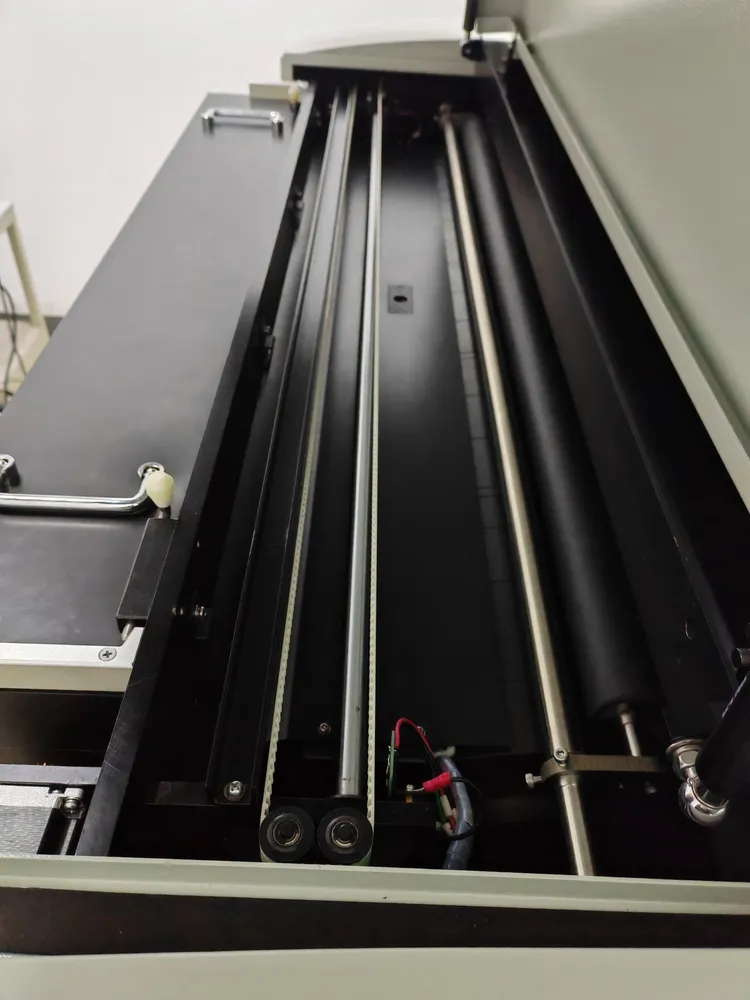
High Resolution Film Imagesetter Ctf Computer to Film Machine ... by dbgraphics.en.made-in-china.com
Advantages and Limitations of CTF
While Computer-to-Film (CTF) processes offer notable advantages in certain printing applications, they also present distinct limitations that can impact overall efficiency and cost-effectiveness.
The high-quality output of CTF, particularly in offset lithography, guarantees exceptional detail and color accuracy, making it suitable for proofing and complex layouts. Nevertheless, the method incurs significant costs due to consumables and maintenance. Workflow delays arise from additional film processing and manual handling, which can introduce errors and bottlenecks. Also be aware that reliance on film negatives complicates last-minute design adjustments, limiting flexibility in dynamic printing environments. These factors must be considered when evaluating CTF’s practicality. Additionally, DTF printing offers vibrant, high-quality prints with minimal preparation, making it a competitive alternative to CTF in various applications, especially due to its ability to print on various materials with ease. The durability of DTF prints ensures they withstand multiple washes without degrading, further enhancing their appeal in the market.
Popular Wiki Terms:
Evolution and Replacement by CTP
As digital technology advanced, the shift from Computer-to-Film (CTF) to Computer-to-Plate (CTP) systems became evident in the printing and filmmaking industries. CTF, which facilitated the transfer of digital images onto film stock, gradually became less relevant as high-quality digital projectors and cameras emerged. By the early 21st century, CTP systems gained prominence, enabling direct transfer of digital data to printing plates. This evolution emphasized efficiency, accuracy, and reduced production times, aligning with broader trends in filmmaking technology. The advent of CGI and VFX has further accelerated this transition, as filmmakers increasingly rely on digital methods to create visual content. Consequently, while CTF played a significant role in earlier processes, CTP’s advancements have made it a crucial component in modern printing practices. The transition to digital image sensors transformed the way filmmakers and printers approached the creation of visual content.
References & Data Sources:
https://www.devx.com/terms/computer-to-plate/ – Retrieved April 29, 2025
https://en.wikipedia.org/wiki/Computer_to_plate – Retrieved May 1, 2024
https://print-us.fujifilm.com/news-updates/cpt-upgrades/ – Retrieved February 1, 2025
https://www.nature.com/articles/s41592-025-02659-6 – Retrieved April 24, 2025
https://en.wikipedia.org/wiki/List_of_IBM_products – Retrieved May 1, 2025
https://en.wikipedia.org/wiki/Computer_to_film – Retrieved May 1, 2025
https://www.gmspacific.com/products/star-plate-computer-to-film-ctf-imaging-devices-and-star-plate-rip – Retrieved May 1, 2025
https://exiletech.com/products/computer-to-screen/spyder-ii/ – Retrieved May 1, 2025
https://standardresume.co/examples/product-manager – Retrieved May 1, 2025
https://dbpedia.org/page/Computer_to_film – Retrieved April 30, 2025
https://chromaline.com/comparing-computer-to-screen-technologies/ – Retrieved April 30, 2025
https://proofing.de/lexicon/ctf/ – Retrieved April 30, 2025
https://www.toptica.com/applications/industrial-manufacturing/computer-to-plate – Retrieved April 30, 2025
https://lawsonsp.com/collections/cts-machines – Retrieved April 30, 2025
http://custom-printedbox.com/capabilities.html – Retrieved April 30, 2025
https://dbgraphics.en.made-in-china.com/product/gTYpxOKMJQhW/China-High-Resolution-Film-Imagesetter-Ctf-Computer-to-Film-Machine.html – Retrieved April 30, 2025
https://lasertransfersupplies.com/blogs/articles/direct-to-film-dtf-printing-what-are-the-pros-and-cons – Retrieved April 30, 2025
https://blog.ricoma.com/2024/03/28/direct-to-film-printing-pros-and-cons/ – Retrieved April 30, 2025
https://www.dtfnc.com/blogs/dtf-insider/direct-to-film-printing-pros-and-cons – Retrieved April 30, 2025
https://www.nyfa.edu/student-resources/the-evolution-of-film-over-time-a-brief-history/ – Retrieved April 30, 2025
https://www.hollywoodinsider.com/technology-in-cinema-cgi-motion-capture/ – Retrieved April 30, 2025
https://en.wikipedia.org/wiki/History_of_film_technology – Retrieved April 30, 2025