
Coil Binding Definition
Coil binding is a mechanical method for binding documents using plastic or metal coils. This technique allows documents to lay flat and rotate 360 degrees, enhancing usability and durability. It typically features a 4:1 hole pattern for added strength and accommodates up to 440 sheets of standard paper. Customizable color options and material durability further enhance its appeal. This binding method is widely utilized in various sectors, including education and corporate environments, revealing its versatile applications.
Definition and Overview of Coil Binding
Coil binding, also recognized as spiral binding, is a mechanical method for binding documents that utilizes plastic or metal coils threaded through perforated pages.
This binding style is particularly effective for creating professional and durable documents, such as manuals and corporate training materials. One of its notable advantages is the ability to lay flat, allowing for easy page-turning and hands-free use. It offers 360-degree rotation for easy note-taking, making it even more user-friendly. Coil binding is an ideal method for various types of documents, ensuring that important information remains accessible and not buried near the spine. Also, it is typically associated with a 4:1 pitch hole pattern that enhances the binding’s strength and functionality.
Coil binding offers a professional, durable solution, enabling documents to lay flat for effortless page-turning and hands-free use.
Common applications include educational resources and presentations, where frequent page flipping is essential.
The method has evolved from metal to plastic coils, enhancing durability and aesthetic options while becoming a standard choice for various industries globally.
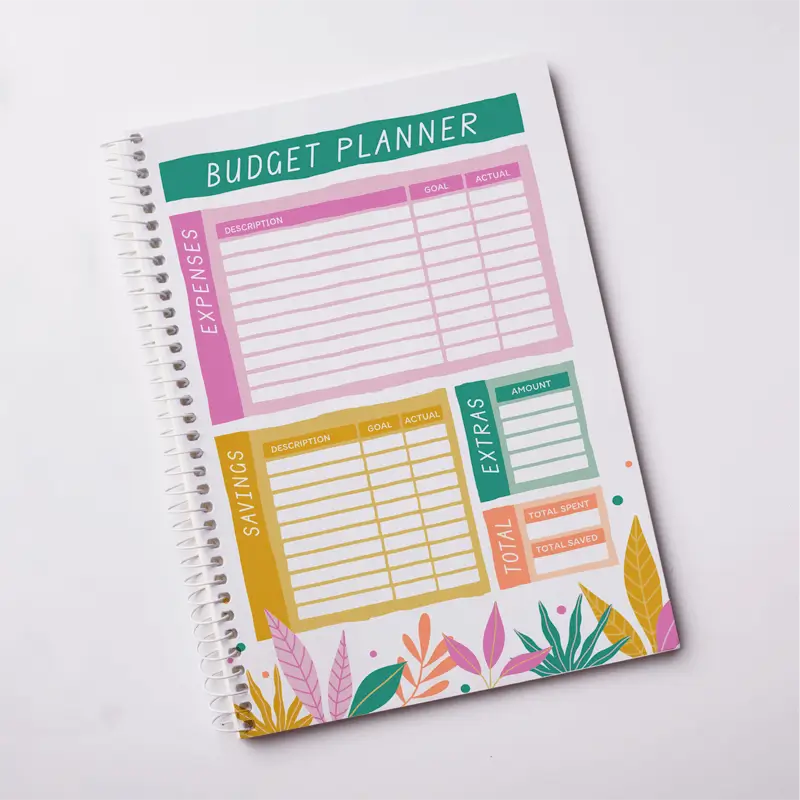
Spiral Bound Book Printing - Print Custom Spiral Bound Books ... by mixam.com
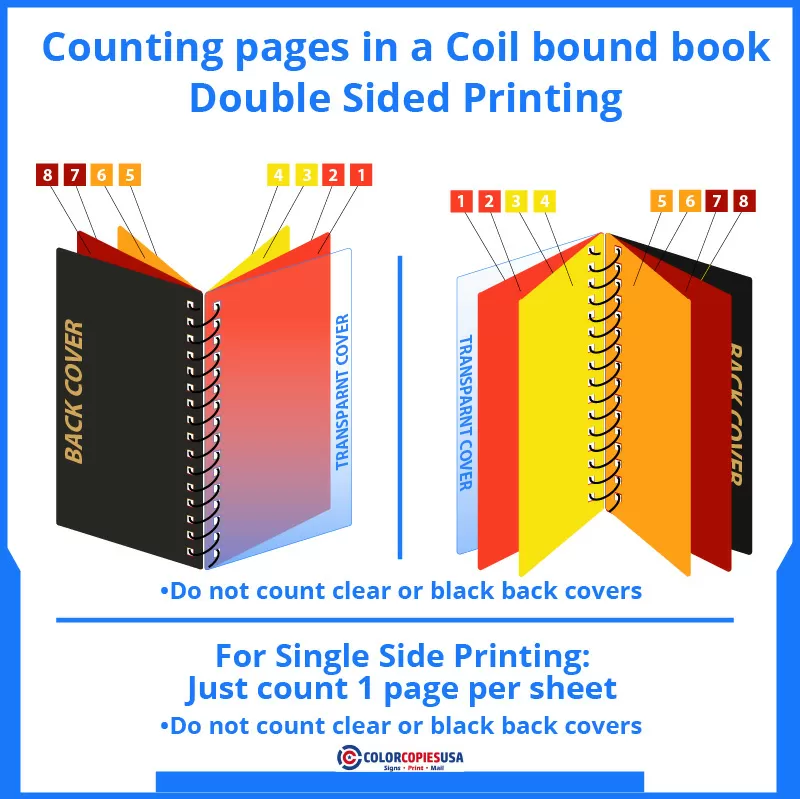
Spiral or Coil Binding booklets by colorcopiesusa.com
Characteristics of Coil Binding
Binding documents with coils provides a robust and versatile solution characterized by several key features.
Coil binding utilizes plastic or metal coils, available in sizes from 1/4″ to 2″ diameter. The continuous spiral design allows for efficient threading through punched holes, accommodating up to approximately 440 sheets of 20# bond paper. To determine the appropriate coil size, measure the thickness of the entire stack of pages, including covers, and add 1/8 inch to the thickness measurement. This method offers customizable spines in various colors, enhancing aesthetic appeal. It guarantees effective pagination for booklets, allowing for 360-degree rotation and lay-flat capability. The spiral binding’s flexibility ensures easy handling and usability for diverse projects. Also, coil binding’s durability resists uncoiling, protecting edges from tearing, making it suitable for diverse applications across educational and corporate sectors.
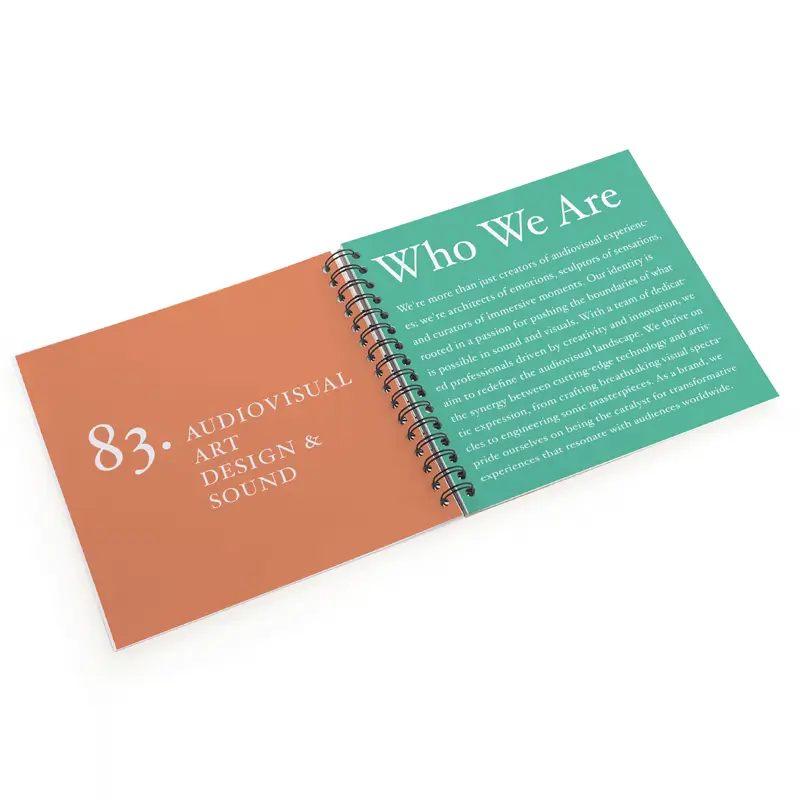
Wire Bound Book Printing by mixam.com
How Coil Binding Works
A robust understanding of the coil binding process is fundamental for effective document assembly.
Initially, document preparation involves organizing and collating pages in the desired order.
Next, hole punching is executed using specialized machines, creating evenly spaced holes along the document’s edge.
Following this, a suitable coil is selected, matching the hole size and available in various diameters and colors. Coil sizes range from 6mm to 50mm, allowing for the binding of documents from a few pages to 450 pages. The durability and flexibility of coil binding make it ideal for documents that are frequently handled, and this method is particularly beneficial for creating home curriculum materials.
The threading process inserts the coil through each punched hole, either manually or with a machine.
Finally, finishing entails trimming excess coil and crimping the ends to prevent unraveling, ensuring a durable and practical bound document.
Advantages of Coil Binding
While various binding methods serve specific purposes, coil binding offers distinct advantages that enhance document usability and durability.
This binding technique features lay-flat functionality, allowing for 360-degree page rotation without creases, which is beneficial for presentations and technical manuals. The key benefits of this binding method include the ability for pages to stay flat when opened, minimizing desk space usage. This style of binding allows documents to lay flat for easy access and use, further enhancing the user’s experience. Also, coil binding accommodates different levels of page count, making it versatile for projects of varying sizes.
The durability and resistance of plastic or metal coils guarantee that documents withstand frequent handling while maintaining page security. Coil binding provides extensive customization options, including color-coordinated coils and cover finishes, accommodating various sizes and page counts.
These features make it an ideal choice for corporate training materials and educational resources requiring both functionality and a professional appearance.
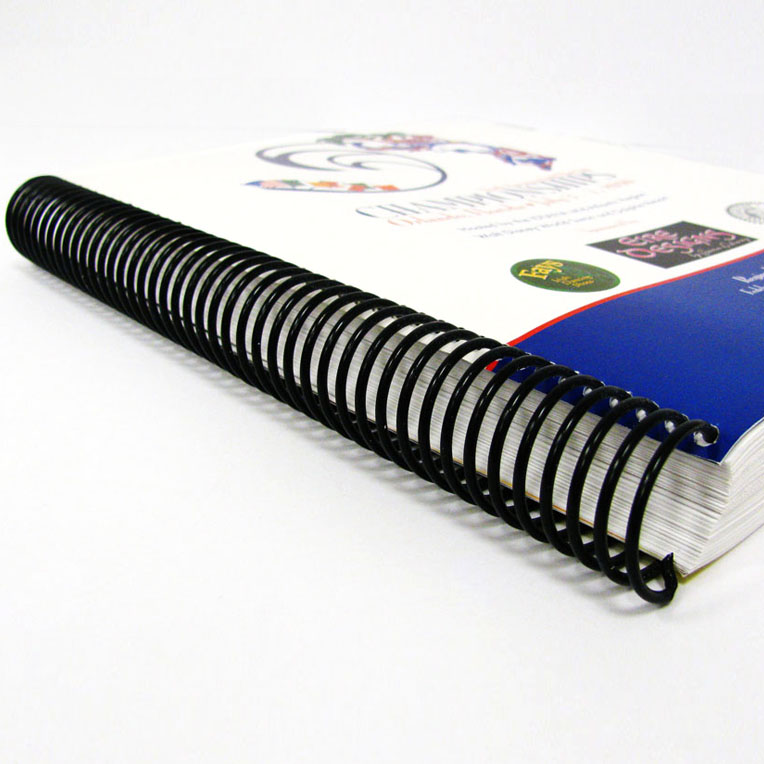
Fast Custom Spiral Bound Booklet Printing by bestprintingusa.com
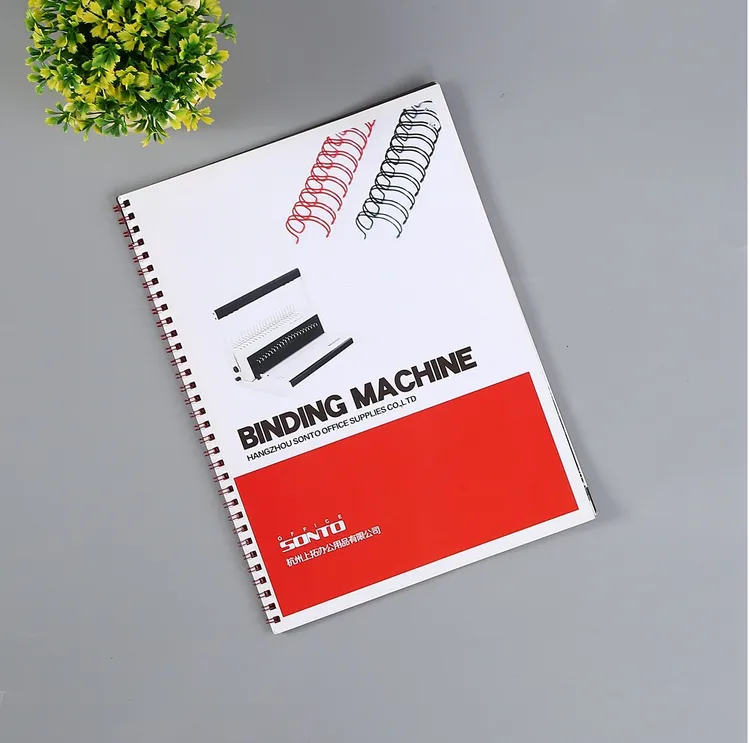
Custom Metal Spiral Ring Binding Printing Company Product Sample ... by bscomelots.en.made-in-china.com
Materials Used in Coil Binding
Coil binding primarily utilizes plastic coils made from polypropylene or PVC, ensuring both durability and flexibility in various document applications.
These plastic coils offer significant material advantages, including cost efficiency and user safety due to the absence of sharp edges. The coil properties include a range of diameters from 6mm to 50mm, accommodating various paper weights and binding capacities. Additionally, plastic coils can bind documents up to 440 sheets or a 1-3/4” thick stack, making them suitable for larger projects. Their design allows for 360° page rotation and easy sanitization, making them ideal for shared documents. Also, these coils are compatible with various binding machines, enhancing their versatility in binding solutions. Also be aware that the maximum book size for coil binding depends on the binding machine, allowing for flexibility in larger document projects.
Color options enhance branding opportunities, while UV-resistant varieties are available for outdoor use, ensuring long-lasting performance under various environmental conditions.
Popular Wiki Terms:
Common Applications and Users
Common applications of coil binding span a diverse range of industries, reflecting its versatility and functional benefits.
In educational institutions, it is frequently used for student handbooks, course packs, and training manuals that require durability and easy accessibility. Coil binding is an ideal method for creating professional-looking materials that are easy to handle. Many educational facilities benefit from the durability of plastic coils, which maintain their shape even after rough handling. This versatile option is particularly advantageous for materials that are handled frequently.
Corporate offices utilize coil binding for polished business reports, employee handbooks, and marketing presentations, ensuring a professional appearance and usability.
It serves legal and healthcare sectors for organizing sensitive documents like case files and medical manuals.
The hospitality and creative industries employ coil binding for menus and portfolios, showcasing its adaptability across various fields and enhancing user experience.
References & Data Sources:
https://en.wikipedia.org/wiki/Coil_binding – Retrieved April 29, 2025
https://www.formaxprinting.com/blog/book-printing-lingo-what-is-coil-binding – Retrieved May 1, 2024
https://blog.laminationdepot.com/an-overview-of-coil-binding-one-of-the-most-popular-binding-styles/ – Retrieved February 1, 2025
https://mixam.com/spiral – Retrieved April 24, 2025
https://www.colorcopiesusa.com/spiral-or-coil-bound-books-training-and-seminar-manuals-printing/ – Retrieved May 1, 2025
https://printfinish.com/12-faq-about-the-spiral-coil-binding/ – Retrieved May 1, 2025
https://www.printingcenterusa.com/blog/spiral-binding-vs-wire-o-binding/ – Retrieved May 1, 2025
https://printfinish.com/differences-between-coil-comb-and-wire-bindings/ – Retrieved May 1, 2025
https://mixam.com/wiro – Retrieved May 1, 2025
https://www.mybinding.com/blog/post/coil-binding-101-everything-you-need-to-know – Retrieved April 30, 2025
https://www.binding101.com/blog/post/binding/guide-how-to-bind-with-spiral-binding-coils-tips-and-tricks – Retrieved April 30, 2025
https://www.formaxprinting.com/blog/what-are-the-advantages-of-spiral/coil-binding-vs-other-binding-types – Retrieved April 30, 2025
https://www.jdyoung.com/resource-center/posts/view/222/the-pros-and-cons-of-spiral-binding – Retrieved April 30, 2025
https://fotexprint.com/blog/what-are-the-advantages-of-spiral-binding/ – Retrieved April 30, 2025
https://www.bestprintingusa.com/spiral-bound-booklets.html – Retrieved April 30, 2025
https://bscomelots.en.made-in-china.com/product/MBCnEyQcCPWo/China-Custom-Metal-Spiral-Ring-Binding-Printing-Company-Product-Sample-Catalogue-Books-with-Indexs.html – Retrieved April 30, 2025
https://www.binding101.com/binding/binding-supplies/plastic-spiral-binding-coils – Retrieved April 30, 2025
https://www.usi-laminate.com/pages/94/binding-supplies-sizes-and-colors-chart – Retrieved April 30, 2025
https://www.binding101.com/blog/post/binding/spiral-coil-binding-faqs – Retrieved April 30, 2025
https://www.printingforless.com/resources/wind-up-your-business-with-coil-binding/ – Retrieved April 30, 2025
https://pro-binding.com/why-is-coil-binding-so-popular/ – Retrieved April 30, 2025
https://www.theprintery.com/blog/bindery-and-finishing/coil-binding-services-is-it-the-right-fit-for-your-project/ – Retrieved April 30, 2025