
CMYK Color Mode Definition
CMYK, which stands for Cyan, Magenta, Yellow, and Key (Black), is a subtractive color model primarily used in color printing. It operates by absorbing specific light wavelengths through the application of these inks. This method contrasts with the RGB model, which is additive and suited for digital displays. CMYK facilitates a wide range of color output while ensuring accuracy and consistency in printed materials. Understanding CMYK is essential for effective graphic design and printing applications. Further details highlight its importance and applications.
Understanding the CMYK Color Model
The CMYK color model, an essential framework in the printing industry, represents the four primary colors: Cyan, Magenta, Yellow, and Key (black). This model is critical for producing full-color images in various printed materials, such as brochures and magazines. Halftoning allows for less than full saturation of primary colors, enabling the creation of various shades and tones in the printed output. The subtractive color model used in CMYK means that colors start as white, with inks added to achieve the desired hues. Color calibration is important for ensuring that the printed output matches the intended design. Accurate color proofing is also necessary to visualize how colors will appear in print, addressing the inherent limitations of the CMYK model compared to RGB. Understanding CMYK’s effectiveness is essential for producing high-quality prints that meet design expectations.
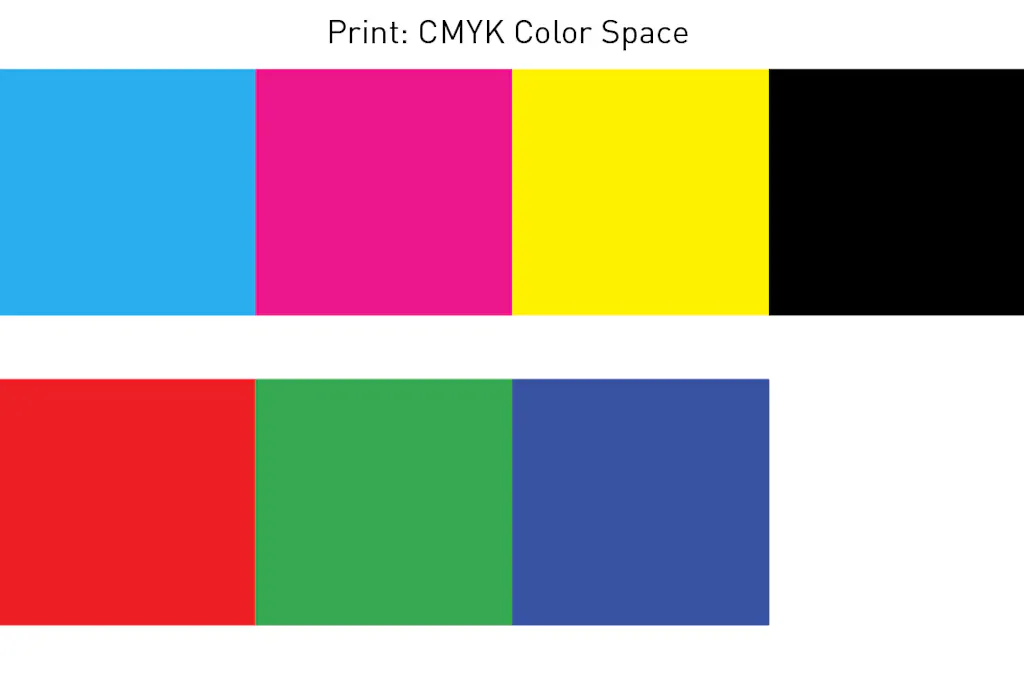
Learn About Color Space by smartpress.com
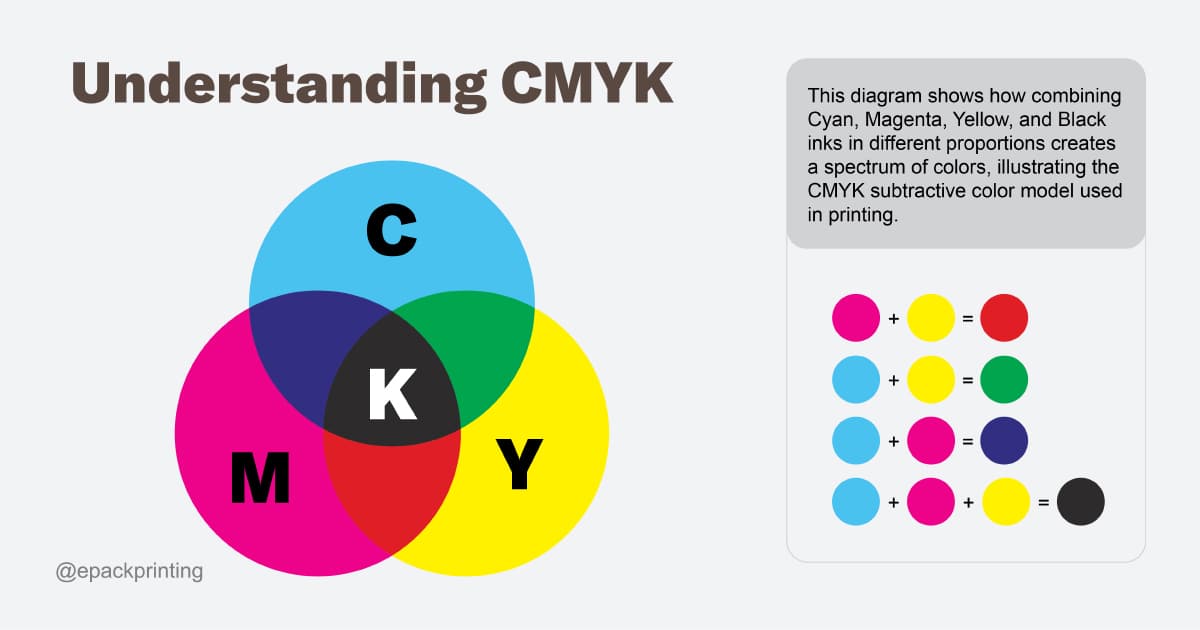
CMYK Printing Guide: Achieve Vibrant and Accurate Colors by epackprinting.com
The Subtractive Process of CMYK
In the subtractive process of CMYK, color is produced through the absorption of specific light wavelengths by pigments. The primary colors—cyan, magenta, and yellow—absorb respective RGB components, creating secondary colors through their mixing. A white background reflects the full spectrum, while inks reduce this reflection. The inclusion of black (K) addresses challenges in achieving deep tones, enhancing contrast and detail. Each layer of ink compounds light absorption, affecting the final print. Understanding the subtractive color model is essential for effective color calibration and achieving desired results in print applications. Knowing that Cyan absorbs Red is crucial for understanding how colors interact during the printing process. Also, the CMYK color system provides a wide array of colors for printing, making it indispensable for designers. Performing preflight checks guarantees accurate color separation and ideal output.
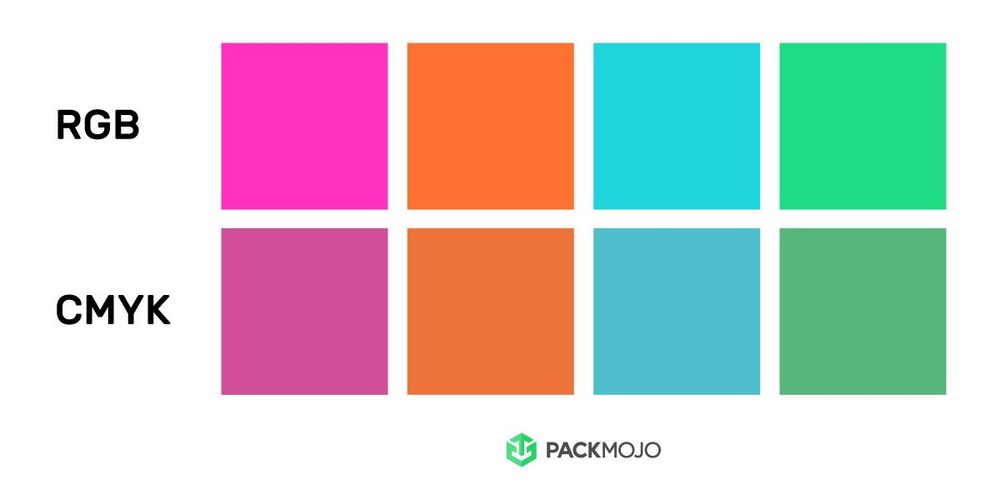
Screen Colors vs Print Colors in Packaging by packmojo.com
Differences Between CMYK and RGB
Understanding the differences between CMYK and RGB is fundamental for professionals in the printing and design industries.
RGB employs red, green, and blue as primary colors, utilizing an additive process that creates white. Alternatively, CMYK combines cyan, magenta, yellow, and black in a subtractive process, resulting in black.
RGB is suited for digital applications, providing a wider color gamut of 16.7 million colors, while CMYK is tailored for printed materials, with approximately 16,000 colors. Additionally, RGB files are usually smaller than CMYK files, which can impact storage and processing requirements. Understanding both modes is essential for optimizing design, as colors may appear differently when converted from one mode to another. Also, the CMYK process allows for the creation of rich black using specific ink percentages, enhancing the depth of printed images.
Consequently, RGB files are smaller, whereas CMYK files accommodate diverse ink combinations, influencing file processing and color reproduction in print versus digital environments.
Importance of CMYK in Printing
CMYK plays a critical role in the printing industry by ensuring color accuracy and consistency across various printed materials. This color model enables reliable reproduction of a wide spectrum of hues while minimizing the risk of discrepancies between digital designs and printed outputs. CMYK is optimized for diverse printing technologies, including inkjet and laser, enhancing productivity and print quality. Its standardization across printers facilitates compatibility, reducing potential errors. CMYK’s economical use of ink supports efficient production processes. By employing this model, printers can avoid costly reprints and deliver high-quality materials that meet client expectations consistently. CMYK color mode is essential for ensuring accurate color representation in printed materials. Also, understanding the difference between color models is crucial for designers to achieve the best results in print. The accurate conversion of RGB to CMYK is vital for maintaining color integrity during the printing process.

CMYK Printing vs. RGB: How to Print the Right Colors by gflesch.com
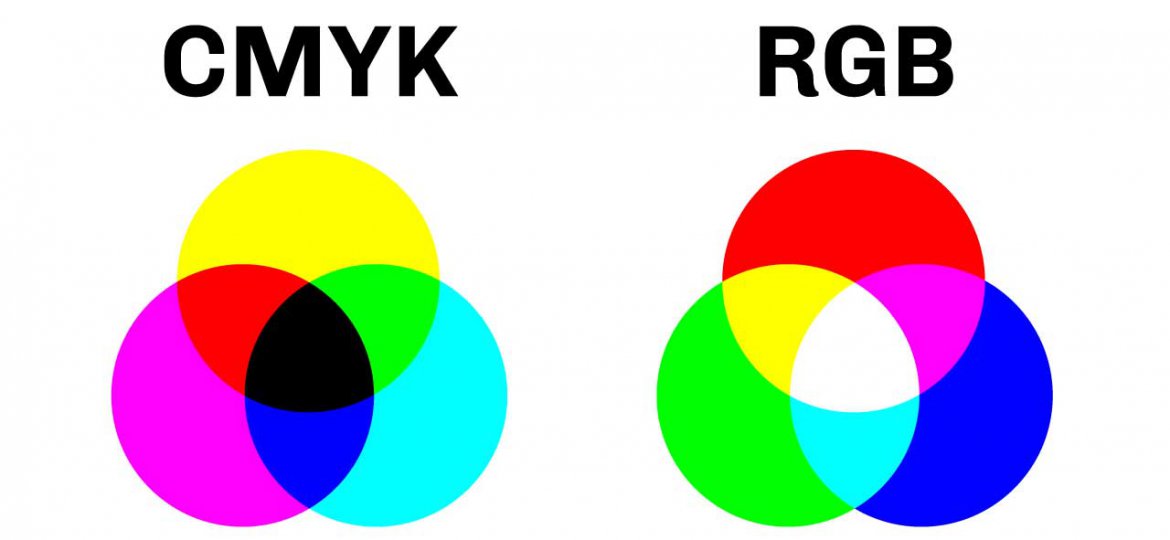
What is CMYK Color? by plumgroveinc.com
Common Applications of CMYK
The applications of the CMYK color model are widespread in the printing industry, impacting various types of printed materials. Business cards and stationery require precise color accuracy for effective branding. Brochures and flyers serve as essential marketing collateral, while posters and banners attract attention in advertising campaigns. Packaging materials benefit from consistent color representation, enhancing product visibility. Event materials, including conference brochures and invitation cards, demand high-quality color output. Signage for retail and exhibitions utilizes CMYK to guarantee vibrant displays. The versatility of CMYK supports multiple printing processes, assuring reliable results across diverse applications. This is particularly important because CMYK is the industry standard for color printing, ensuring consistency and accuracy in all printed materials. CMYK color mode is tailored specifically for printing, which helps to achieve the closest match to printed colors. Also, understanding colour profiles is essential for ensuring that the printed colours are accurately reproduced and meet the desired specifications.
Popular Wiki Terms:
Color Mixing and Percentage in CMYK
Color mixing in the CMYK model relies on the combination of cyan, magenta, yellow, and black inks to create a diverse spectrum of colors. Each color is represented by specific percentage values, indicating the proportion of each ink used. For example, CMYK(33%,33%,0%,0%) signifies 33% cyan and magenta. The addition of black enhances depth, allowing for darker shades. Halftoning techniques further diversify the color range by varying dot sizes. While the CMYK model effectively reproduces a wide array of colors, challenges may arise in achieving precise color matches when converting from digital formats, necessitating careful color calibration and proofing. Understanding the limitations of pigment mixing is crucial for achieving desired colors. The CMYK palette originates from photographic printing processes that differ from traditional painting methods. The secret to mixing colors involves using Cyan, Magenta, and Yellow as primary colors instead of the traditional Red, Yellow, and Blue.
References & Data Sources:
https://en.wikipedia.org/wiki/CMYK_color_model – Retrieved April 29, 2025
https://refinepackaging.com/blog/what-is-cmyk-color-model/ – Retrieved May 1, 2024
https://aispa.us/blog/what-does-cmyk-stand-for/ – Retrieved February 1, 2025
https://smartpress.com/support/color-ink/color-space – Retrieved April 24, 2025
https://www.epackprinting.com/support/understanding-cmyk/ – Retrieved May 1, 2025
https://pavilion.dinfos.edu/Article/Article/2355687/additive-subtractive-color-models/ – Retrieved May 1, 2025
https://www.xrite.com/blog/what-is-subtractive-cmyk-color-model – Retrieved May 1, 2025
https://packmojo.com/help/screen-colors-vs-print-colors/ – Retrieved May 1, 2025
https://blog.thenounproject.com/rgb-vs-cmyk-understanding-the-differences/ – Retrieved May 1, 2025
https://www.vistaprint.com/hub/correct-file-formats-rgb-and-cmyk – Retrieved April 30, 2025
https://www.rushordertees.com/blog/rgb-vs-cmyk/ – Retrieved April 30, 2025
https://printingshoppe.com/help-center/importance-of-cmyk-color-mode/ – Retrieved April 30, 2025
https://www.printingcenterusa.com/blog/what-is-cmyk-and-why-is-it-used-for-printing/ – Retrieved April 30, 2025
https://www.gflesch.com/blog/cmyk-printing – Retrieved April 30, 2025
https://plumgroveinc.com/what-is-cmyk-color/ – Retrieved April 30, 2025
https://www.thecustomboxes.com/blog/cmyk-color-model/ – Retrieved April 30, 2025
https://support.jukeboxprint.com/en/articles/3190006-why-cmyk-color-mode-is-essential-for-printing – Retrieved April 30, 2025
https://carleton.ca/theprintshop/story/optimize-your-designs-with-the-correct-colour-mode/ – Retrieved April 30, 2025
https://danielkenneth.com/2019/10/16/acrylic-paint-mixing-in-cmyk/ – Retrieved April 30, 2025
https://www.learning-to-see.co.uk/the-cmyk-palette-an-overview – Retrieved April 30, 2025
https://www.instructables.com/How-To-Mix-Colors-Like-A-Color-Printer/ – Retrieved April 30, 2025