
Anilox Volume Definition
Anilox volume measures the ink transfer capacity of anilox rolls in cubic centimeters per square meter (cc/m²) and BCM/in². It notably influences ink density, color consistency, and print quality. Various factors affect anilox volume, including engraving style, cell count, ink properties, and printing conditions. Accurate measurement methods, such as laser-based systems, are vital for maintaining print standards. Regular maintenance of anilox rolls is necessary to guarantee peak performance in diverse printing applications, with further details available on related practices.
Definition and Importance of Anilox Volume
Anilox volume is a vital parameter in flexographic printing, referring to the quantity of ink that an anilox roll can transfer to a printing plate. This volume directly impacts ink transfer, affecting ink density and color consistency in printed materials. Consistent anilox volume guarantees uniform application, which is fundamental for achieving the desired print quality. Maintaining anilox volume allows printers to monitor the condition of the anilox rolls and compensate for wear, ensuring optimal performance. Higher volumes produce thicker ink films suitable for solid prints, while lower volumes are ideal for detailed work. The quality of manufacturing plays a crucial role in maintaining ideal anilox volume, as wear and contamination can lead to variations in print quality, ultimately affecting the overall appearance of the final product. Also, consistent print quality requires systematic control over various printing components, including the anilox roll volume, to meet customer expectations effectively.
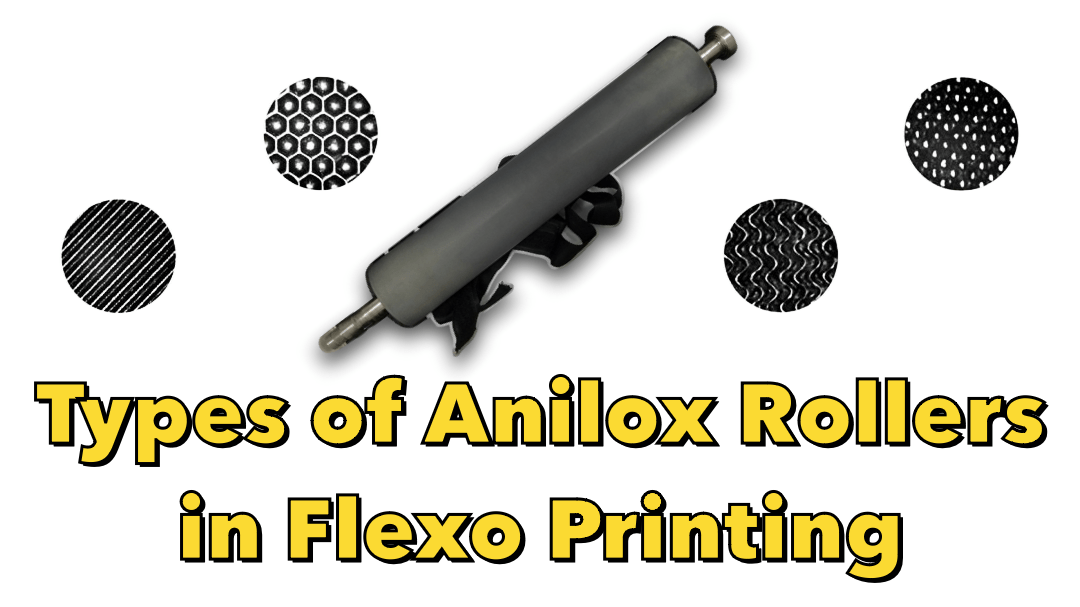
Optimise Thy Flexo Printing with Suitable Anilox Rollers by flexopedia.net
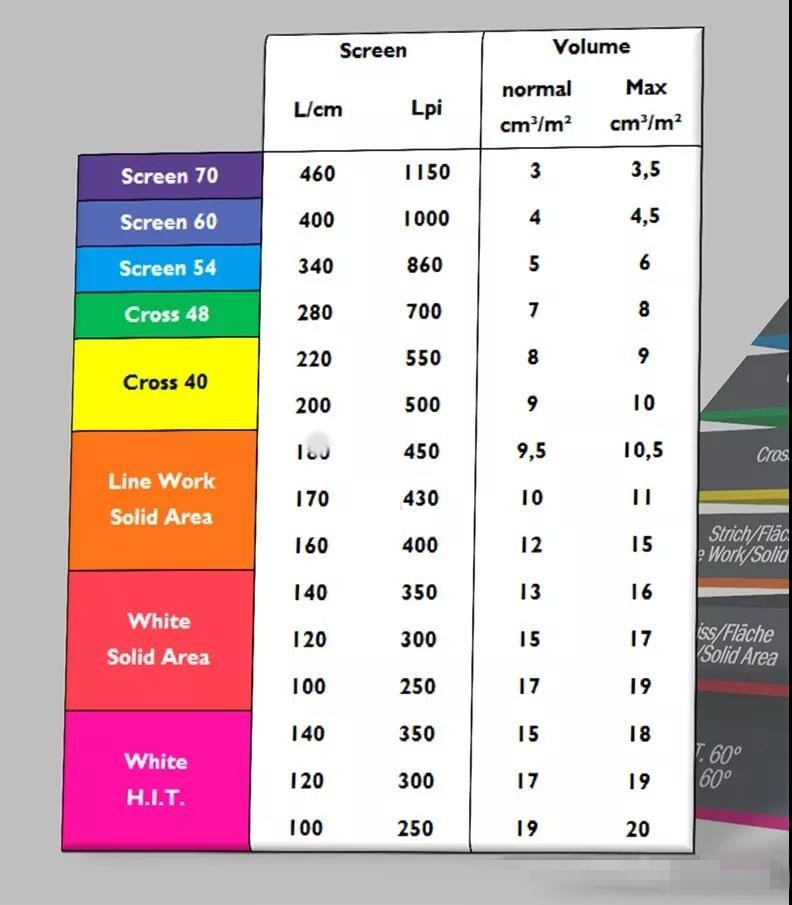
The number of lines and the amount of ink in the anilox roll by jctprinting.com
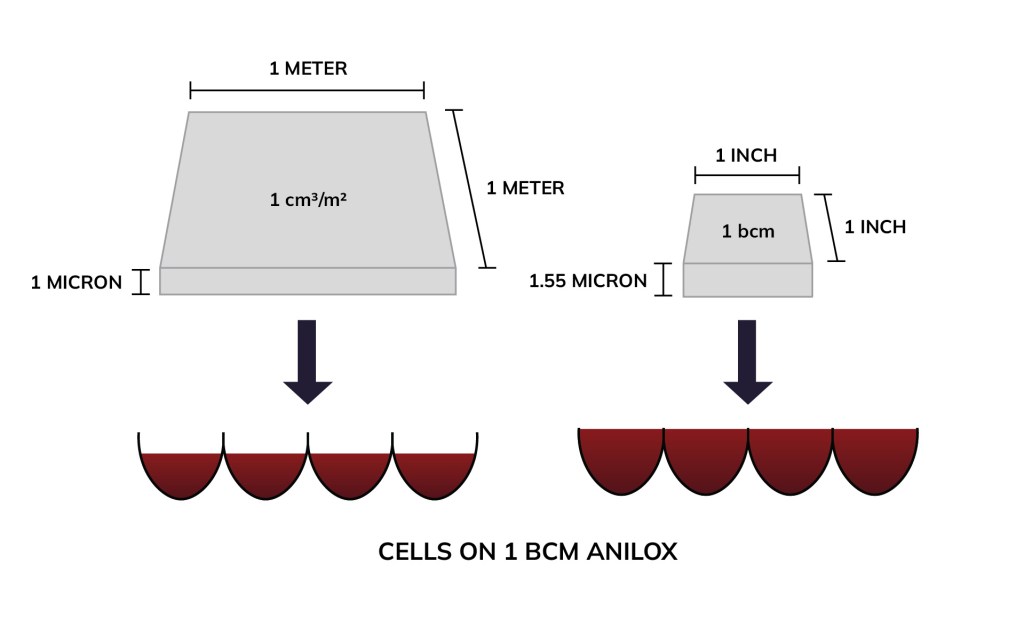
What is Anilox Volume? - MicroDynamics LLC by microdynamics.net
Units of Measurement and Conversion
In flexographic printing, the measurement of anilox volume is critical for ensuring accurate ink transfer and print quality. Anilox volume is quantified in billions of cubic microns per square inch (BCM/in²) and cubic centimeters per square meter (cc/m²). The conversion formula for shifting between these units is essential: BCM to cc/m² is multiplied by 1.55, while the reverse requires division by 1.55. Understanding these anilox specifications and conversions is crucial for maintaining consistent ink film thickness, optimizing printing processes, and achieving desired outcomes. Anilox functionality is key in controlling the ink volume delivered to the image carrier, which directly impacts print quality. Accurate conversions prevent over- or under-saturation of colors, ensuring high-quality print results. Also be aware that maintaining the correct anilox volume is essential to achieve thinner ink films that enhance overall print quality. The use of closed cell technology in anilox rolls optimizes ink film transfer, further improving print accuracy.
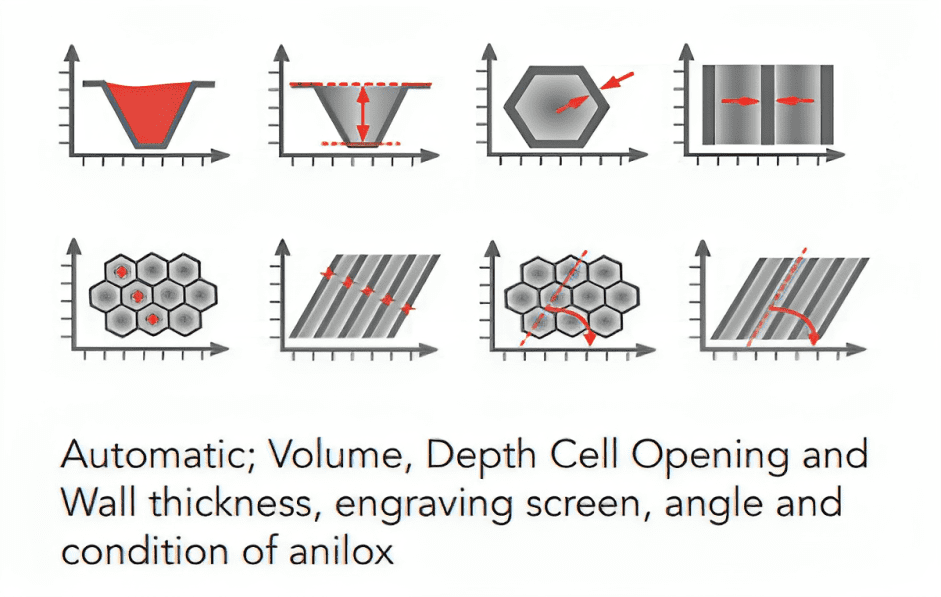
How to Inspect Anilox Rollers Part 3 - Best Practice by flexopedia.net
Methods for Measuring Anilox Volume
Effective measurement of anilox volume is essential for maintaining quality in flexographic printing. Modern measurement devices, particularly laser-based systems, provide accurate assessments of anilox cell volumes. These tools enable precise determination of ink film thickness, which directly influences print clarity. Instruments like the Veritas and AniCheck facilitate rapid measurements, ensuring consistency across various applications. Calibration and validation procedures are integral to these methods, eliminating discrepancies between different printers and suppliers. Accurate measurement is critical, given the variability in cell shapes and the need for reliable data management to maintain color consistency and overall print quality. Also be aware that understanding the anilox volume is the primary controlling factor in flexo printing, which further emphasizes the importance of precise measurement techniques. The transition to laser-ablated ceramic rolls has significantly improved measurement accuracy and allowed for more complex anilox structures. The use of Apex’s comprehensive assessment tools ensures comprehensive monitoring and control of anilox rolls to enhance printing performance.
Applications Across Different Printing Needs
Applications of anilox volume are critical across various printing needs, particularly in flexographic, corrugated, UV ink, and label printing.
In flexographic printing, anilox volume directly influences ink transfer efficiency, impacting color strength and print sharpness. The cell volume of the anilox roller plays a significant role in determining the amount of ink released during the printing process.
Corrugated board printing typically requires higher anilox volumes to guarantee adequate ink coverage for complex graphics.
Higher anilox volumes are essential in corrugated board printing to ensure sufficient ink coverage for intricate designs.
For UV ink applications, maintaining specific volumes enhances print quality and reduces defects.
Label printing demands consistent anilox volume to achieve uniform print quality across substrates.
Each application requires careful consideration of anilox specifications to optimize performance, assuring clarity and accuracy in printed materials.
Factors Influencing Anilox Volume Calculations
Factors influencing anilox volume calculations are varied and complex, impacting the overall efficiency of ink transfer in flexographic printing. Engraving style greatly alters cell shape and volume, affecting ink delivery. Cell count, defined as the number of cells per inch, also plays an essential role in determining anilox volume. Ink characteristics, such as viscosity and surface tension, influence how well ink fills and releases from the cells. The material of the anilox roll affects its durability and susceptibility to wear. Finally, printing conditions, including temperature and pressure, further impact the transfer efficiency of ink from the anilox roll. Achieving thinner ink films is crucial for enhancing print quality and reducing dot gain.
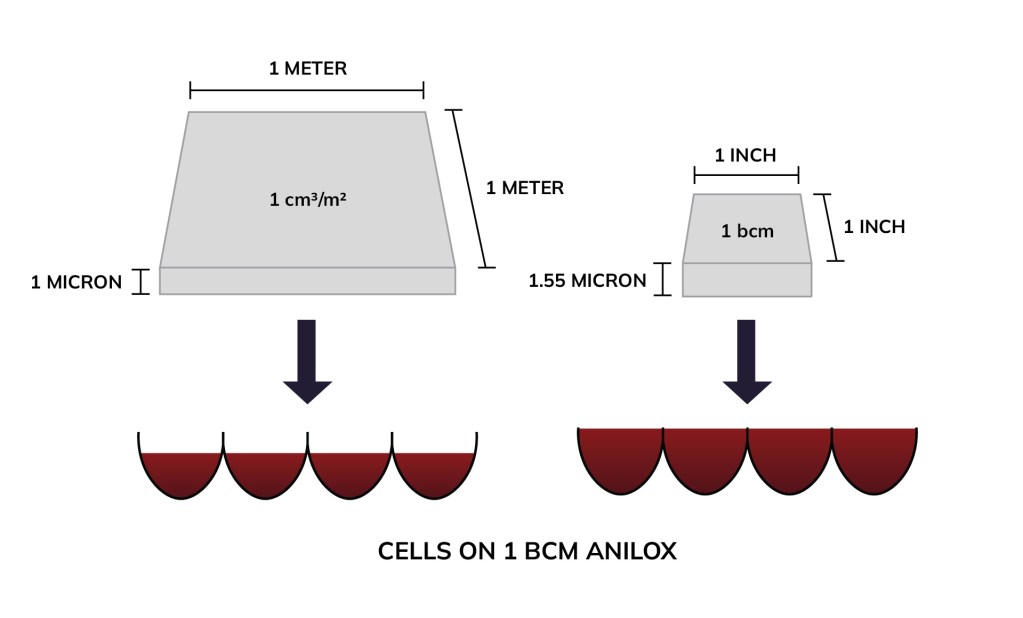
What is Anilox Volume? - MicroDynamics LLC by microdynamics.net
Popular Wiki Terms:
Maintenance and Care for Anilox Rolls
Maintenance and care for anilox rolls are critical to ensuring peak performance and longevity in flexographic printing applications. Implementing effective anilox cleaning procedures, such as using pH-neutral cleaners and stainless steel brushes, prevents cell clogging and maintains ideal cell depth-to-opening ratio. Establishing preventive maintenance routines, including routine inspections and immediate post-use cleaning, minimizes ink hardening and cross-contamination. Volume tracking through regular audits and historical data analysis allows for early detection of wear. Proper handling of anilox rolls is essential to avoid issues like chipping that can compromise their performance. Regular cleaning helps to prevent plugged cells, which can significantly impact the efficiency of ink circulation. To maintain optimal performance, regular maintenance is crucial for clean anilox rolls, ensuring consistent print quality and preventing build-up.
References & Data Sources:
https://microdynamics.net/blog/what-is-anilox-volume/ – Retrieved April 27, 2025
https://blog.apexinternational.com/academy/anilox-101-what-is-an-anilox – Retrieved April 29, 2024
https://www.flexography.org/industry-news/print-consistency-maintain-anilox-roll-volume/ – Retrieved January 29, 2025
https://flexopedia.net/anilox-rollers-in-flexo/ – Retrieved April 22, 2025
https://www.jctprinting.com/article/en/The-number-of-lines-the-amount-of-ink-in-the-anilox-roll.html – Retrieved April 29, 2025
https://blog.luminite.com/blog/anilox-volume-guide – Retrieved April 29, 2025
https://flexopedia.net/anilox-volume/ – Retrieved April 29, 2025
https://www.flexography.org/industry-news/shape-volume-count-standard-anilox-specifications-in-flexographic-packaging/ – Retrieved April 29, 2025
https://flexopedia.net/inspect-anilox-rollers-03/ – Retrieved April 29, 2025
https://harpercorporation.com/blog/understanding-anilox-volume/ – Retrieved April 28, 2025
https://www.flexography.org/industry-news/anilox-volume-measurement-history-evolution-flexographic-printing/ – Retrieved April 28, 2025
https://www.apexinternational.com/anilox-volume-inspection/ – Retrieved April 28, 2025
https://blog.focuslabel.com/choosing-the-right-anilox-for-each-application – Retrieved April 28, 2025
https://harpercorporation.com/blog/anilox-volume/ – Retrieved April 28, 2025
https://www.packagingimpressions.com/article/best-practices-anilox-care-and-maintenance/ – Retrieved April 28, 2025
https://www.flexography.org/industry-news/how-to-clean-anilox-rolls-understanding-chemicals/ – Retrieved April 28, 2025
https://www.troika-systems.com/quality-leap-the-ultimate-anilox-roll-cleaning-guide/ – Retrieved April 28, 2025