
Anilox Roll Definition
Anilox rolls are vital components of flexographic printing systems. They feature engraved cells that regulate the volume and transfer of ink to various substrates. Constructed from durable materials such as steel or aluminum, these rolls often have a ceramic coating to enhance precision and longevity. Specifications, including cell volume and screen count, contribute to ideal ink delivery and print quality. Understanding their function is fundamental for achieving efficient printing processes and consistent results in diverse applications.

Quick Summary
- Anilox rolls are essential components in flexographic printing, designed for precise ink transfer and metering to achieve high-quality prints.
- They feature engraved cells, which control the volume of ink released onto substrates during the printing process.
- Made from durable materials like steel or aluminum, anilox rolls are coated with ceramic for enhanced durability and precise cell engraving.
- The design and specifications of anilox rolls, including cell volume and shape, are tailored to specific ink types and printing requirements.
- Regular maintenance, such as ultrasonic cleaning, is crucial to prevent cell blocking and ensure consistent print quality.
Core Construction and Purpose of Anilox Rolls
The core construction of anilox rolls is critical to their functionality in ink transfer and metering processes. Steel or aluminum alloy cores provide durability, while stainless steel options resist corrosion in humid environments. A chromium oxide ceramic coating allows for precise engraving of anilox cells, which are essential for controlled ink release. The bond coat enhances adhesion between the core and the ceramic surface. In addition, anilox cell volume adjustments enable fine-tuning of ink transfer, ensuring consistent print quality. The selection of anilox rollers directly impacts the efficiency of ink delivery during the printing process. Proper maintenance, including regular ultrasonic cleaning, is essential to prevent issues such as cell blocking and scoring, thereby contributing to the overall efficiency and longevity of the anilox roll in printing applications. Anti-corrosion layers protect against degradation from inks and cleaning agents, contributing to the overall efficiency and longevity of the anilox roll in printing applications. Also be aware that maintaining anilox integrity is key to avoiding production issues that can arise from damaged cells.
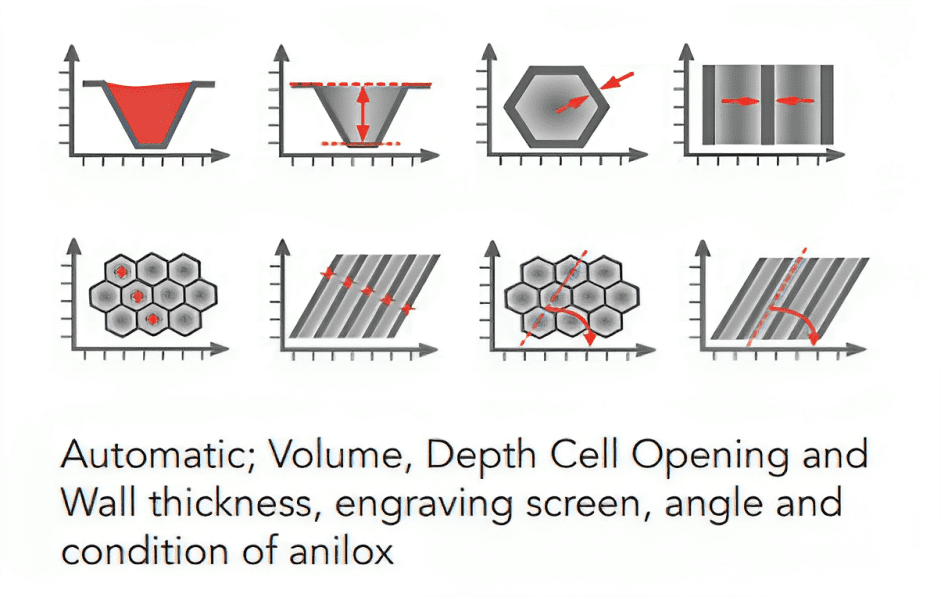
How to Inspect Anilox Rollers Part 3 - Best Practice by flexopedia.net
Key Technical Specifications
Key technical specifications of anilox rolls play a significant role in their application for ink transfer and metering. The cell volume and measurement are critical, typically expressed in BCM, influencing the ink capacity and delivery. A fixed relationship between screen count and film weight ensures that the desired coating application is achieved efficiently. Anilox rolls are essential in flexographic printing as they facilitate precise ink transfer, which is vital for achieving high-quality prints. The type of cell used can significantly impact the performance and suitability of anilox rolls for different coatings and inks.
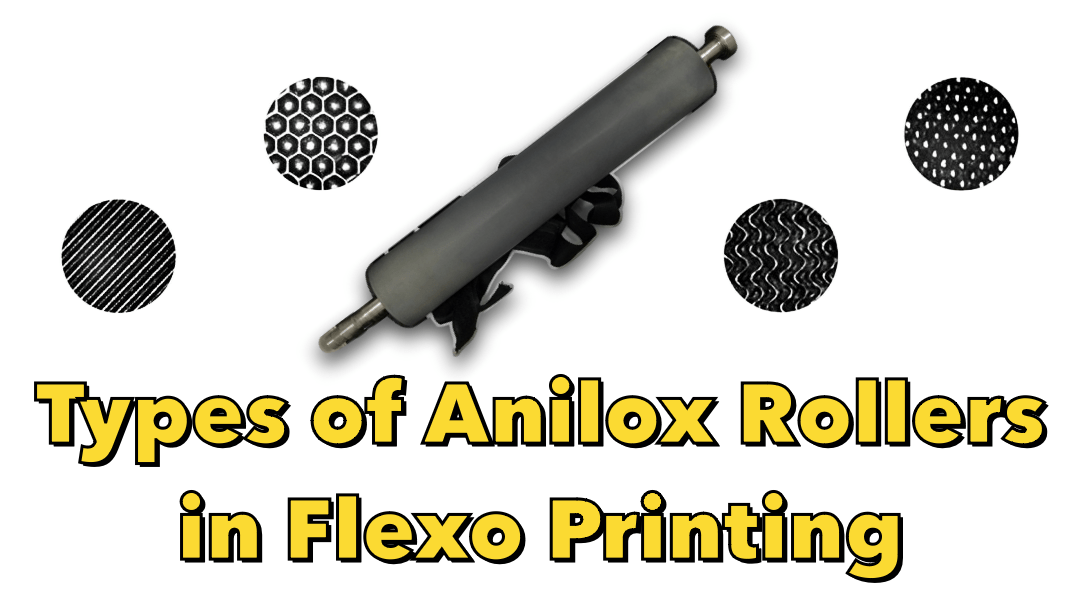
Screen count and line per inch (LPI) determine the resolution and ink distribution; ranges typically span from 25 to over 500 LPI depending on the application. Cell configurations, such as hexagonal and helical, cater to various ink types and printing needs.
Proper balance of these specifications guarantees prime performance and print quality in diverse printing environments, supporting consistent results across different substrates.
(b) inkjet printing process ... by researchgate.net
Manufacturing and Engineering Techniques
Manufacturing and engineering techniques for anilox rolls are critical to achieving ideal performance in ink transfer and metering applications. Core materials like steel or aluminum are selected for their strength and weight balance. Precision machining guarantees adherence to dimensional specifications. The incoming roll inspection ensures that the materials meet quality standards before they are processed further. Ceramic coatings are applied using thermal spraying methods, achieving controlled thickness for durability. Laser engraving fine-tunes cell geometry and depth, essential for precise ink metering. The ceramic coating enhances the durability and performance of the roller. Quality control measures validate adhesion, thickness, and cell patterns, minimizing dot gain variability. These processes collectively support achieving correct trapping settings, guaranteeing consistent print quality and prime functionality in flexographic printing. The use of 120gsm paper plays a crucial role in achieving print quality and consistency. Also, the integration of CTP technology in the printing process enhances overall efficiency and accuracy, contributing to superior results. The anilox roller plays a crucial role in achieving print quality and consistency.
Application-Specific Variables
Ink quantity and transfer dynamics are critical, with cell volume specifications tailored for different printing needs. The choice of anilox roller engraving affects the quantity of ink that can be transferred, which is essential for optimizing print quality. Substrate and ink compatibility also play a significant role; for instance, corrugated materials require higher volumes than narrow web applications. Print technique and resolution dictate the anilox line count, which must exceed print job screen lines to maintain quality. These variables necessitate precise adjustments to guarantee consistent ink transfer, maximum color strength, and effective performance, finally enhancing print quality and efficiency in diverse applications. Proper selection of anilox rolls based on line screens and transfer volumes is crucial for achieving the desired printing results. Also be aware that the cell shape and engraving geometry are crucial for ink-transfer properties, further influencing overall print efficiency. Understanding the principles of offset printing can also provide insights into improving ink transfer in various applications. Also, maintaining consistent ink density is vital for ensuring that printed designs adhere to brand standards and achieve optimal visual impact.
Industry Role and Importance
The role of anilox rolls in the flexographic printing industry is pivotal for both print quality and operational efficiency.
These rolls guarantee consistent print quality through precise ink transfer and metering, enabling uniform coverage across various substrates. Their design minimizes ink overflow, which is critical for intricate graphics and labels. The use of ceramic anilox rollers ensures high precision and durability, further enhancing the ink transfer control. The selection of anilox roll types is influenced by various factors like image type, substrate, and ink types, which ensures optimal performance for different printing applications. Also, the integration of flexography technology has significantly improved the capabilities of anilox rolls in adapting to various printing needs. The implementation of Management Information Systems allows for better tracking of ink usage, which can further optimize the printing process.
Operational efficiency is enhanced by stable performance, reducing scrap rates and press downtime. The durability advantages of high-hardness ceramic materials extend the lifespan of anilox rolls, minimizing maintenance and replacement costs. Together, these factors contribute greatly to the effective and sustainable production processes within the industry.
Popular Wiki Terms:
Substrate Compatibility and Interaction
Substrate compatibility and interaction play essential roles in the efficacy of anilox rolls within the flexographic printing process.
Anilox adaptability is important, as different substrates require specific configurations to achieve ideal ink transfer. The ink type correlation further dictates the necessary cell volumes and geometries, ensuring that the ink’s viscosity aligns with substrate needs. For instance, UV inks necessitate mid-range BCM, while water-based inks require higher volumes due to absorption factors. Cell shape impact influences performance; hexagonal cells enhance precision for smooth surfaces, while deeper engravings are critical for high-adhesion requirements on textured materials, ensuring print quality and consistency. The quality of anilox rollers significantly affects the overall print quality, making it vital to choose the correct roller for each substrate. Also, optimal print density is crucial for achieving high-quality prints, influencing both visual appeal and client satisfaction. Also be aware that the flexibility and versatility of flexography allow it to adapt to various printing demands, further enhancing the effectiveness of anilox rolls in diverse applications. Understanding the characteristics of anilox rolls is crucial for optimizing their performance across different printing scenarios. Also, achieving optimal ink adhesion is essential for ensuring the durability and visual integrity of printed materials.
References & Data Sources:
https://flexopedia.net/anilox-rollers-in-flexo/ – Retrieved April 6, 2025
https://blog.focuslabel.com/everything-you-need-to-know-about-anilox-rolls – Retrieved April 8, 2024
https://blog.apexinternational.com/academy/anilox-101-anatomy-of-an-anilox-roll – Retrieved January 8, 2025
https://flexopedia.net/inspect-anilox-rollers-03/ – Retrieved April 1, 2025
http://www.travisltd.com/anilox-roller---specifications.html – Retrieved April 8, 2025
https://blog.apexinternational.com/academy/anilox-101-what-is-an-anilox – Retrieved April 8, 2025
https://press-parts-outlet.com/blogs/blog/anilox-roller-what-does-it-do-what-are-the-basic-specifications – Retrieved April 8, 2025
https://www.researchgate.net/figure/a-Flexography-printing-process-207-b-inkjet-printing-process-177-and-c-3D_fig3_344612781 – Retrieved April 8, 2025
https://www.laserengrave.com/anilox-manufacturing-process/ – Retrieved April 8, 2025
https://www.jinhangmachinery.com/news/how-to-make-a-ceramic-anilox-roller – Retrieved April 7, 2025
https://224664-286886.apps-06.cloudsonic.dev/term/120gsm-paper/ – Retrieved April 7, 2025
https://224664-286886.apps-06.cloudsonic.dev/term/ctp-computer-to-plate/ – Retrieved April 7, 2025
https://jctprinting.com/news/en/Anilox-roller-knowledge.html – Retrieved April 7, 2025
https://www.jctprinting.com/article/en/Anilox-roller-structure-classification.html – Retrieved April 7, 2025
https://en.wikipedia.org/wiki/Anilox – Retrieved April 7, 2025
https://blog.focuslabel.com/choosing-the-right-anilox-for-each-application – Retrieved April 7, 2025
https://224664-286886.apps-06.cloudsonic.dev/term/offset-vs-large-format/ – Retrieved April 7, 2025
https://224664-286886.apps-06.cloudsonic.dev/term/ink-density/ – Retrieved April 7, 2025
https://www.jinhangmachinery.com/news/why-does-the-printing-industry-need-to-use-ceramic-anilox-rollers – Retrieved April 7, 2025
https://blog.focuslabel.com/anilox-roll-technology – Retrieved April 7, 2025
https://224664-286886.apps-06.cloudsonic.dev/term/flexography/ – Retrieved April 7, 2025
https://224664-286886.apps-06.cloudsonic.dev/term/mis-management-information-system/ – Retrieved April 7, 2025
https://www.jctprintco.com/news/news/anilox_roll_selection_guide_how_to_choose_the_right_anilox_roller_according_to_your_needs.html – Retrieved April 7, 2025
https://224664-286886.apps-06.cloudsonic.dev/term/print-density/ – Retrieved April 7, 2025
https://www.harpercorporation.com/harperblog/An-Introduction-to-Flexography-and-the-Role-of-Anilox-Rolls-in-Packaging-Industry/ – Retrieved April 7, 2025
https://www.harperimage.com/AniloxRolls/Anilox-Guides/Specifying-the-Right-Anilox- – Retrieved April 7, 2025
https://224664-286886.apps-06.cloudsonic.dev/term/ink-adhesion/ – Retrieved April 7, 2025